
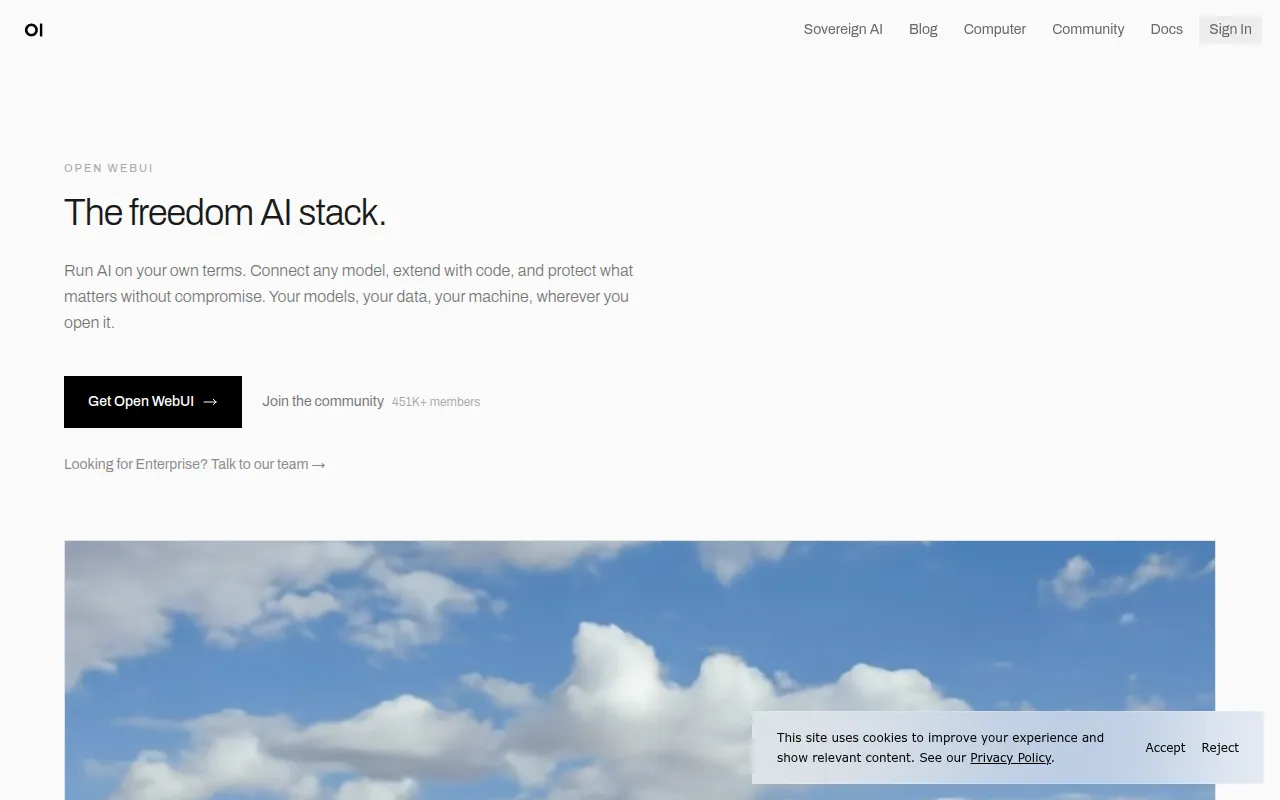
A self-hosted, offline-capable AI platform with a chat interface, built-in RAG, plugin support, and connections to Ollama and OpenAI-compatible APIs.
Read moreThe best open source alternative to ChatGPT is Open WebUI. If that doesn't suit you, we've compiled a ranked list of open source ChatGPT alternatives to help you find a replacement.

A self-hosted, offline-capable AI platform with a chat interface, built-in RAG, plugin support, and connections to Ollama and OpenAI-compatible APIs.
Read more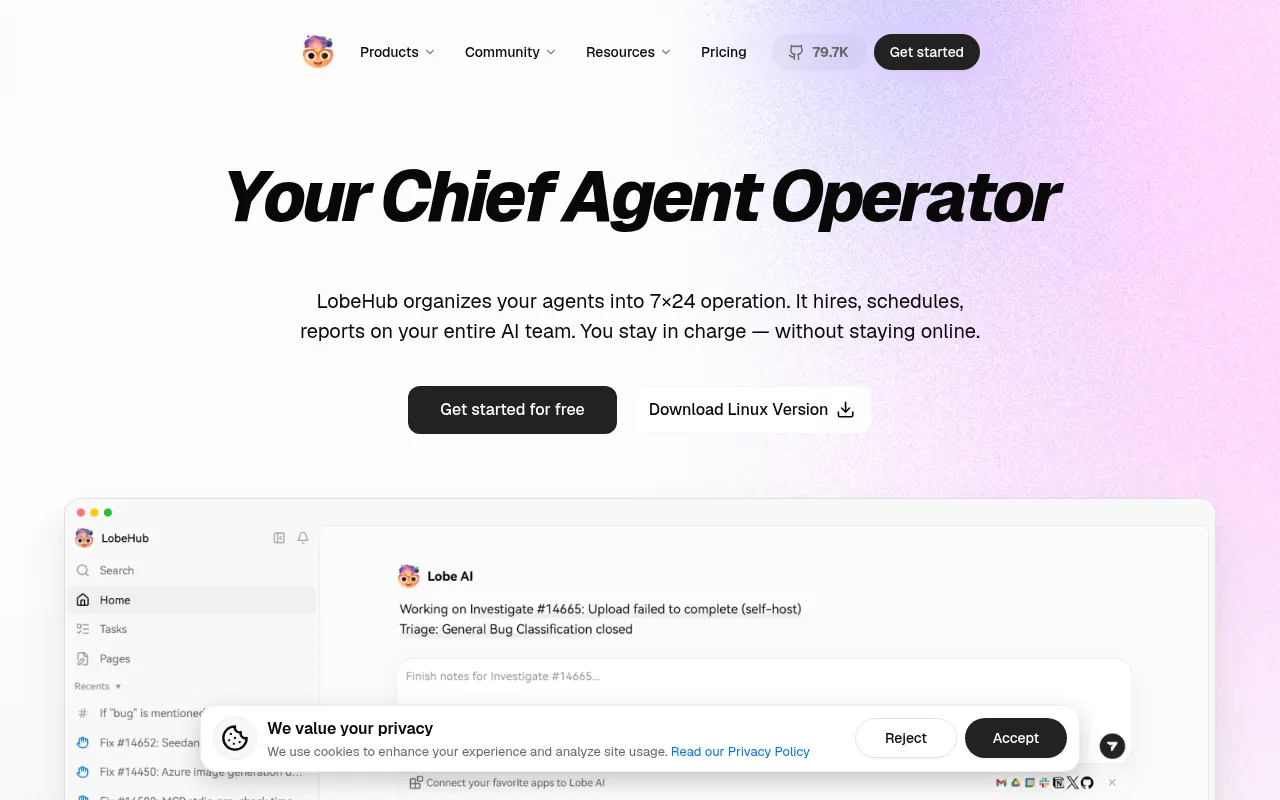
LobeHub is an open source AI chat platform connecting multiple LLM providers, plugins, and agents in one self-hosted app.
Read more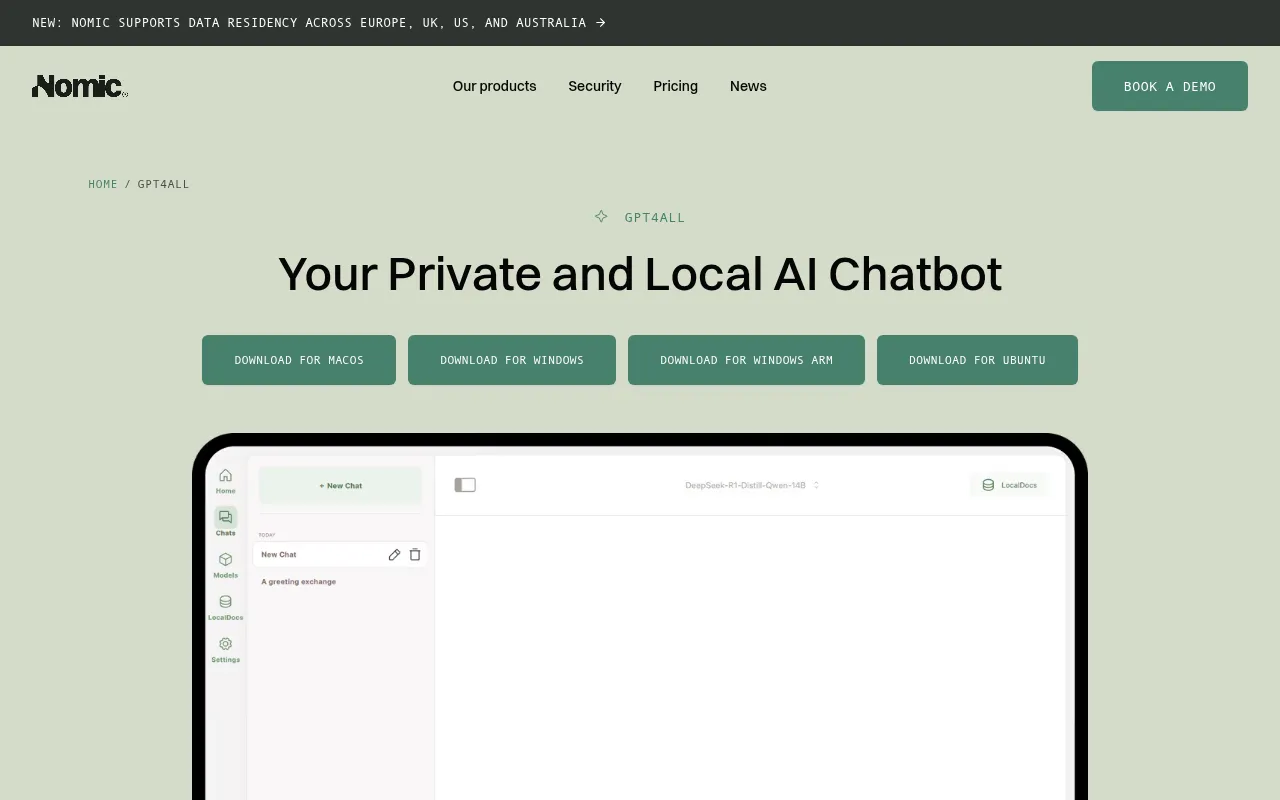
GPT4All runs large language models locally on desktop and laptop hardware, without requiring API calls or a GPU.
Read more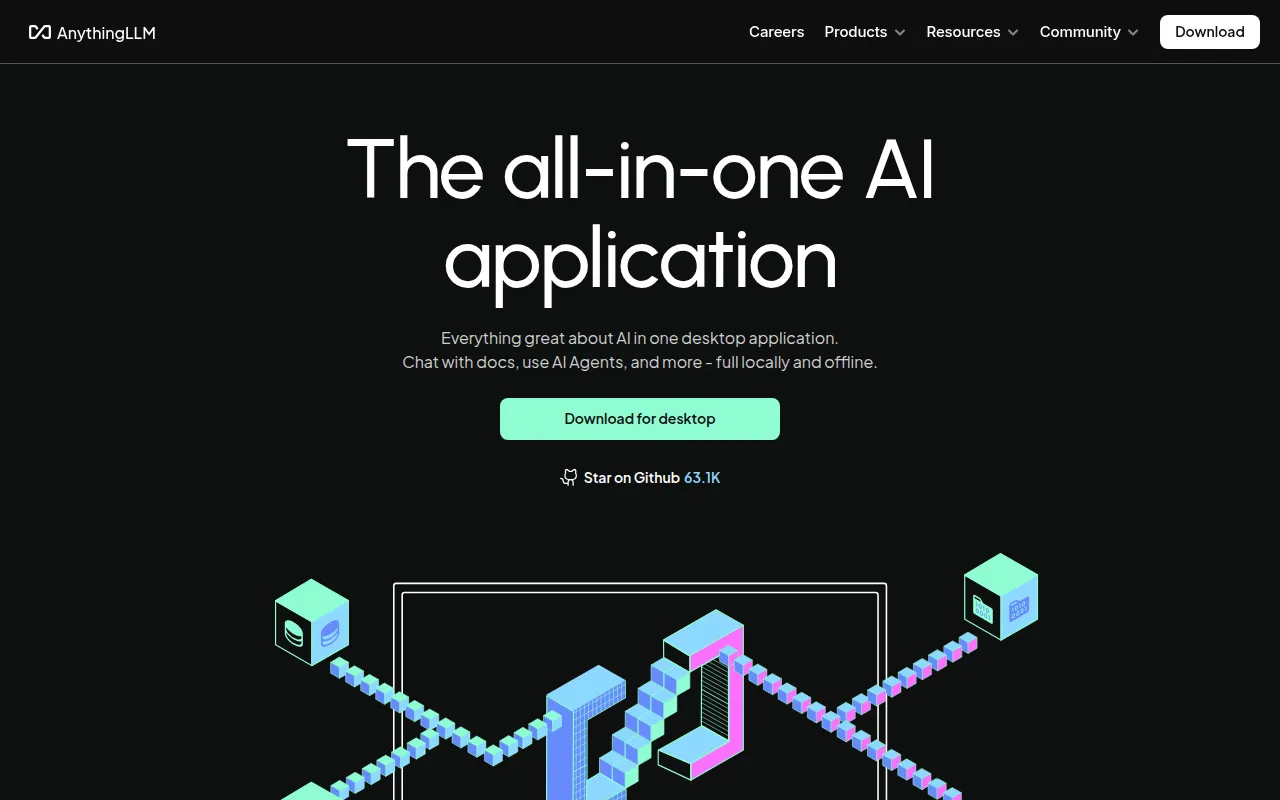
AnythingLLM is a self-hosted AI app for chatting with your documents, running AI agents, and connecting to any LLM provider.
Read more
LibreChat is a self-hosted AI chat platform that unifies OpenAI, Anthropic, Google, and other providers in one UI.
Read more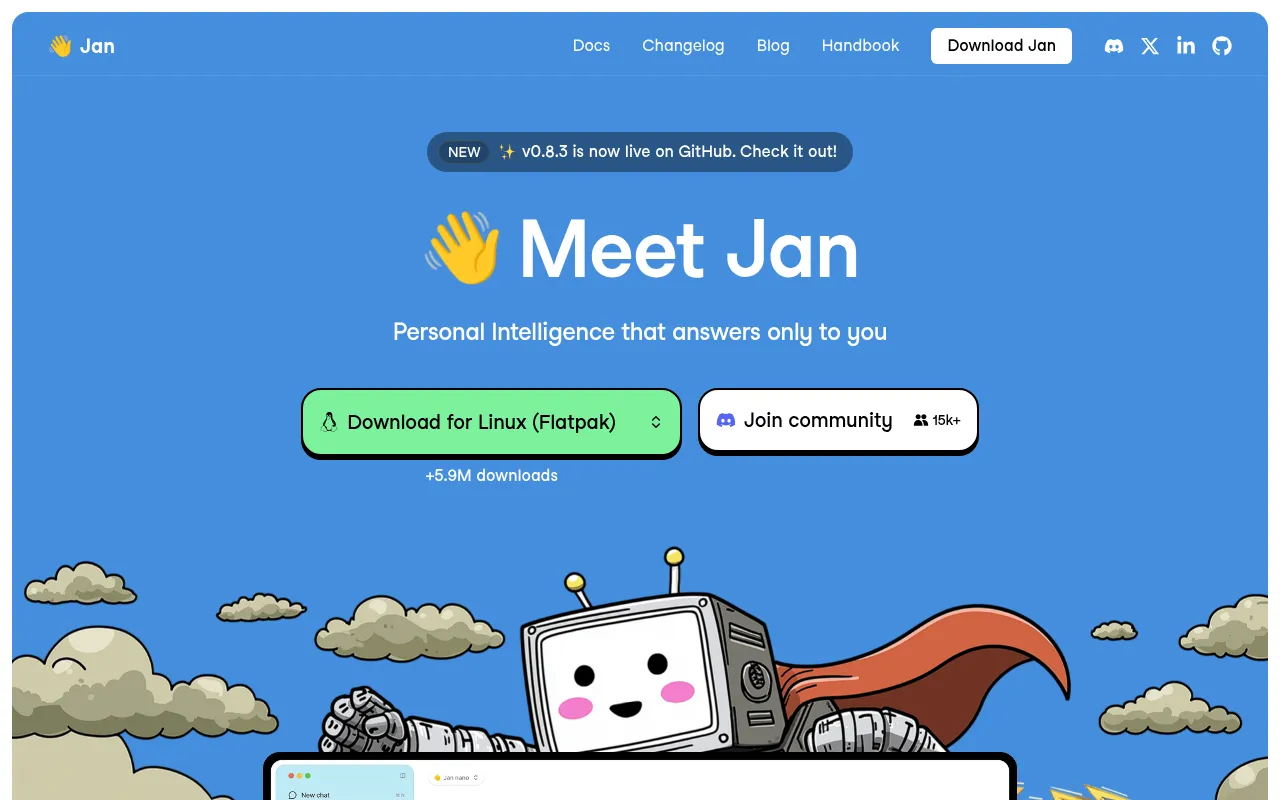
Jan is an open source, local-first ChatGPT alternative that runs LLMs on your own device with full privacy.
Read more
Khoj is an open-source, self-hostable AI assistant that chats with any LLM, searches your docs, and runs custom agents.
Read more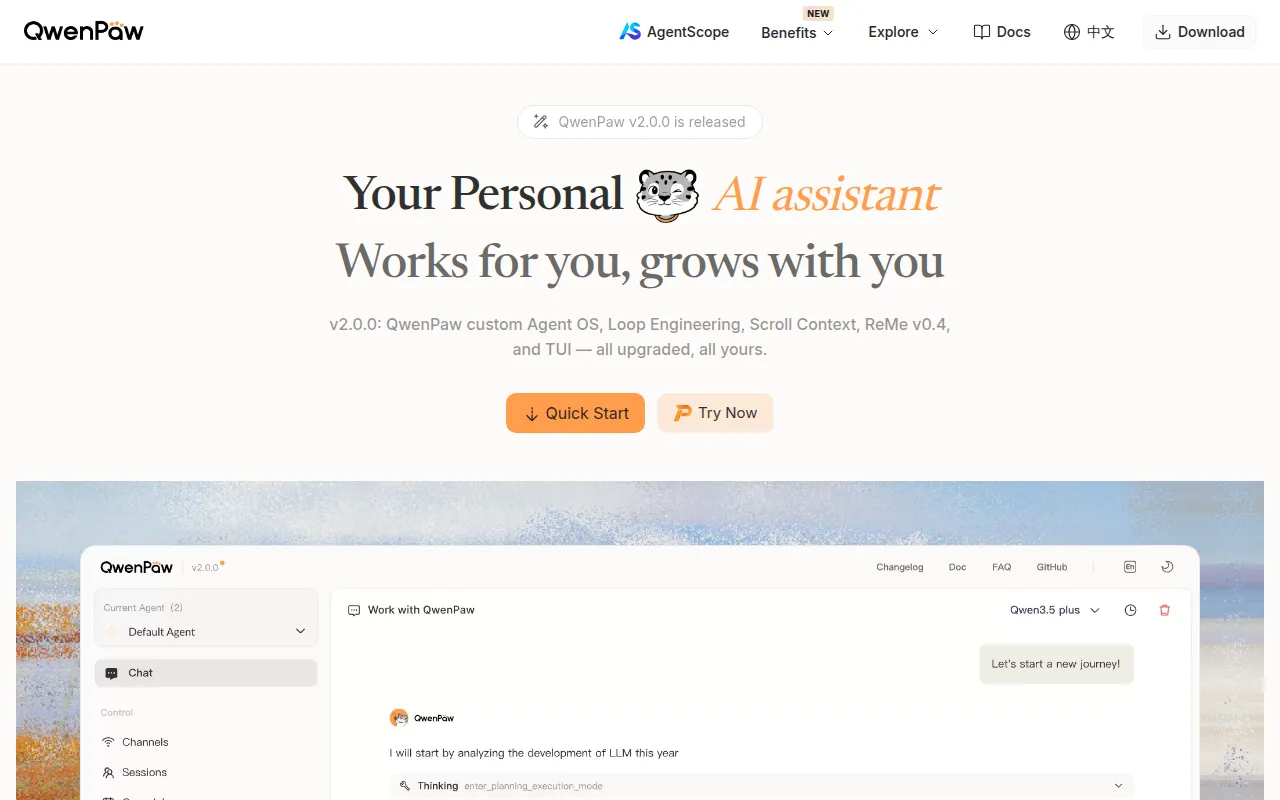
QwenPaw is an open-source, self-hosted AI assistant with persistent memory, sandboxed tool execution, and support for local or cloud LLMs.
Read more
Open-source, self-hosted platform for building AI agents grounded in your documents, with citations, any LLM, and full data privacy.
Read more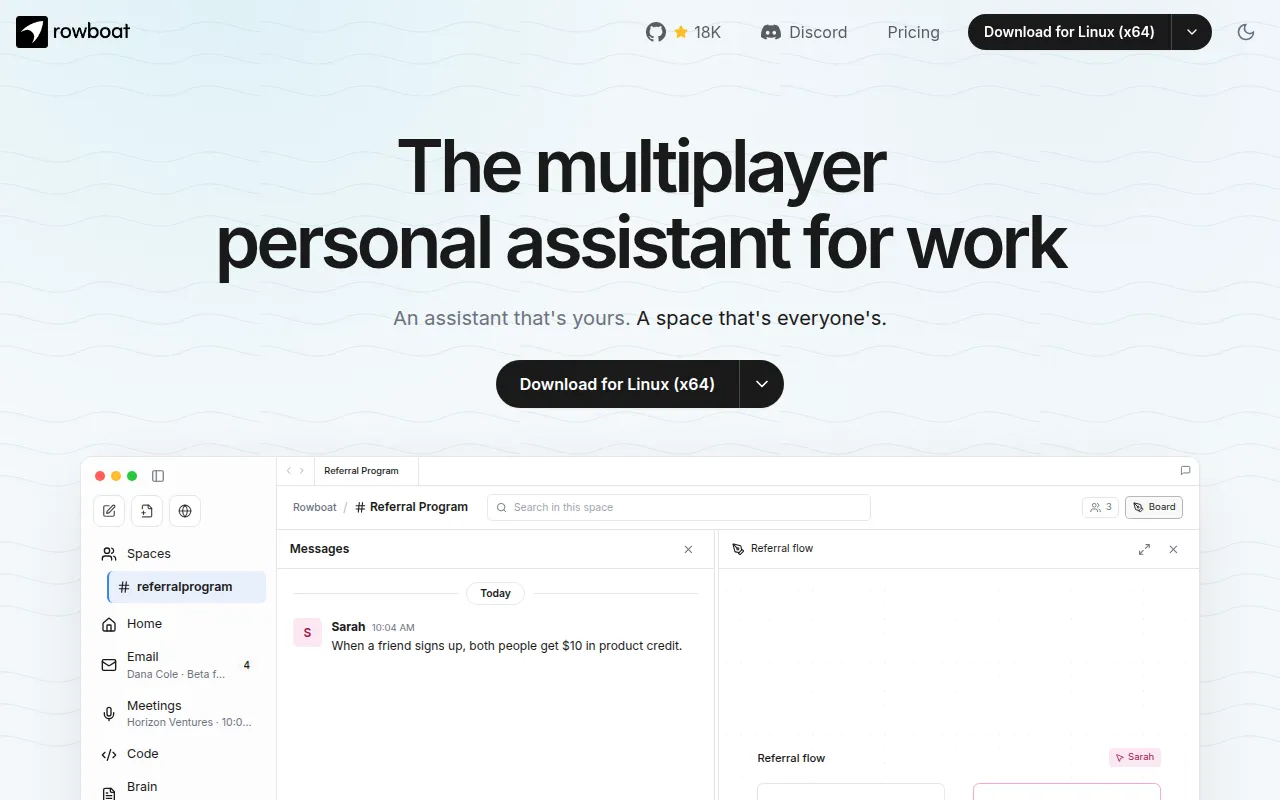
Rowboat is an open-source personal AI assistant that builds a local knowledge graph from your email, meetings, and notes, and works solo or with a team.
Read moreEvery message sent to ChatGPT passes through OpenAI's servers, which is a problem for teams handling client data, source code, or health records under contracts that restrict where that data can go. Open-source chat interfaces let you point at a local model running on your own hardware, or route requests through your own API keys to providers you choose, so conversation data stops leaving infrastructure you control.
Cost is the second reason. ChatGPT Plus and Team plans charge per seat regardless of usage. Self-hosted tools that connect to model APIs let you pay only for tokens actually consumed, and tools that run models locally remove the per-token cost entirely once the hardware is in place.
Decide first whether you need local inference (no internet connection required, but limited to models your hardware can run) or a multi-provider chat UI (needs internet and API keys, but gives access to larger hosted models). Check hardware requirements: some local runners need a GPU, others are tuned to run acceptably on CPU alone. For teams, look for multi-user auth and role management, since single-user desktop apps don't handle shared deployments well. If document search matters, confirm the tool supports retrieval-augmented generation (RAG) rather than just chat.
Jan and GPT4All both run entirely offline: Jan uses a llama.cpp backend and exposes an OpenAI-compatible local API, while GPT4All is a desktop app built specifically to run local LLMs on ordinary consumer hardware without requiring a GPU. AnythingLLM is local-first too, but built around retrieval-augmented generation, so it is suited to teams that want to chat with their own documents rather than just converse with a model. LobeChat (from LobeHub) is a multi-model chat framework with a plugin and agent marketplace, aimed at running your own branded AI assistant rather than a single chatbot. LibreChat is the closest to a direct ChatGPT clone with more range: it connects to OpenAI, Anthropic, Azure, Google Vertex, Groq, and OpenRouter behind one interface, supports multi-user accounts with authentication, and includes a code interpreter and an artifacts feature similar to Claude's canvas.


 Your brand here — Reach our audience of professional directory owners and boost your sales.