
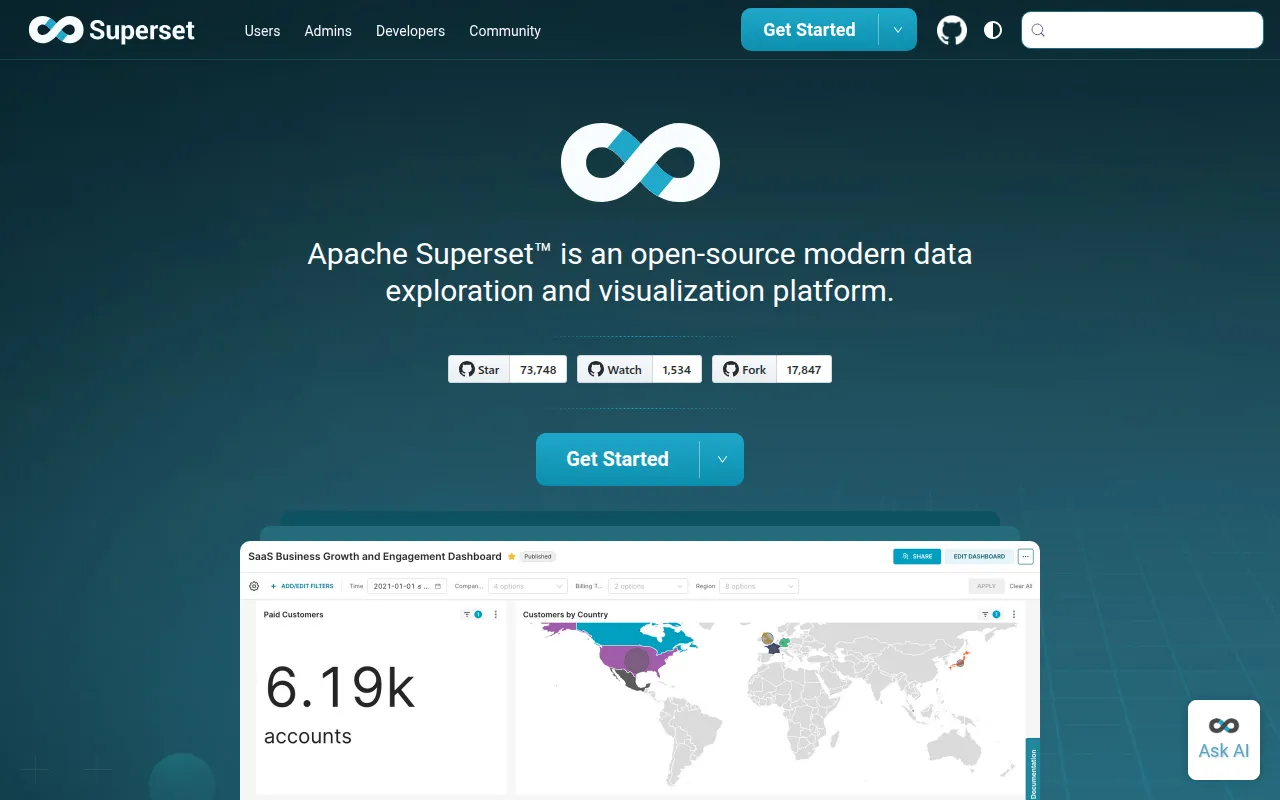
A business intelligence web application for building charts and dashboards, running SQL queries, and connecting to almost any SQL data source.
Read moreThe best open source alternative to Looker is Superset. If that doesn't suit you, we've compiled a ranked list of open source Looker alternatives to help you find a replacement.

A business intelligence web application for building charts and dashboards, running SQL queries, and connecting to almost any SQL data source.
Read more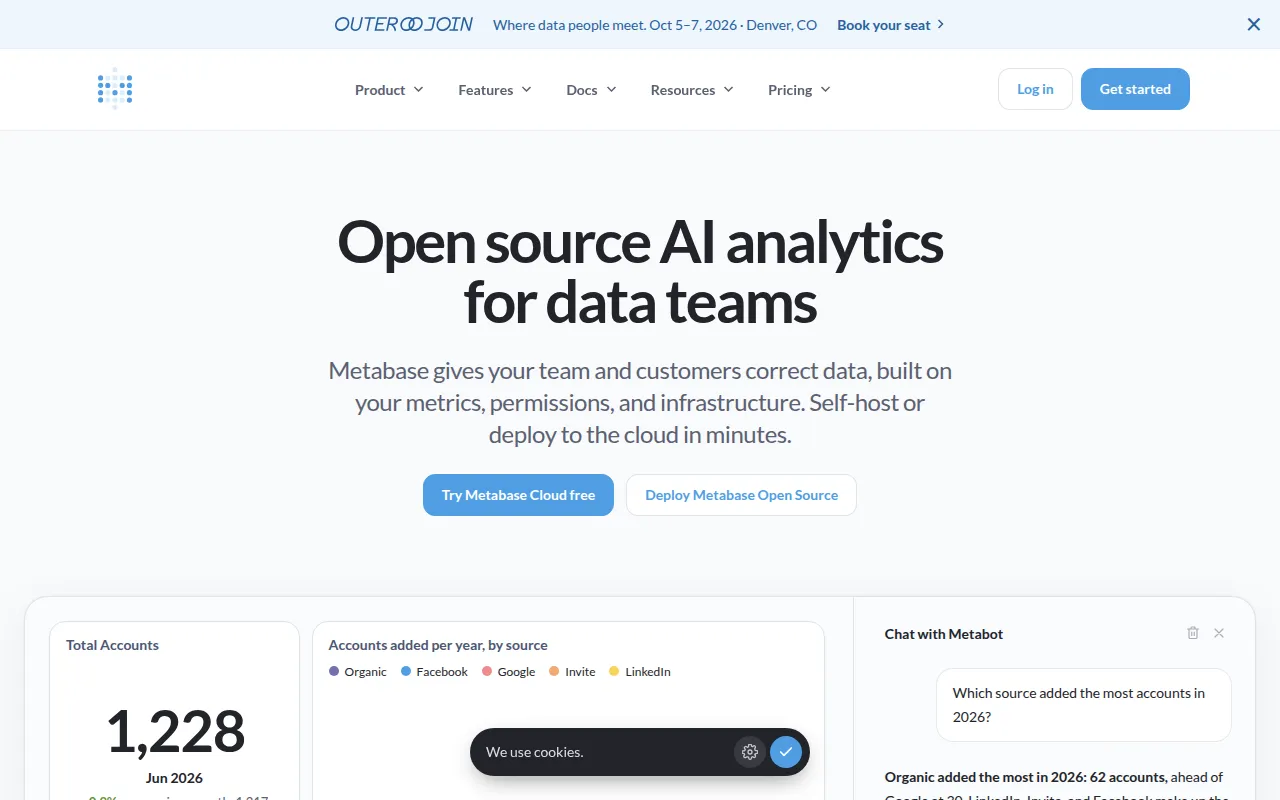
Open-source BI tool for building questions, dashboards, and alerts from your data, with a SQL editor, embedding, and self-hosted or cloud deployment.
Read more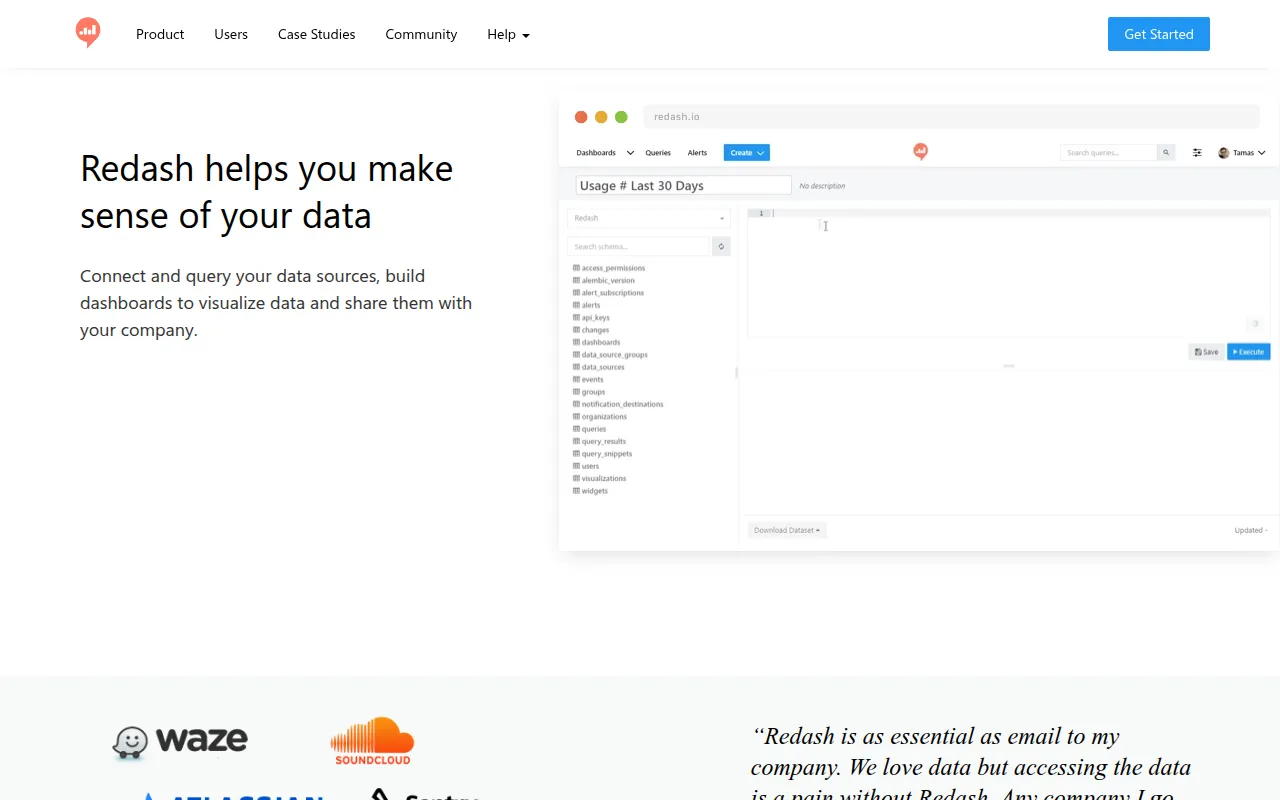
Redash lets teams query 35+ SQL and NoSQL sources, build drag-and-drop visualizations, and share dashboards with scheduled refreshes.
Read more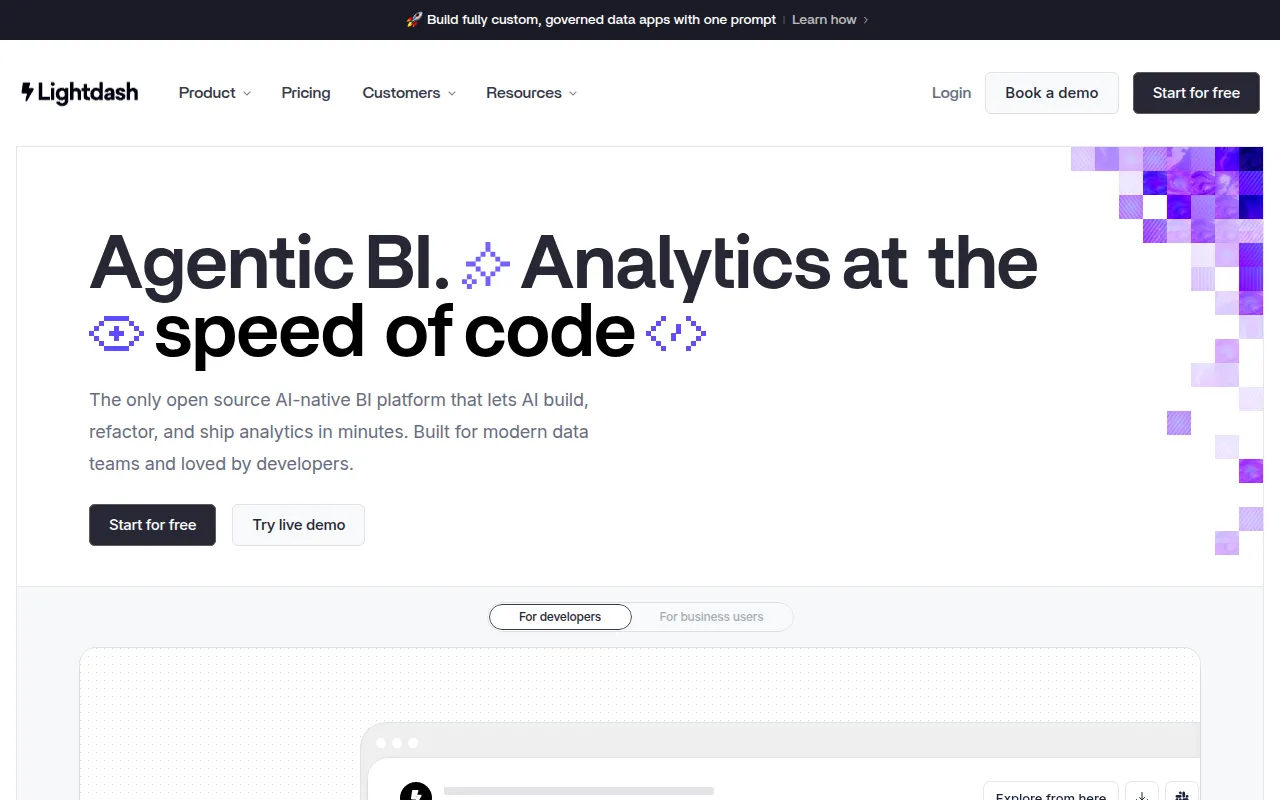
Lightdash is an open-source BI tool that turns your dbt project's metrics and dimensions into shareable dashboards.
Read moreLooker's pricing is built around enterprise contracts and platform user licenses, which puts it out of reach for smaller teams that still need shared dashboards and governed metrics. Self-hosting a BI tool means the queries touching your production or warehouse database run through infrastructure you operate, without sending credentials or query patterns through a third-party SaaS layer. It also avoids Looker's LookML lock-in, metric and dashboard definitions in an open-source tool are typically stored as plain SQL, YAML, or code that can be version-controlled and exported without a proprietary modeling layer.
Cost predictability is the practical driver for most teams: an open-source BI tool run on your own server scales with your infrastructure bill, not with a per-seat enterprise license negotiated annually.
Check how the tool defines metrics: Looker's model is LookML, and the closest open-source equivalent is a dbt-based semantic layer rather than a tool with its own proprietary modeling language. Confirm which databases are supported as data sources, since not every BI tool connects to every warehouse out of the box. Look at whether dashboards and queries live in git (easier for teams that already use dbt and CI) or purely in a database (simpler setup, less version control). Check the sharing and permissions model if multiple teams need separate access to the same underlying data.
Redash connects to a wide range of data sources through a SQL query editor, then turns queries into visualizations and shareable dashboards, closer in spirit to a lightweight, general-purpose BI tool than to Looker's modeling layer. Lightdash is the more direct Looker equivalent: it builds directly on top of dbt, so metrics are defined as code in your existing dbt project and version-controlled through git rather than configured in a separate BI-specific language, and it markets itself around agentic, code-speed analytics.


 Your brand here — Reach our audience of professional directory owners and boost your sales.