
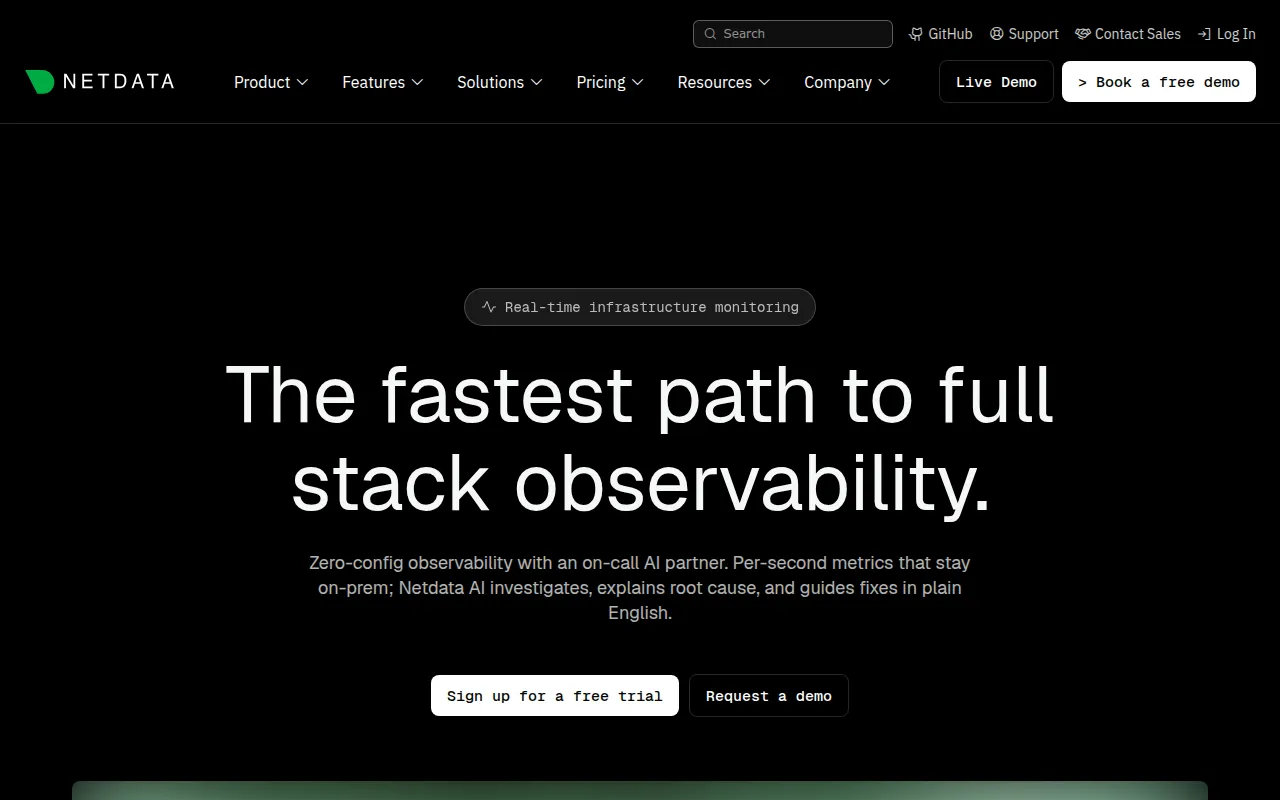
Netdata is a real-time infrastructure monitoring platform that collects per-second metrics with zero configuration and edge-based anomaly detection.
Read moreThe best open source alternative to Datadog is Netdata. If that doesn't suit you, we've compiled a ranked list of open source Datadog alternatives to help you find a replacement.

Netdata is a real-time infrastructure monitoring platform that collects per-second metrics with zero configuration and edge-based anomaly detection.
Read more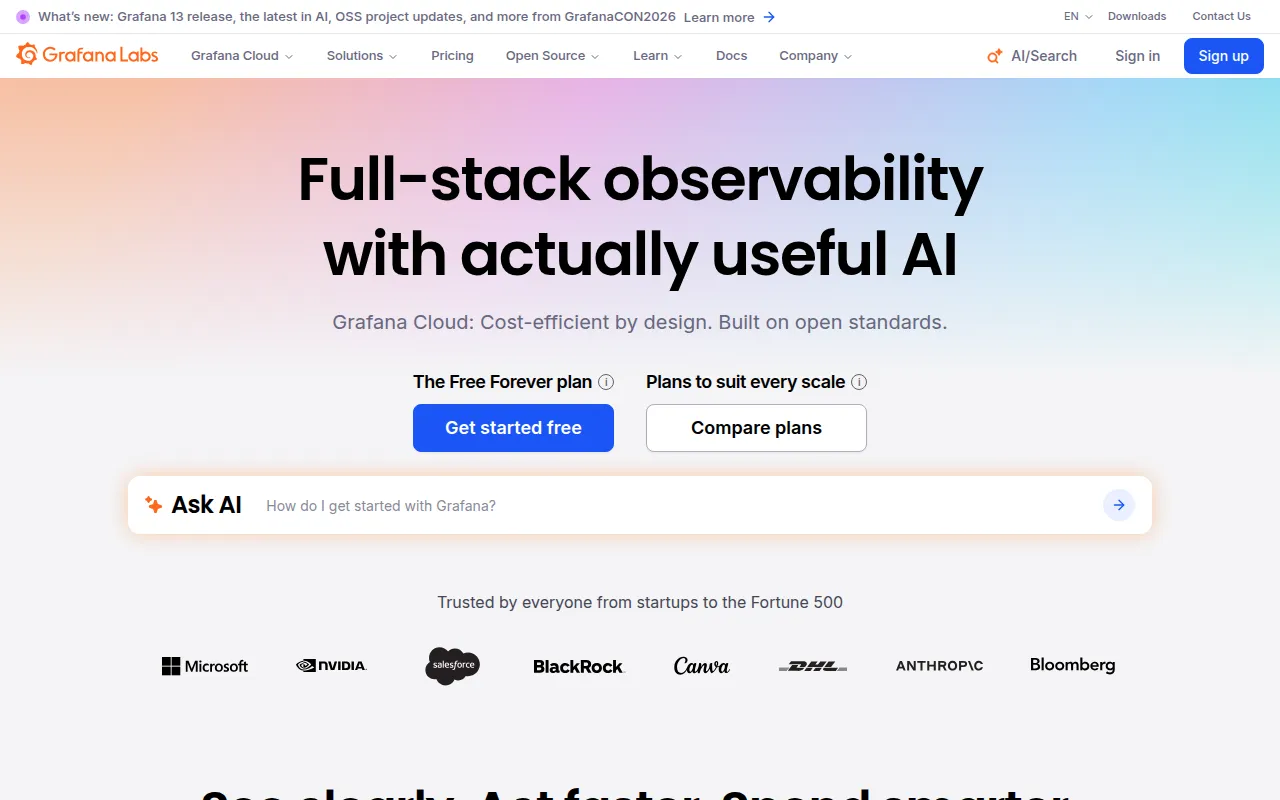
An open-source platform for building dashboards, exploring logs and metrics, and setting up alerts across mixed data sources.
Read more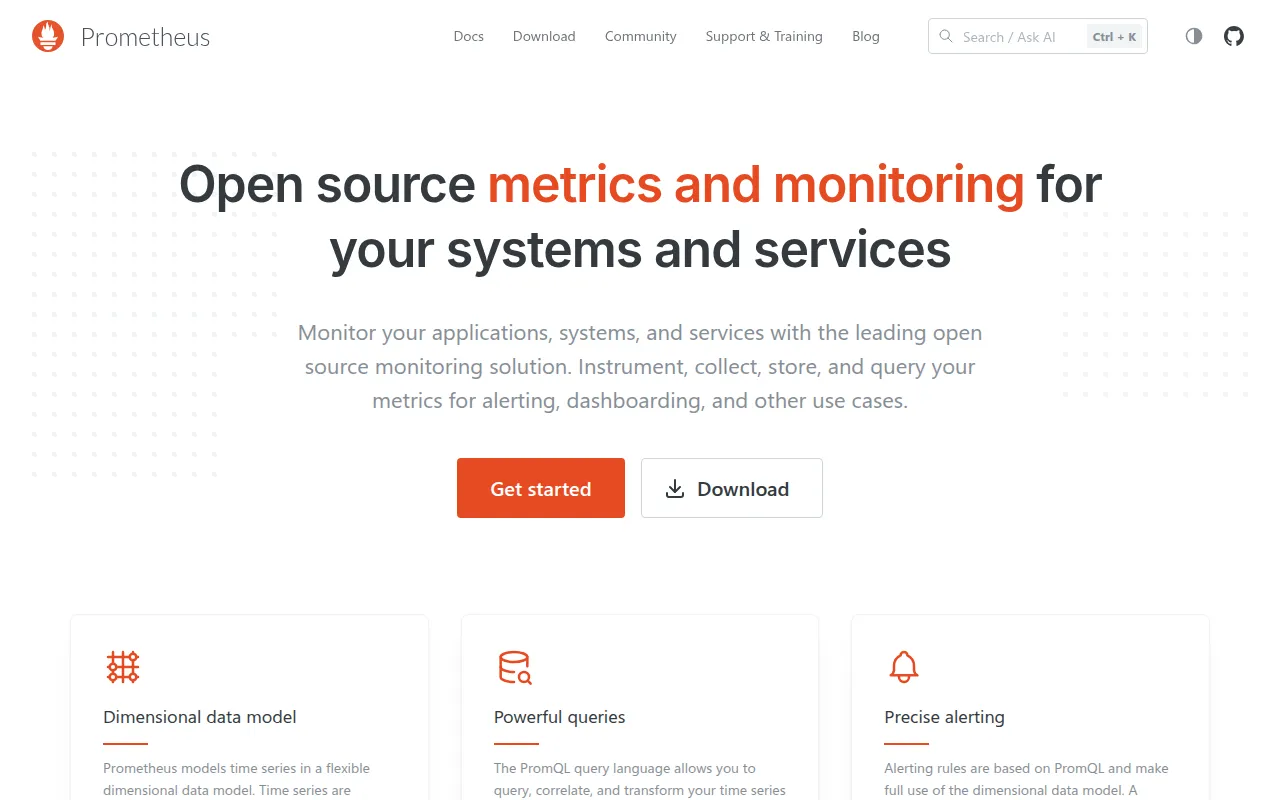
Prometheus collects time-series metrics from configured targets over HTTP, stores them, and lets you query and alert on them with PromQL.
Read more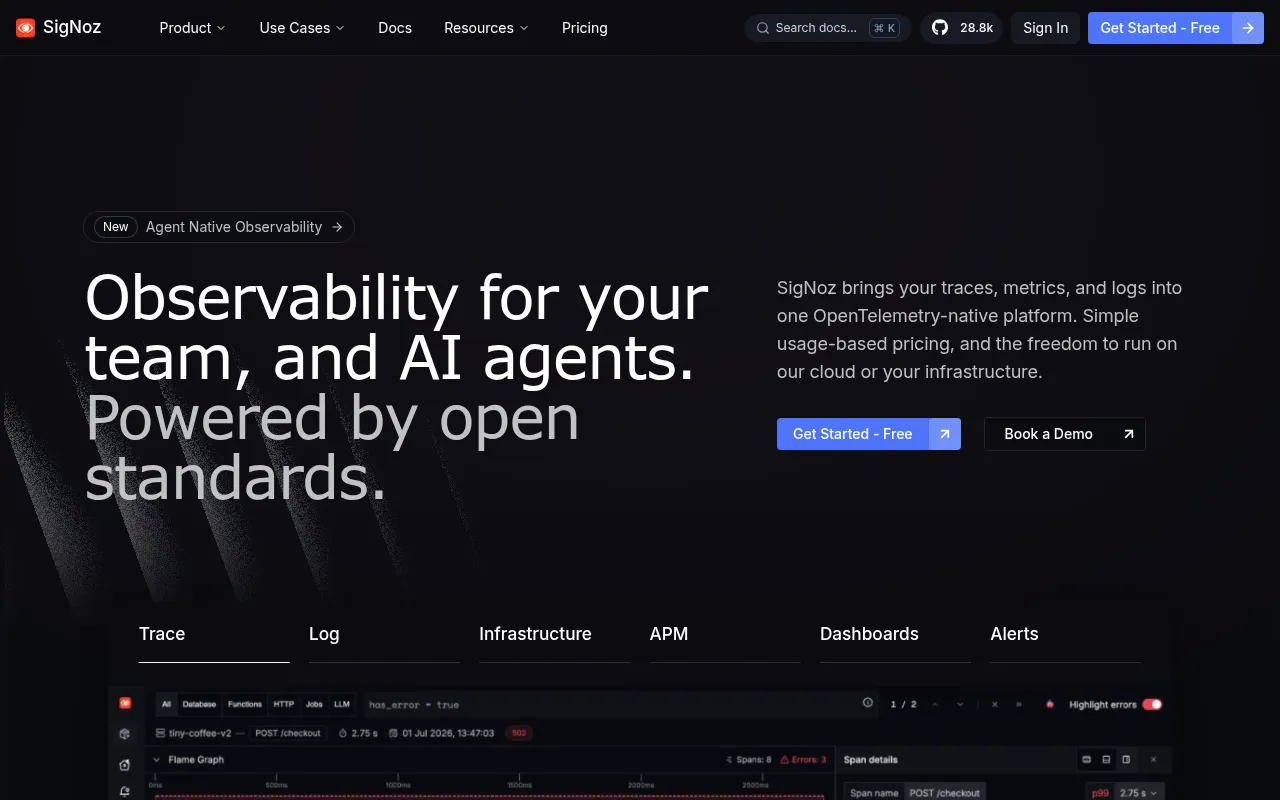
SigNoz is an open source, OpenTelemetry-native observability platform combining metrics, logs, traces, and alerts.
Read more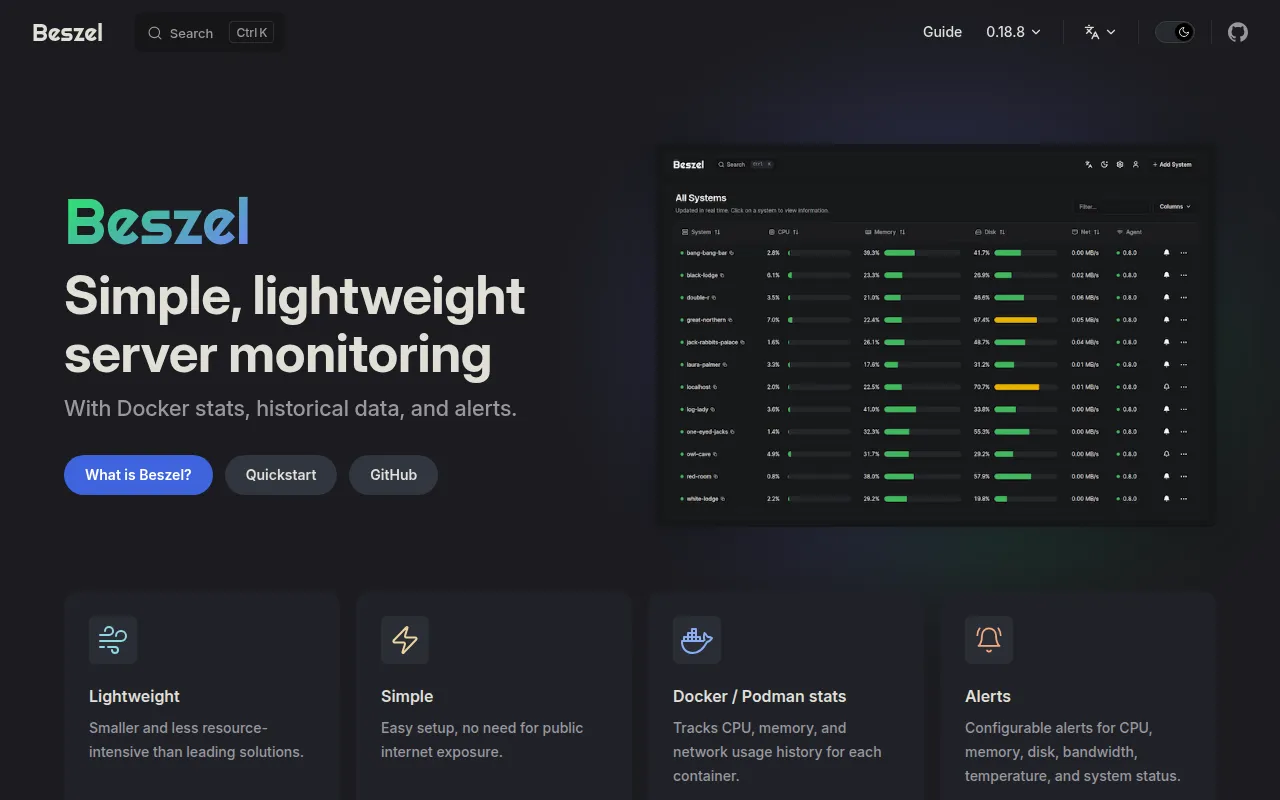
Beszel is an open-source, lightweight server monitoring tool with Docker stats, historical data, and configurable alerts.
Read more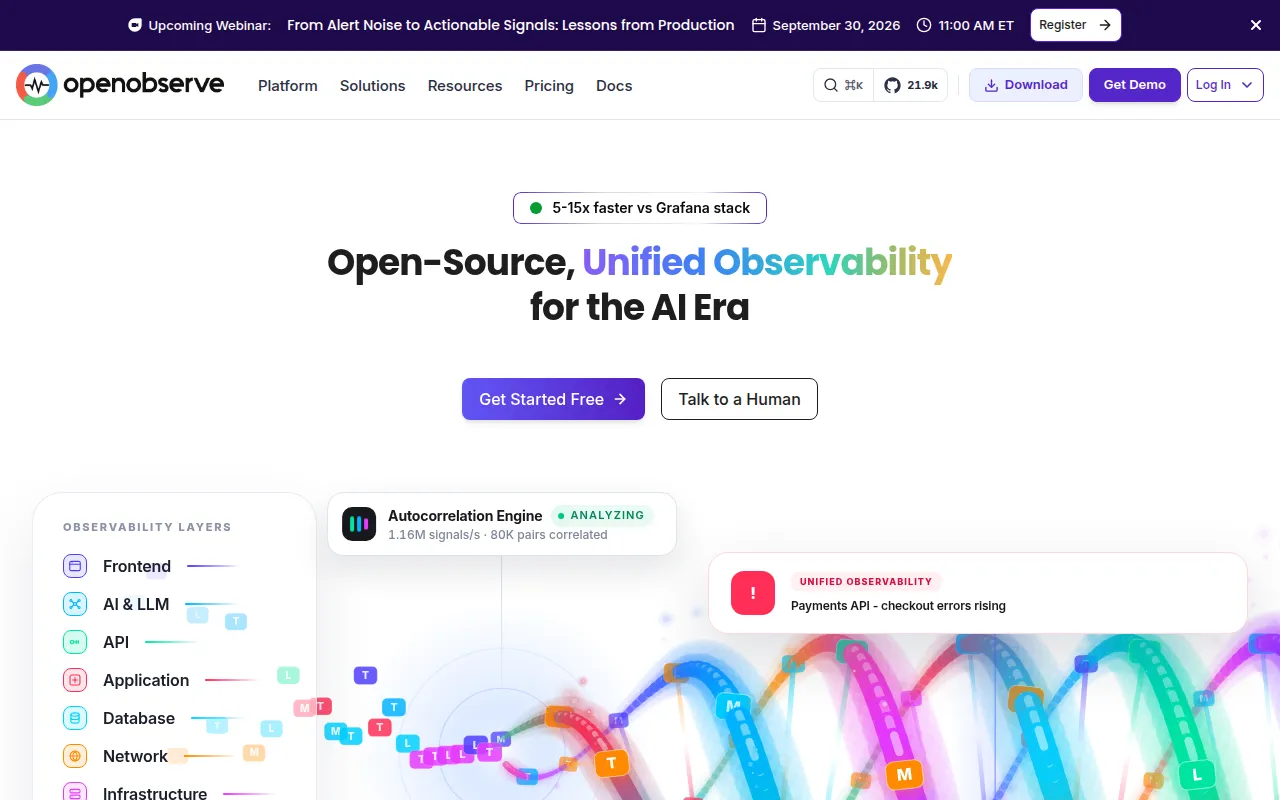
OpenObserve is an open-source observability platform for logs, metrics, traces, and frontend monitoring, built on Parquet and S3-native storage.
Read moreDatadog prices by host and by custom metric, so costs climb quickly as infrastructure grows or teams add more granular metrics, making the bill hard to predict months in advance. Self-hosted observability tools trade that variable pricing for a fixed infrastructure cost you control directly.
Logs, traces, and metrics often contain sensitive request data, user identifiers, and internal system details, so keeping that telemetry inside your own network rather than a third party's cloud reduces exposure. Open standards like OpenTelemetry also reduce vendor lock-in, since instrumentation is written against an open specification rather than a proprietary agent tied to one vendor.
There's a migration angle too: dashboards, alerts, and retained historical data built inside a closed observability platform do not transfer cleanly if you switch providers later, while data stored in an open-source tool's own database stays under your control from the start.
Cost predictability during incident response also matters. Teams sometimes hesitate to add deeper instrumentation to a usage-priced tool because it directly raises the bill, while a self-hosted platform's cost is tied to the infrastructure you already provisioned rather than to how much data you choose to collect.
Check whether a tool covers metrics, logs, and traces together, or focuses on a single signal type and expects you to pair it with something else. Native OpenTelemetry support matters directly if you already instrument services with OTel, since it determines whether existing instrumentation works without changes. Look at resource footprint, since some observability stacks need meaningful infrastructure of their own just to run at scale, sometimes rivaling the size of the systems they monitor. Retention and storage model deserve attention too, since observability data volume grows fast and can outpace naive storage choices within weeks of going into production. Finally, compare alerting and dashboarding depth against what your team actually uses day to day, rather than the full feature list on a project's homepage.
Netdata is focused on real-time infrastructure monitoring, built around fast, low-overhead data collection across a fleet of machines.
SigNoz is built natively on OpenTelemetry, combining logs, traces, and metrics in a single application, and is positioned as an open-source alternative to Datadog and New Relic.


 Your brand here — Reach our audience of professional directory owners and boost your sales.