
Ghost
Ghost is an open source, headless Node.js CMS for professional publishing, blogging, and newsletters, self-hosted or managed.
 Medium
 Substack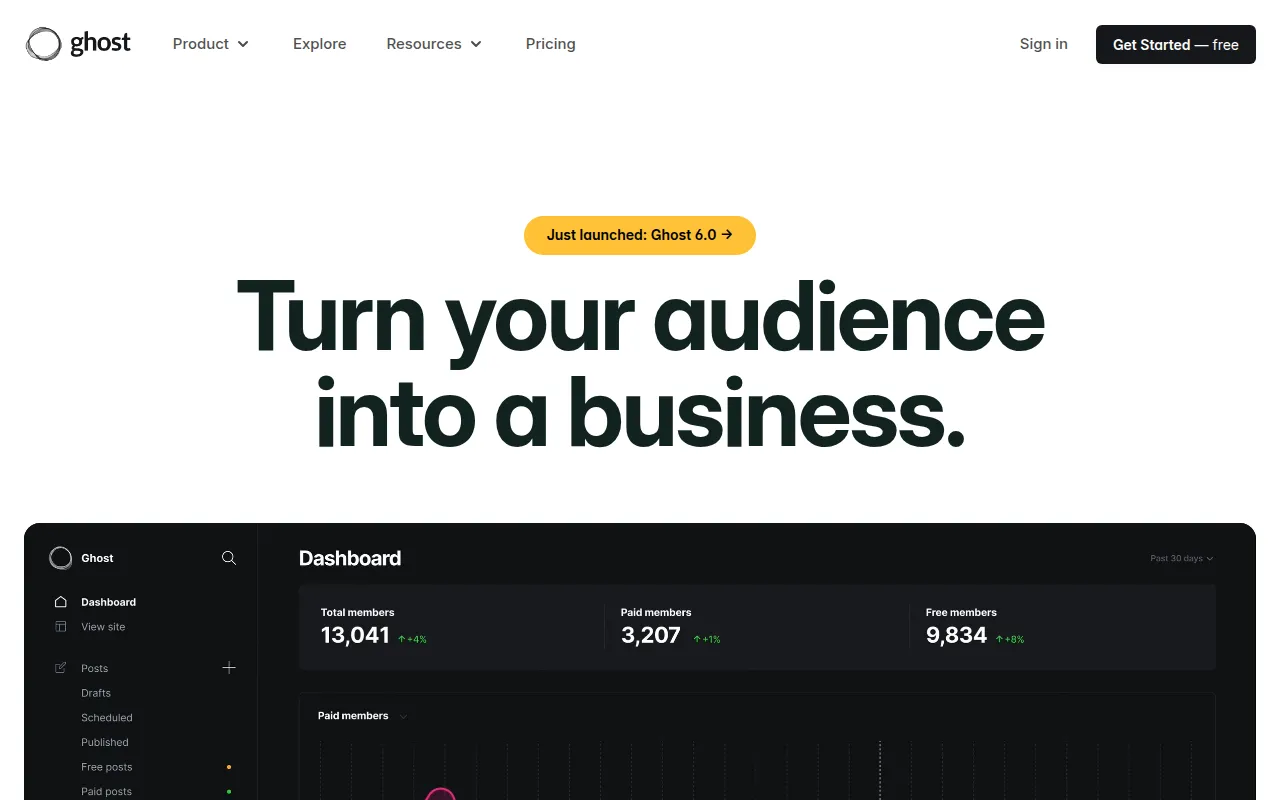
Ghost is an open source, headless Node.js content management system built for professional publishing, blogging, and newsletters. It's commonly used as a self-hosted alternative to Substack or Medium by writers and publications that want to own their platform, their audience, and their subscription revenue instead of renting them from a hosted network. Ghost separates content management from presentation, so it can power a themed website, a headless frontend, or both through its content API, and the project has been maintained continuously since 2013.
Key features
- Built-in newsletters and memberships: send email newsletters and manage paid subscriptions directly from Ghost, without bolting on a third-party service.
- Headless-capable architecture: pull posts into any frontend framework through the Content API, or run one of Ghost's official themes out of the box.
- Native SEO and social tooling: structured metadata, sitemaps, and social card previews are handled by default, without additional plugins.
- Editor built for writing: a card-based editor supports rich embeds, code blocks, and bookmarks without a page-builder learning curve.
- REST and webhook APIs: automate publishing workflows or connect Ghost to other tools in your stack.
- Self-hostable or managed: run Ghost yourself with the
ghost-clitool, or use the official Ghost(Pro) hosted service for a managed instance. - Documented trademark policy: Ghost and the Ghost logo are trademarks of the Ghost Foundation, with a public policy covering acceptable usage for themes, forks, and integrations.
Ideal use cases
Publications moving off Substack or Medium use Ghost to keep full ownership of their subscriber list, since memberships and newsletters are native features rather than a bolted-on add-on. Developer-focused teams also run Ghost headless, pulling content into a Next.js or Astro frontend through the Content API while keeping Ghost's editor and newsletter tooling as the backend.
Getting started
The fastest path to a local instance is npm install ghost-cli -g followed by ghost install local, which sets up a working site in under a minute according to the project's own documentation. Production installs use ghost install on a server, which can also configure SSL automatically via Let's Encrypt. Ghost(Pro), the managed hosting option, funds the Ghost Foundation and handles CDN, backups, security, and maintenance for teams that don't want to run their own server, with all Ghost(Pro) revenue going back into the open source project.
Tech stack
Ghost is a Node.js application backed by MySQL or SQLite, distributed under the MIT license, and has powered over 100 million downloads since its 2013 launch. Contributors who want to hack on core files or build themes are pointed to a dedicated development setup guide separate from the production install path, and the project publishes its own changelog newsletter to track releases.
Getting help
Support comes from a large community on the Ghost forum, with 24/7 email support reserved for Ghost(Pro) customers, and release updates are also posted through the project's changelog and social channels.
Tags:
Frequently asked questions







Similar to Ghost


