
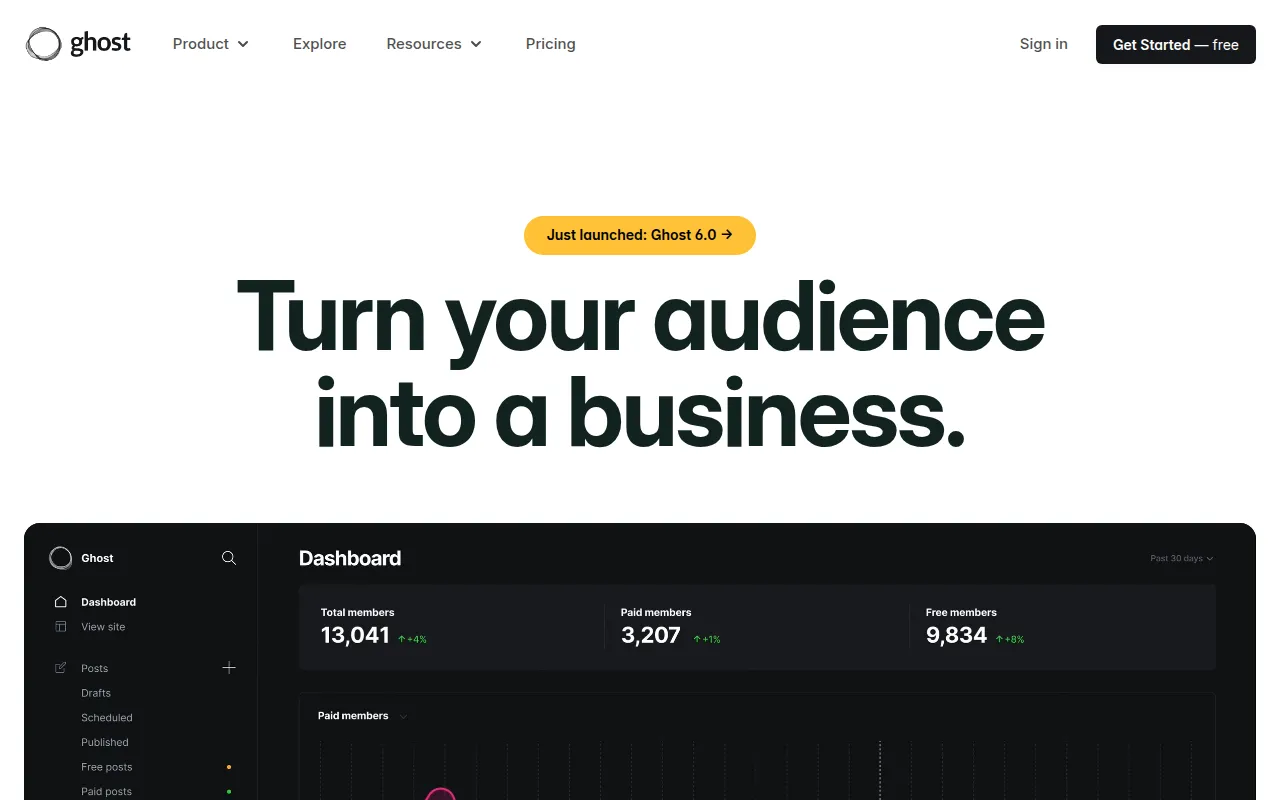
Ghost is an open source, headless Node.js CMS for professional publishing, blogging, and newsletters, self-hosted or managed.
Read moreThe best open source alternative to Substack is Ghost. If that doesn't suit you, we've compiled a ranked list of open source Substack alternatives to help you find a replacement.

Ghost is an open source, headless Node.js CMS for professional publishing, blogging, and newsletters, self-hosted or managed.
Read moreSubstack takes a percentage cut of paid subscription revenue on top of Stripe's processing fees, and the platform controls the domain and subscriber relationship by default unless a publisher pays extra to fully customize it. The subscriber list also lives inside Substack's infrastructure, which limits how that data can be used outside their tools.
Self-hosting a publishing platform removes the revenue cut entirely: whatever a subscriber pays goes to the publisher minus payment processor fees, not a platform fee on top. It also means the subscriber list, email sending, and site itself are assets a publisher owns outright rather than renting.
A newsletter platform needs paid membership tiers, a clean writing and editing experience, email delivery that doesn't land in spam, and a way to run the site on a custom domain without platform branding. Check whether the tool separates content management from payments, so switching payment processors doesn't mean rebuilding the site, and whether it has a theme system for a site that doesn't look like every other newsletter on the same platform. Portability of the subscriber list, being able to export it in full at any time, is worth confirming before committing years of writing to a platform.
Ghost is built on Node.js and combines a headless CMS with built-in newsletter sending and membership or subscription payments through Stripe. Writers get a Markdown-based editor, and publishers can offer free and paid tiers with gated content, all from one admin panel. Because Ghost is self-hosted, or run through Ghost's own managed hosting, there's no revenue-share cut on subscriptions beyond what Stripe charges for processing. Ghost supports custom themes built with its templating language, so a publication's site doesn't have to look like a generic template, and its API exposes content for headless setups where the frontend is built separately from the CMS.

 Your brand here — Reach our audience of professional directory owners and boost your sales.