
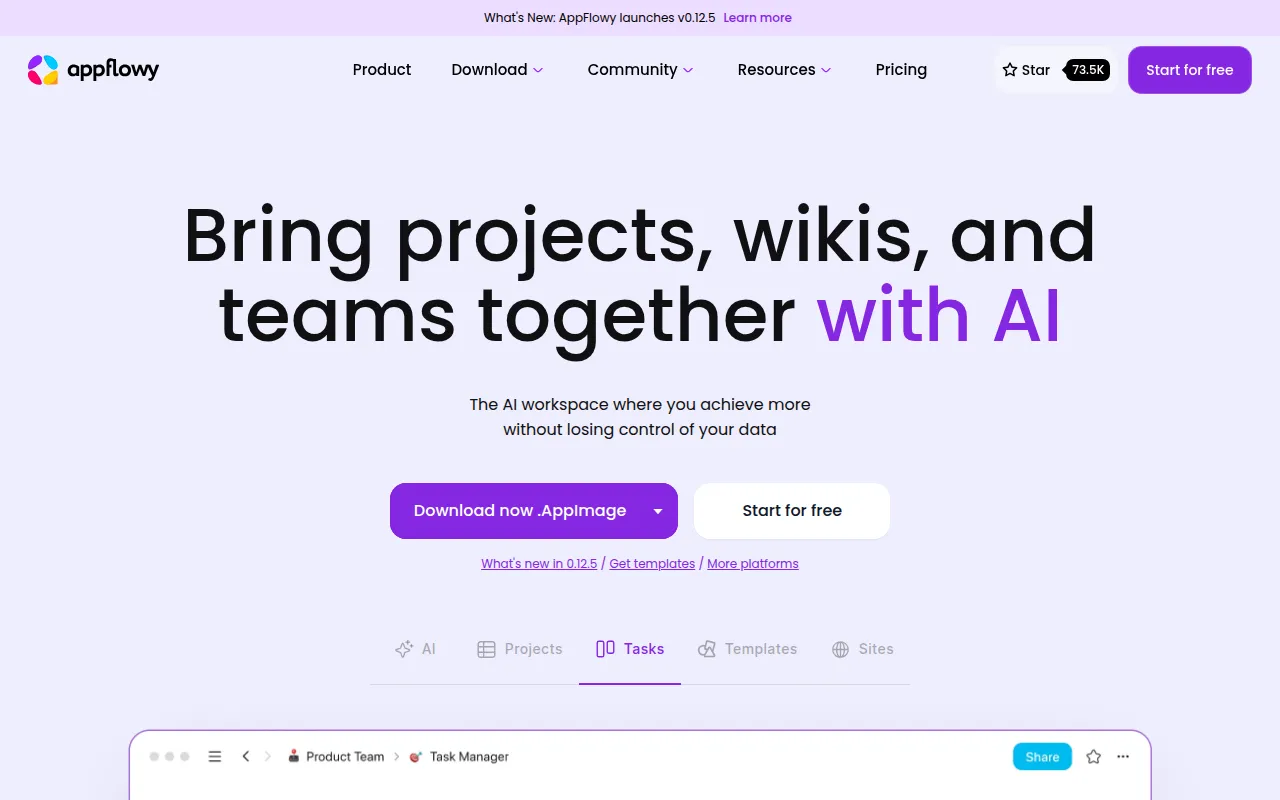
An open-source, AI-enabled workspace app for docs, kanban boards, and databases, positioned as a self-hostable alternative to Notion.
Read moreThe best open source alternative to Confluence is AppFlowy. If that doesn't suit you, we've compiled a ranked list of open source Confluence alternatives to help you find a replacement.

An open-source, AI-enabled workspace app for docs, kanban boards, and databases, positioned as a self-hostable alternative to Notion.
Read more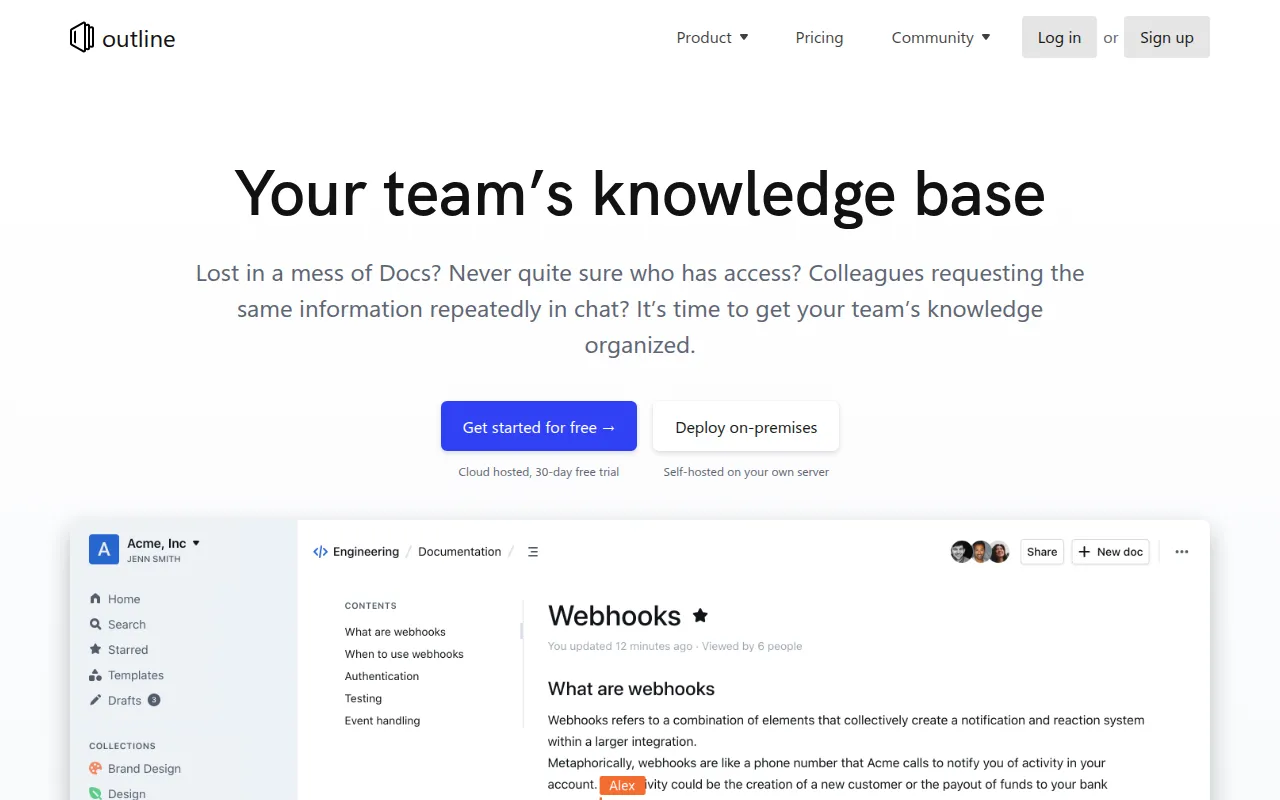
Self-hostable team wiki and knowledge base with a collaborative editor, built on React and Node.js, also available as a hosted service.
Read more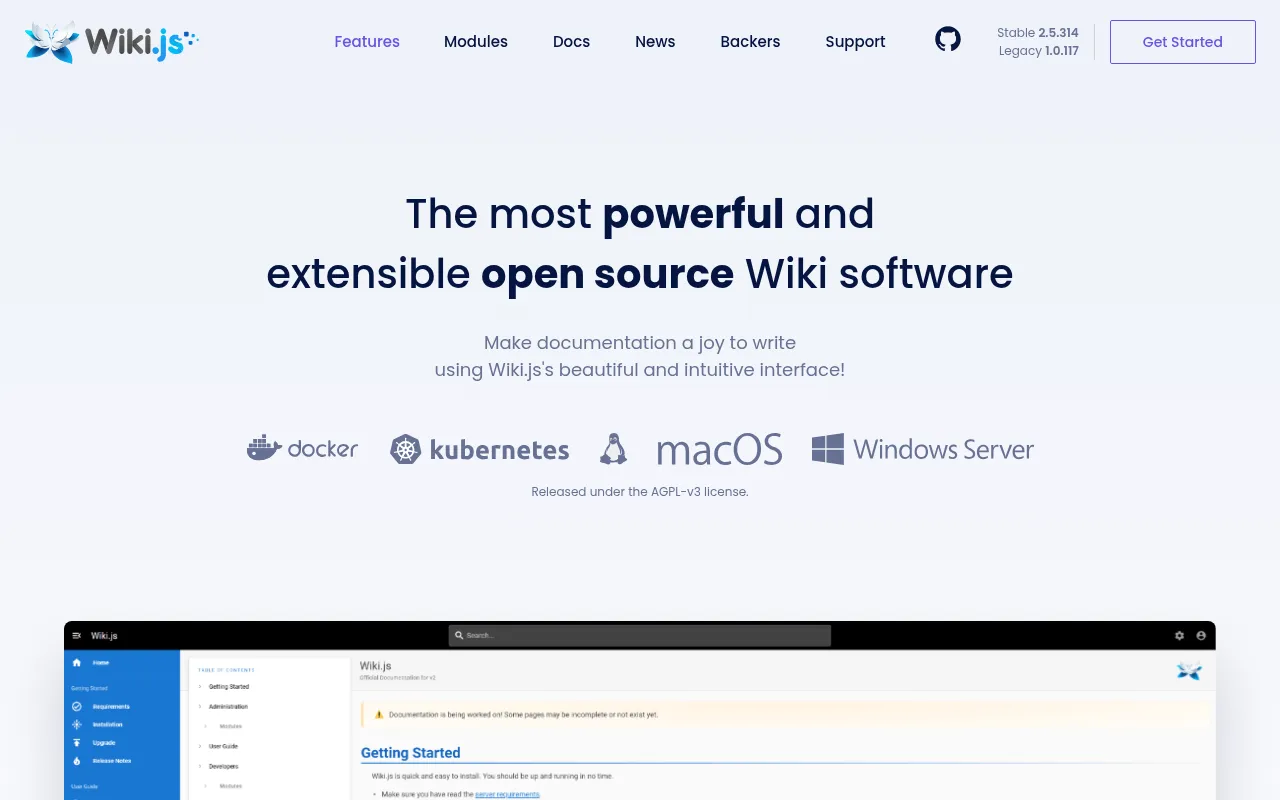
Wiki.js is a self-hosted wiki app built on Node.js with Markdown editing, access control, and Git-backed storage.
Read more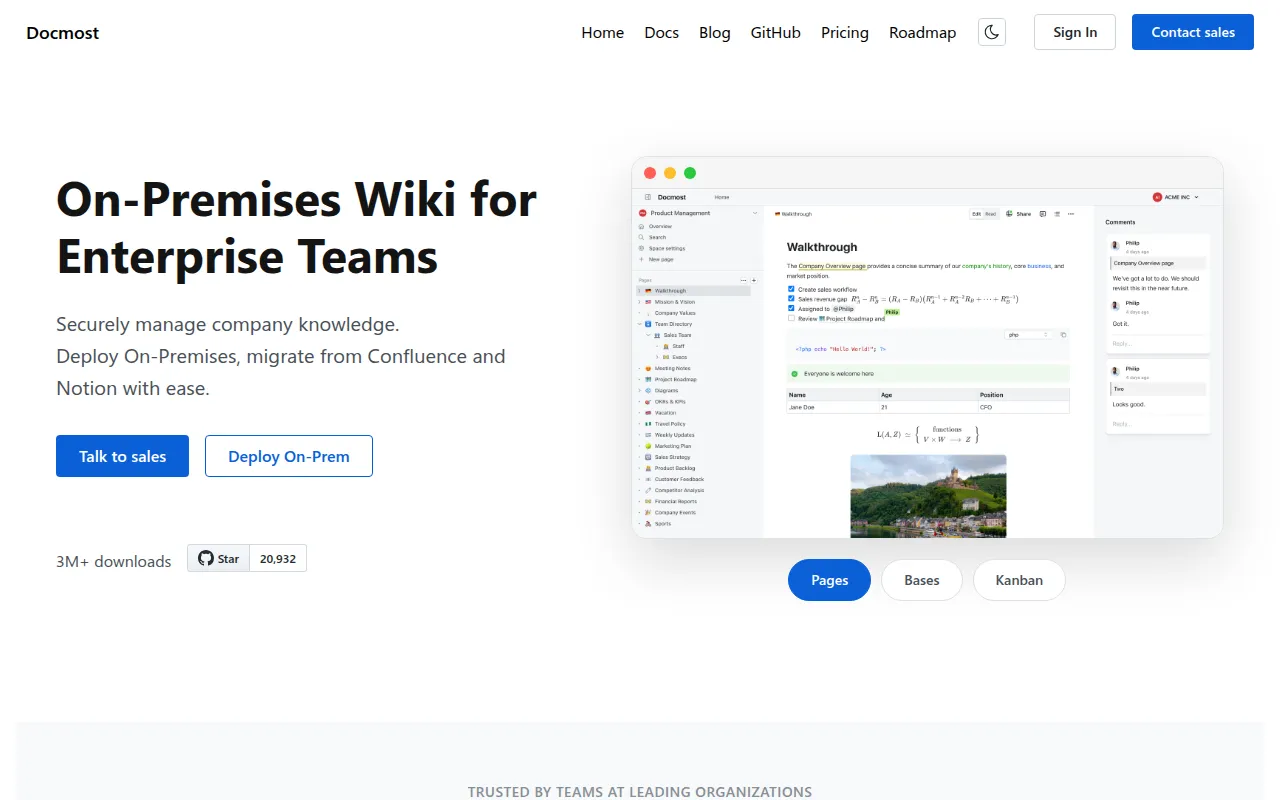
Docmost is an open source collaborative wiki and documentation platform with real-time editing, diagrams, spaces, and permissions.
Read more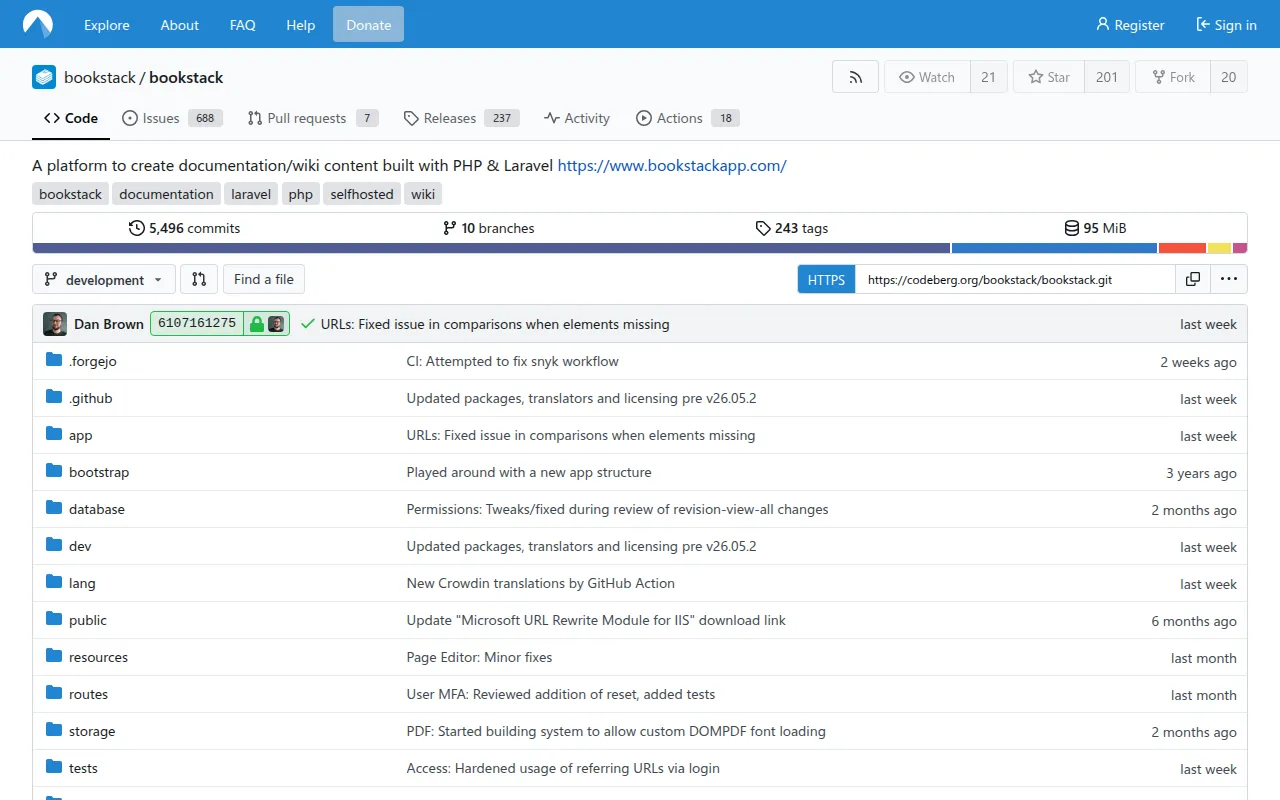
BookStack is an open source platform for organizing documentation and information into books, chapters, and pages.
Read moreConfluence pricing is per user and rises with team size, and Atlassian has been steadily narrowing its server and data center options in favor of cloud-only billing, leaving fewer self-hosted paths for teams that need one. Open-source wikis fill that gap directly.
Documentation and internal knowledge bases often contain sensitive product plans, credentials, and architecture details, so keeping that content on infrastructure your organization controls matters for compliance or air-gapped environments. Full database access also means you can back up, search, or integrate documentation content directly instead of working through a rate-limited API.
Portability is a real concern too: Confluence's storage format makes a full, faithful export difficult once a space has years of pages, macros, and attachments in it. Tools that store pages in Markdown or a standard database from day one avoid that problem entirely.
Search is another practical reason teams move: a self-hosted wiki backed by a full-text search index you control can be tuned or replaced without waiting on a vendor's roadmap, and page history stays queryable directly against the database rather than through a limited API.
Check the editor first: rich WYSIWYG editing versus Markdown-based authoring changes how technical writers and non-technical contributors both experience the tool. Look at page organization, since nested spaces and pages behave very differently from a flat page list once a wiki grows past a few hundred articles. Permissions granularity matters if multiple teams will share one instance and need separate visibility. Version history and side-by-side page comparison are worth checking directly rather than assuming. Decide whether you need a general-purpose wiki or something closer to project-specific documentation, since the tools in this category lean in different directions. Search quality and file attachment handling are also worth testing directly before committing to a migration.
Wiki.js runs on Node.js and supports Markdown alongside multiple storage backends, including Git and a standard database, as general-purpose wiki software.
Docmost is built explicitly to cover both Confluence and Notion use cases, combining wiki-style pages with a real-time collaborative documentation editor.
BookStack organizes content into a book, chapter, and page hierarchy rather than a flat page tree, aimed at technical documentation, and its primary repository is now managed on Codeberg instead of GitHub.


 Your brand here — Reach our audience of professional directory owners and boost your sales.