
ToolJet
ToolJet is an open source, low-code platform for building and deploying internal tools, admin panels, and dashboards.
 Retool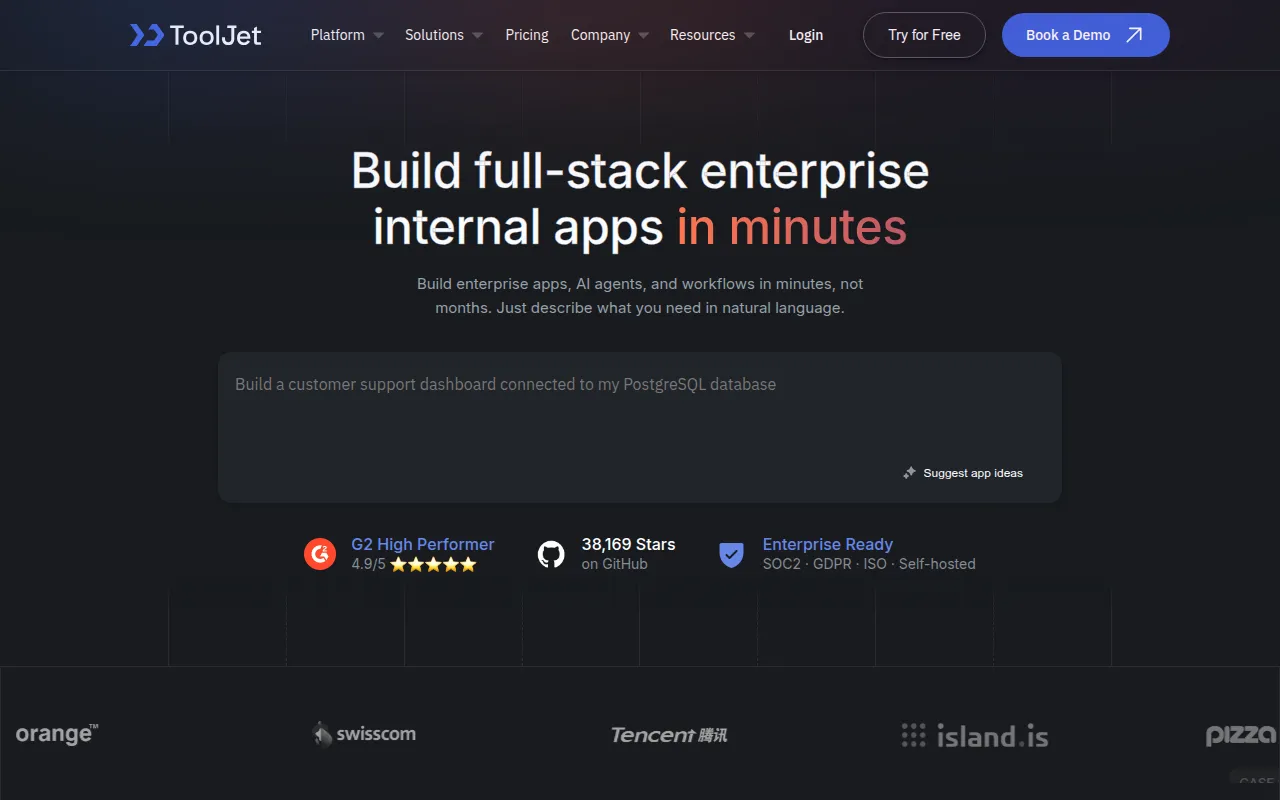
ToolJet is the open source foundation of ToolJet's internal tool platform: a drag-and-drop visual builder for connecting to databases, APIs, and SaaS tools to assemble admin panels, dashboards, and internal workflows. It's a common open source alternative to Retool, giving teams a self-hostable option instead of a hosted proprietary builder. The Community Edition (CE) covers the core builder; a separate commercial "ToolJet AI" edition adds AI app generation and enterprise features like SSO and audit logs on top of the same open source base. ToolJet is listed on both the AWS and Azure marketplaces, and the project publishes a public roadmap so contributors and users can track recently shipped features and what's planned next. Documented tutorials, including a time tracker application, a CMS built on MongoDB, and an AWS S3 browser, walk through building real internal tools end to end.
Key features
- Visual drag-and-drop builder: 60+ pre-built responsive components including tables, charts, forms, lists, and progress bars.
- 80+ data source connectors: Databases, REST/GraphQL APIs, cloud storage, and SaaS tools connect through built-in data sources.
- Built-in no-code database: ToolJet Database provides a database you can query and edit without leaving the builder.
- Multiplayer editing: Multiple developers can build the same app simultaneously, with inline comments and mentions for review.
- Run code inline: JavaScript and Python can run directly inside app logic, for custom logic beyond the visual builder.
- Flexible deployment: Self-host with Docker, Kubernetes, or on AWS, GCP, and Azure, or use ToolJet Cloud for a managed instance.
- CLI-based extensibility: The ToolJet CLI lets you build custom plugins and connectors beyond the built-in data sources.
Self-hosting and deployment
ToolJet ships official guides for Docker, Kubernetes (including managed EKS, GKE, and AKS), AWS EC2 and ECS, Google Cloud Run, Azure Container Instances, DigitalOcean, OpenShift, and Helm charts, alongside listings on the AWS and Azure marketplaces. Security features built into self-hosted deployments include AES-256-GCM encryption, a proxy-only data flow model, and SSO support, so credentials for connected data sources aren't exposed directly to the browser.
Getting started
The fastest way to try ToolJet locally is Docker:
docker run --name tooljet --restart unless-stopped -p 80:80 --platform linux/amd64 -v tooljet_data:/var/lib/postgresql/13/main tooljet/try:ee-lts-latest
This starts a local instance backed by a persistent Postgres volume. For anyone who doesn't want to manage infrastructure, ToolJet Cloud offers a hosted account instead. The project follows a git-flow branching model, with develop as the base branch and stable releases tagged as v1.x.x on main. For upgrades, the project recommends tracking LTS releases rather than the latest tag, since LTS builds carry stability fixes, security patches, and performance improvements. Community support runs through a public Slack workspace and GitHub Issues for bug reports and feature requests.
Tags:
Frequently asked questions






Similar to ToolJet


