
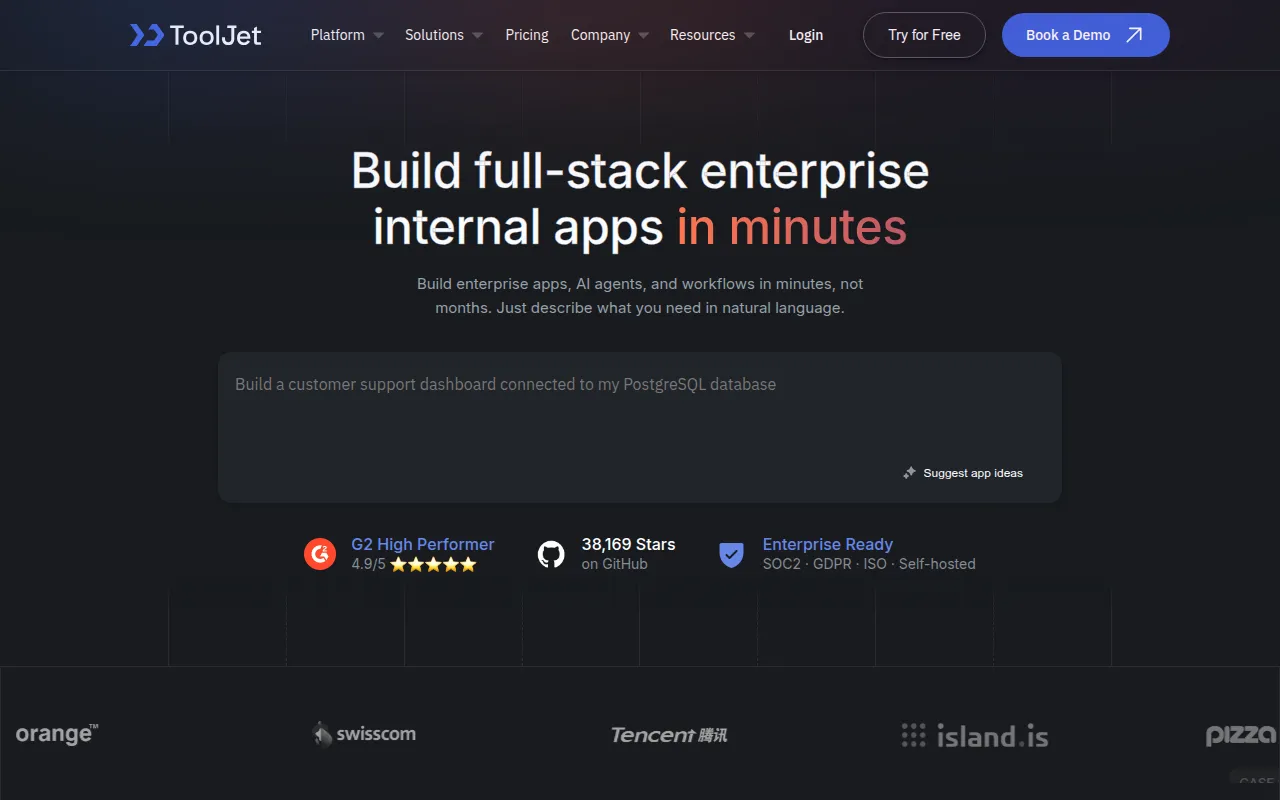
ToolJet is an open source, low-code platform for building and deploying internal tools, admin panels, and dashboards.
Read moreThe best open source alternative to Retool is ToolJet. If that doesn't suit you, we've compiled a ranked list of open source Retool alternatives to help you find a replacement.

ToolJet is an open source, low-code platform for building and deploying internal tools, admin panels, and dashboards.
Read more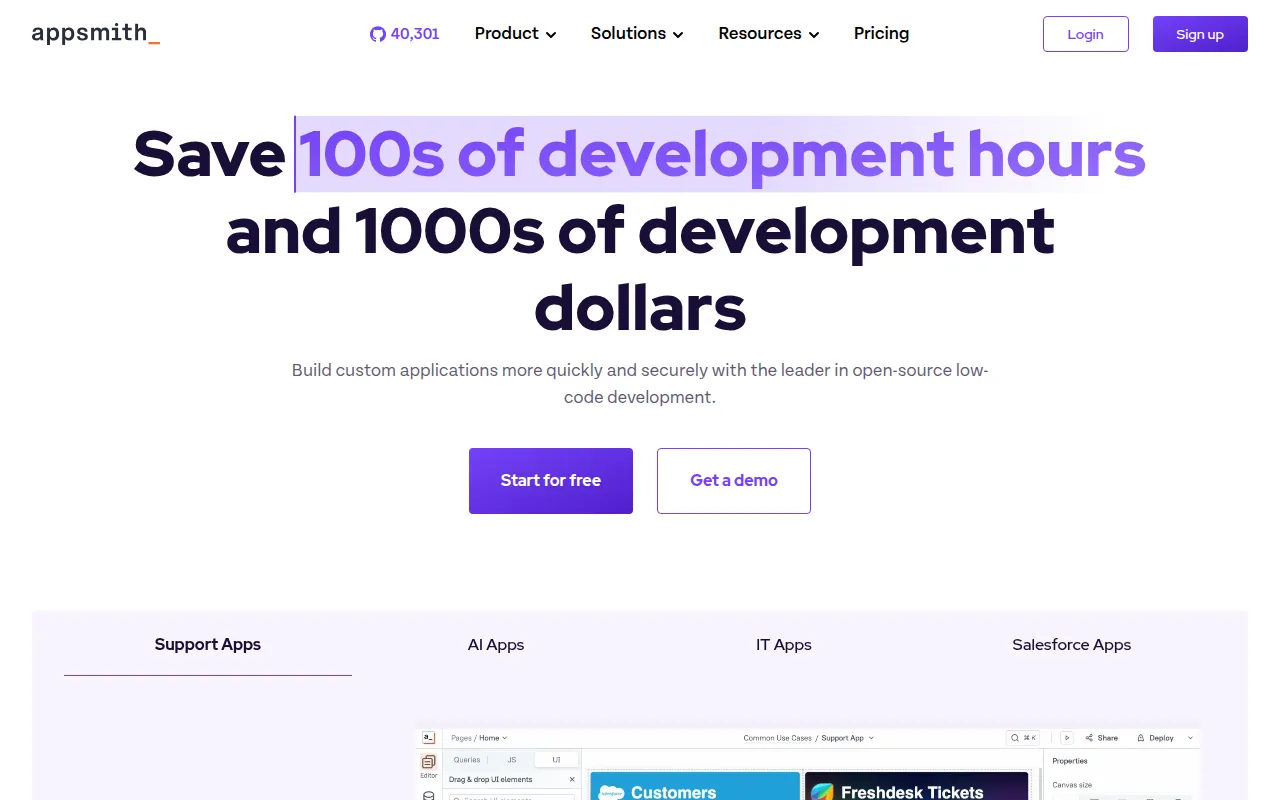
Low-code platform for building admin panels, dashboards, and internal tools on top of your own data sources.
Read more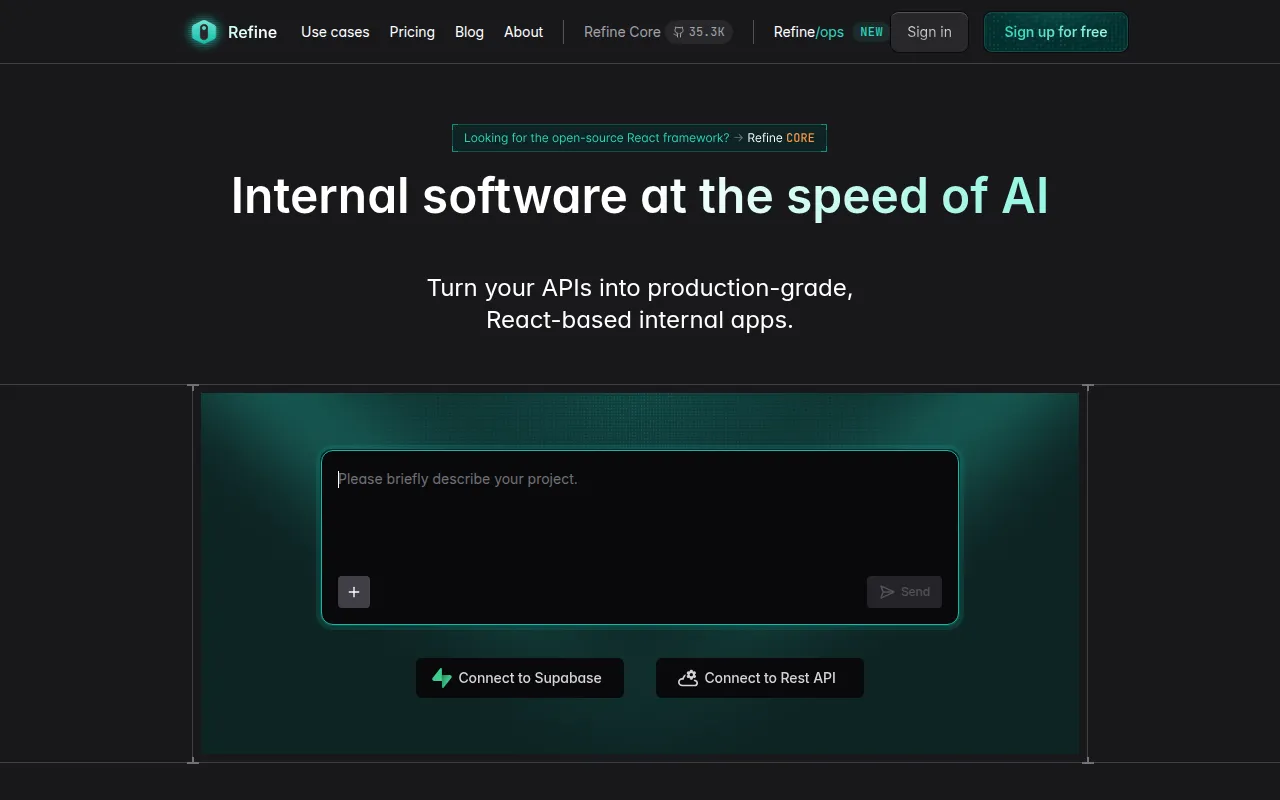
Headless React framework for building CRUD-heavy admin panels and dashboards with built-in auth and data providers.
Read more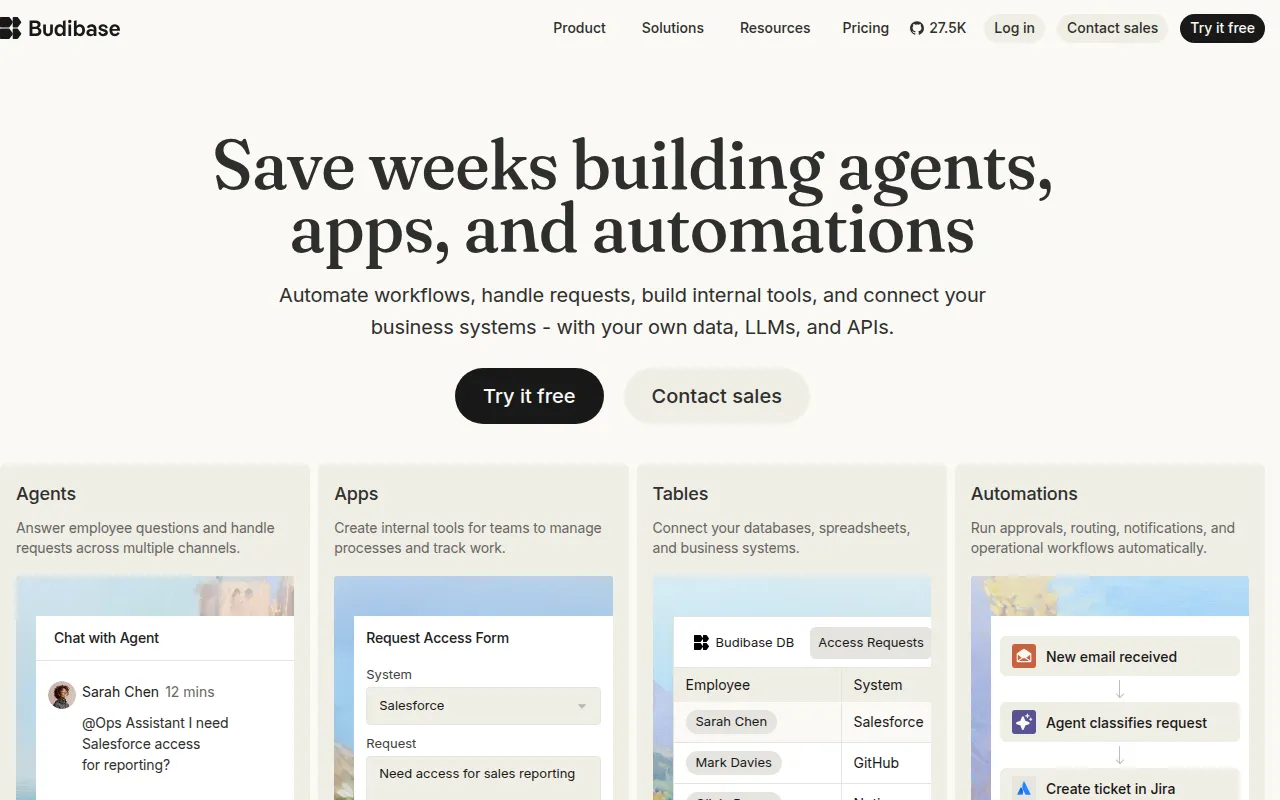
Budibase is an open-source platform for building internal tools, AI agents, and business automations.
Read more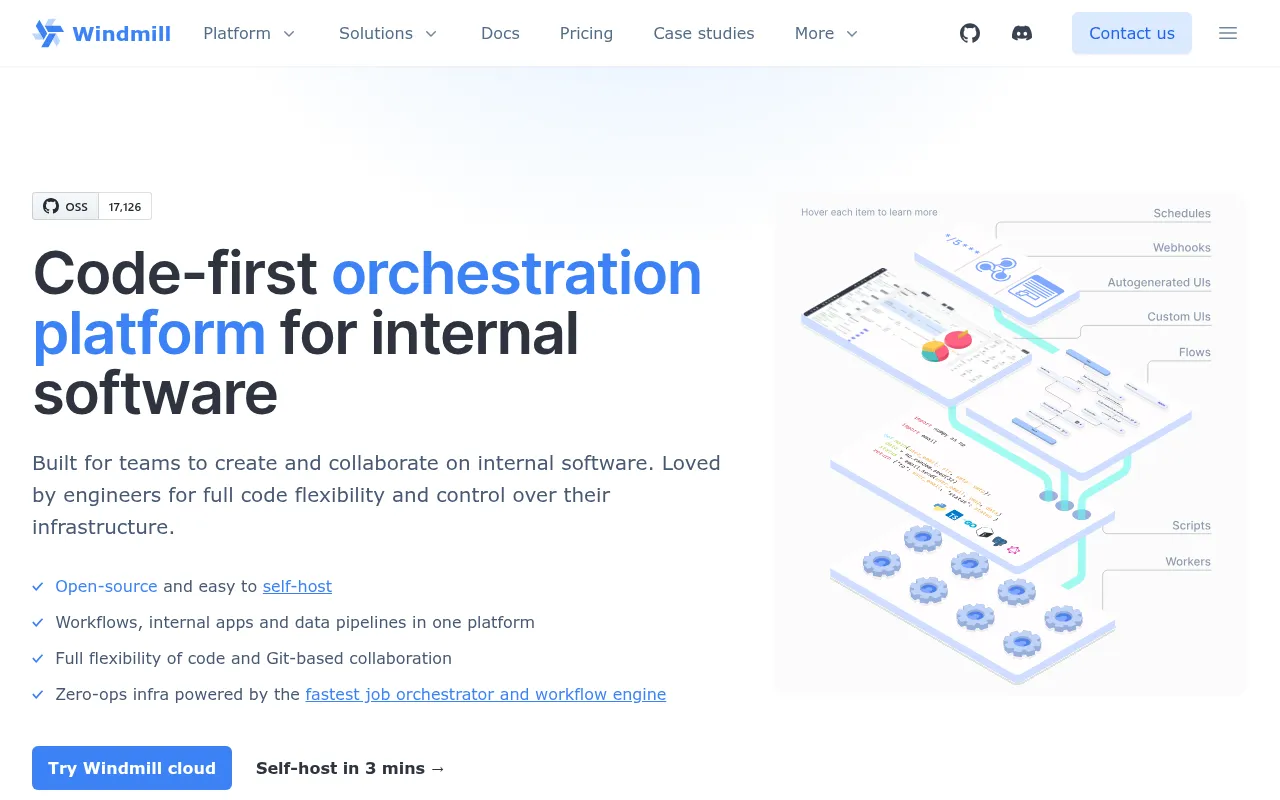
Windmill is an open source platform that turns scripts into APIs, workflows, and internal UIs with auto-generated frontends.
Read more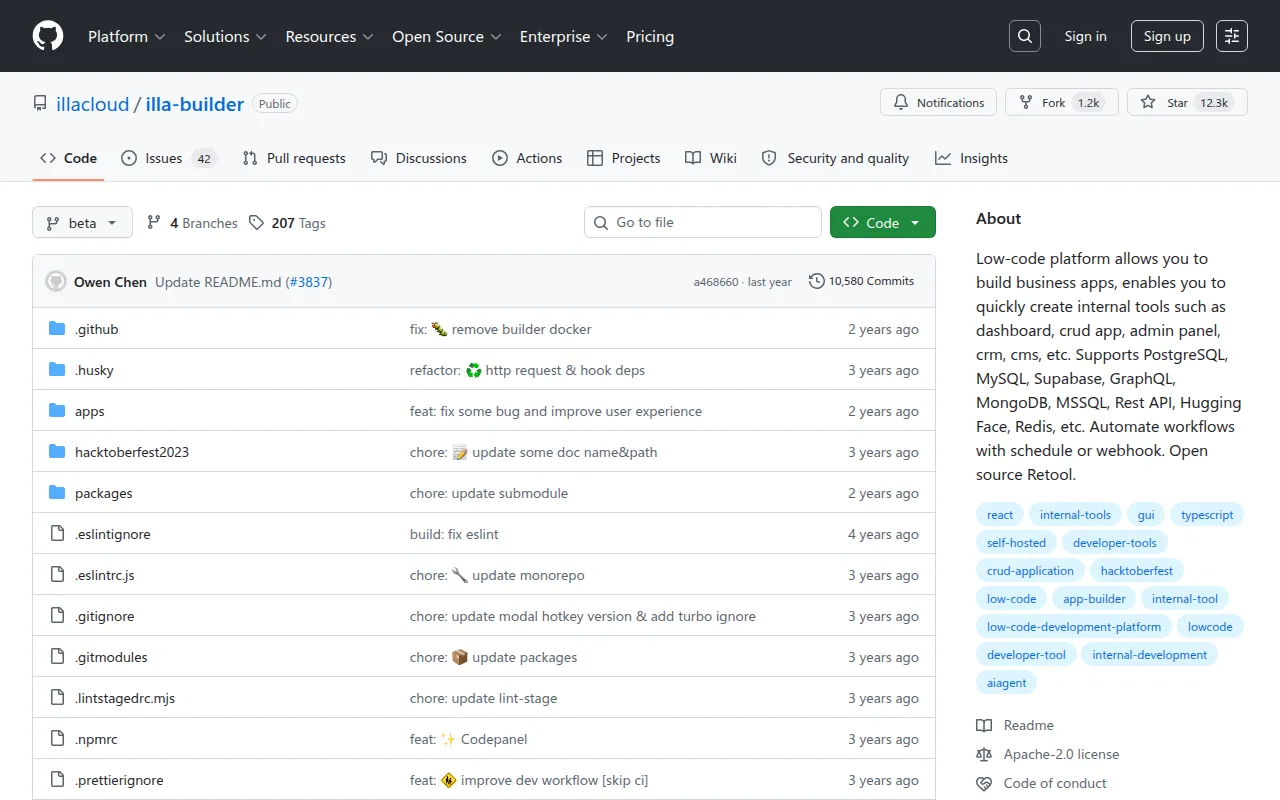
ILLA Builder is an open-source, self-hosted low-code platform for developers to build internal tools quickly.
Read moreRetool bills per user and runs your internal tools through its own cloud by default, which means every admin panel, ops dashboard, and CRUD screen your team builds depends on a vendor's uptime and pricing changes. An open-source alternative runs on your own infrastructure, so the tools that touch production databases and customer data never leave your network. Self-hosting also removes the per-seat cost that scales badly once more than a handful of employees need access to an internal tool, and it lets you pin a version instead of absorbing breaking changes on someone else's schedule.
Customization is the other driver. Retool's builder is powerful but closed; open-source platforms expose the underlying code, so you can patch a connector, add an auth provider, or embed the tool inside an existing app without waiting on a vendor roadmap.
Check how many data sources ship as native connectors versus requiring custom REST calls, since that determines setup time. Look at whether the platform is drag-and-drop (faster for non-developers) or code-first (more control, steeper learning curve). Confirm the self-hosting story: a single Docker container is a very different operational commitment than a Kubernetes deployment with separate worker and database services. Check the license, since some "open source" internal-tool builders gate SSO, audit logs, or version history behind a paid tier even when self-hosted.
Appsmith is a drag-and-drop builder with connectors for 25+ databases and APIs, closest in shape to Retool's own builder. ToolJet covers a similar no-code range and has been expanding into AI-driven app generation on top of its existing plugin system. Budibase adds built-in automations and its own internal database, so teams without an existing data source can still ship an app. ILLA Builder targets the same CRUD-app-and-dashboard use case with a wide connector list including Hugging Face and Redis, plus schedule- or webhook-triggered workflows. Windmill takes a different approach: instead of a visual builder, you write scripts in Python, TypeScript, Go, or Bash and Windmill turns them into APIs, workflows, and UIs, positioning itself against both Retool and workflow engines like Temporal. Refine breaks the pattern entirely, it is a React framework rather than a hosted builder, so you write React components and Refine handles data-fetching, auth, and CRUD boilerplate while your team keeps full control of the UI layer and component library.


 Your brand here — Reach our audience of professional directory owners and boost your sales.