
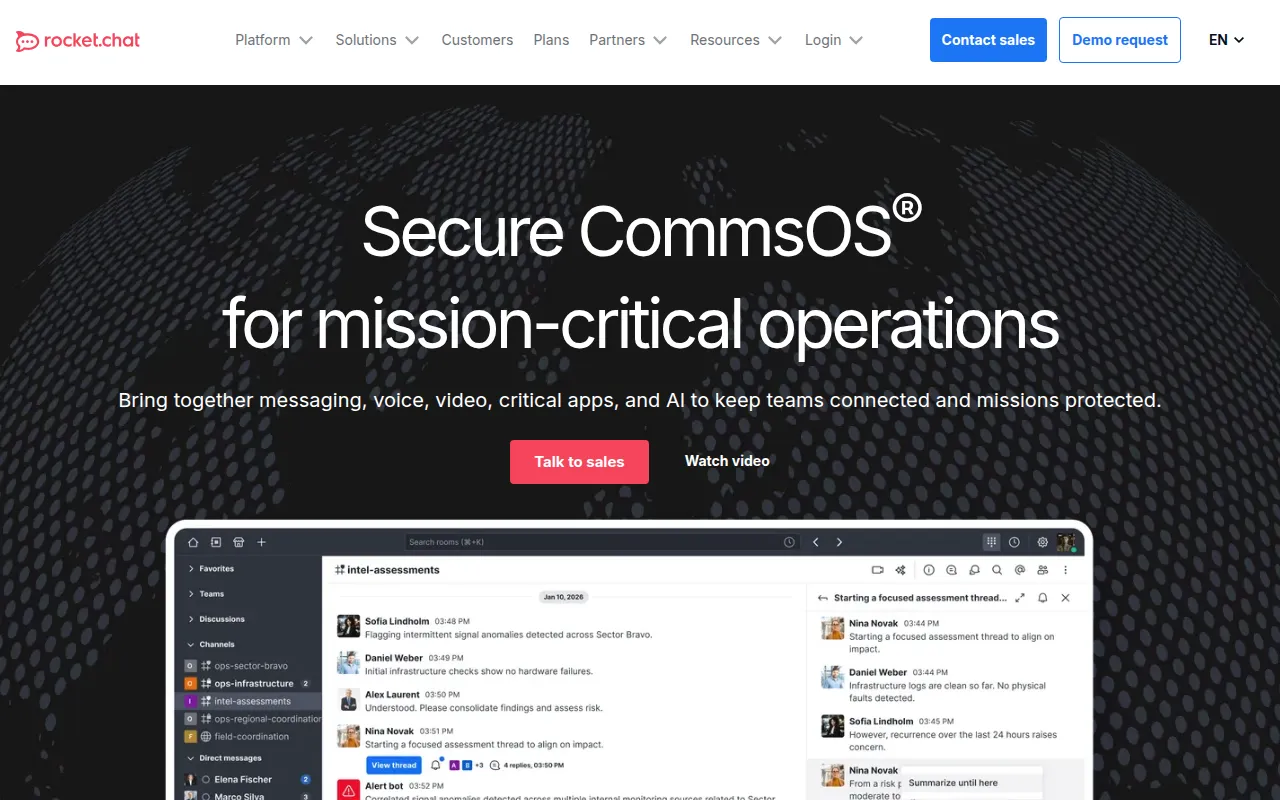
Self-hosted, open-source team chat platform in TypeScript with end-to-end encryption, voice calls, federation, and a custom app framework.
Read moreThe best open source alternative to Slack is Rocket.Chat. If that doesn't suit you, we've compiled a ranked list of open source Slack alternatives to help you find a replacement.

Self-hosted, open-source team chat platform in TypeScript with end-to-end encryption, voice calls, federation, and a custom app framework.
Read more
Open core, self-hosted collaboration platform offering chat, workflow automation, voice calling, screen sharing, and AI integration.
Read more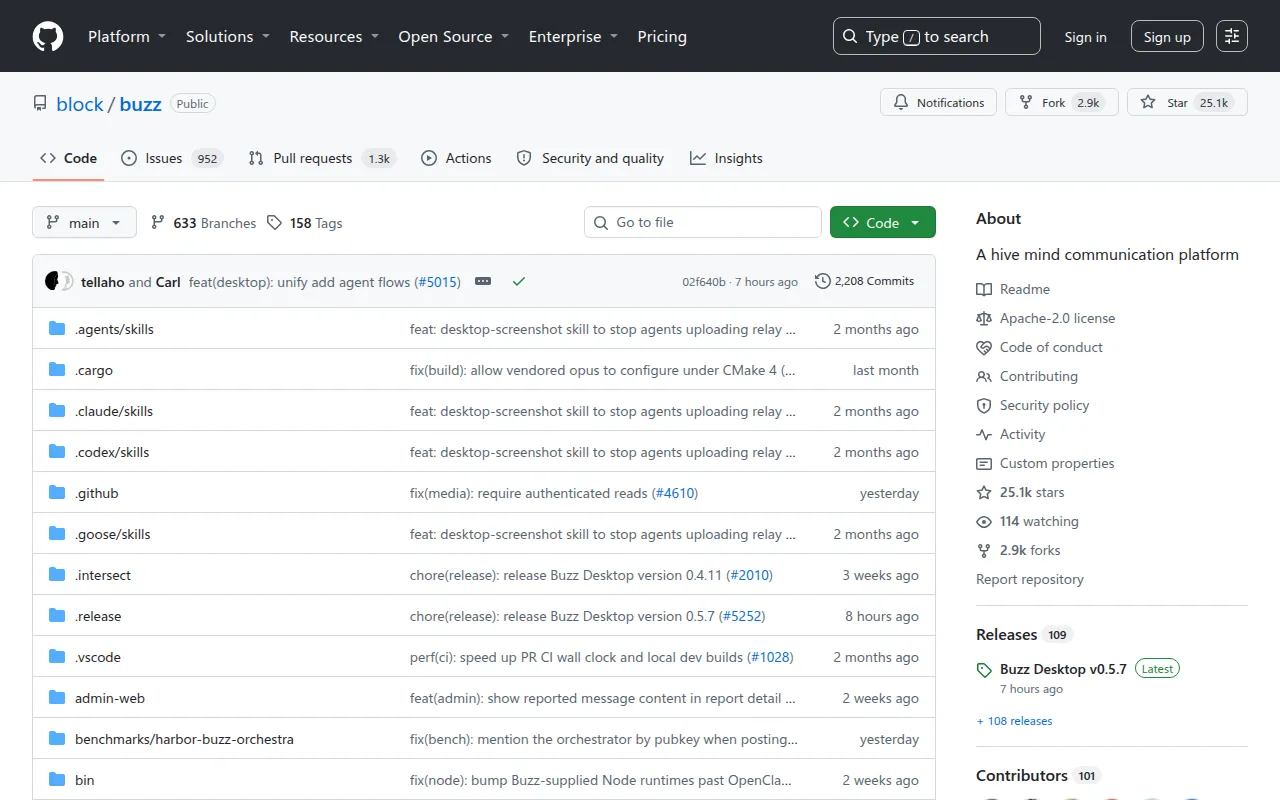
Buzz is a self-hostable Rust workspace where humans and AI agents share channels, git events, and workflows on a Nostr relay you own.
Read more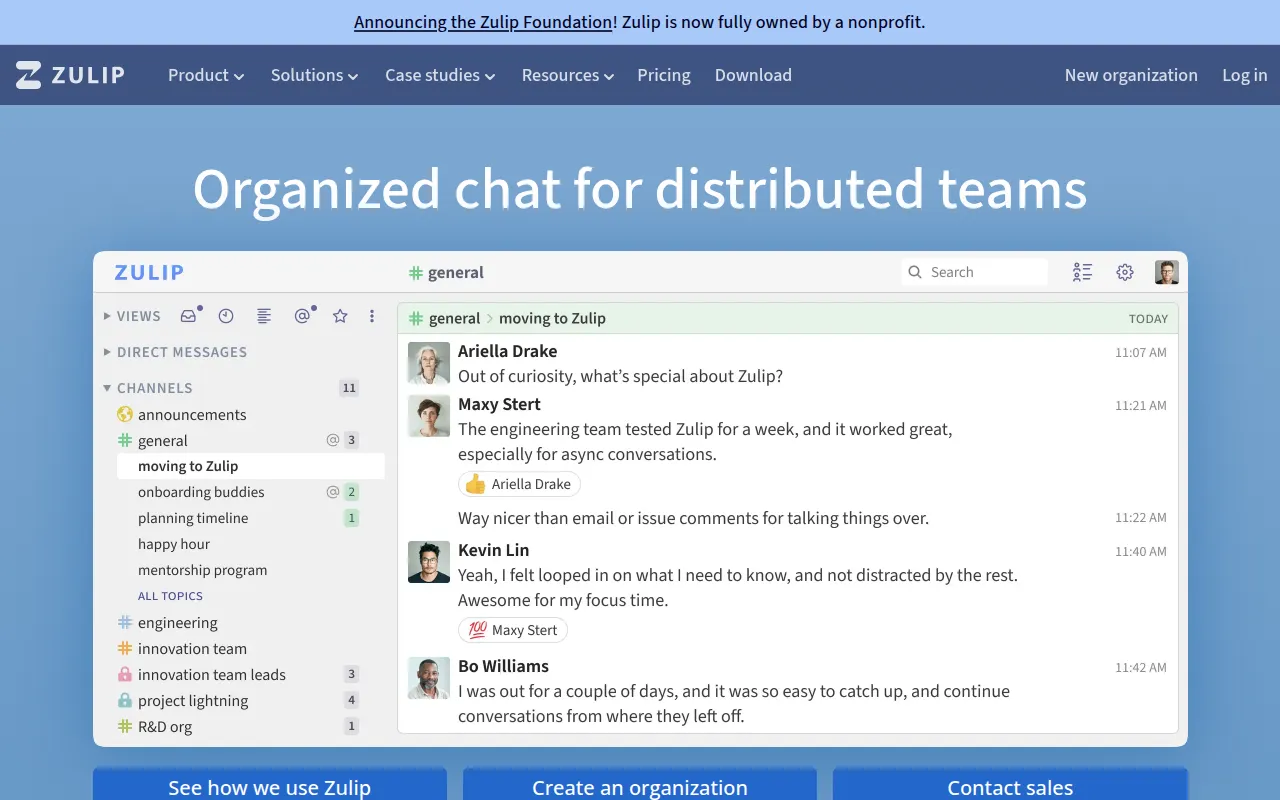
Zulip is an open source team chat app with topic-based threading that organizes conversations for live and asynchronous discussion.
Read more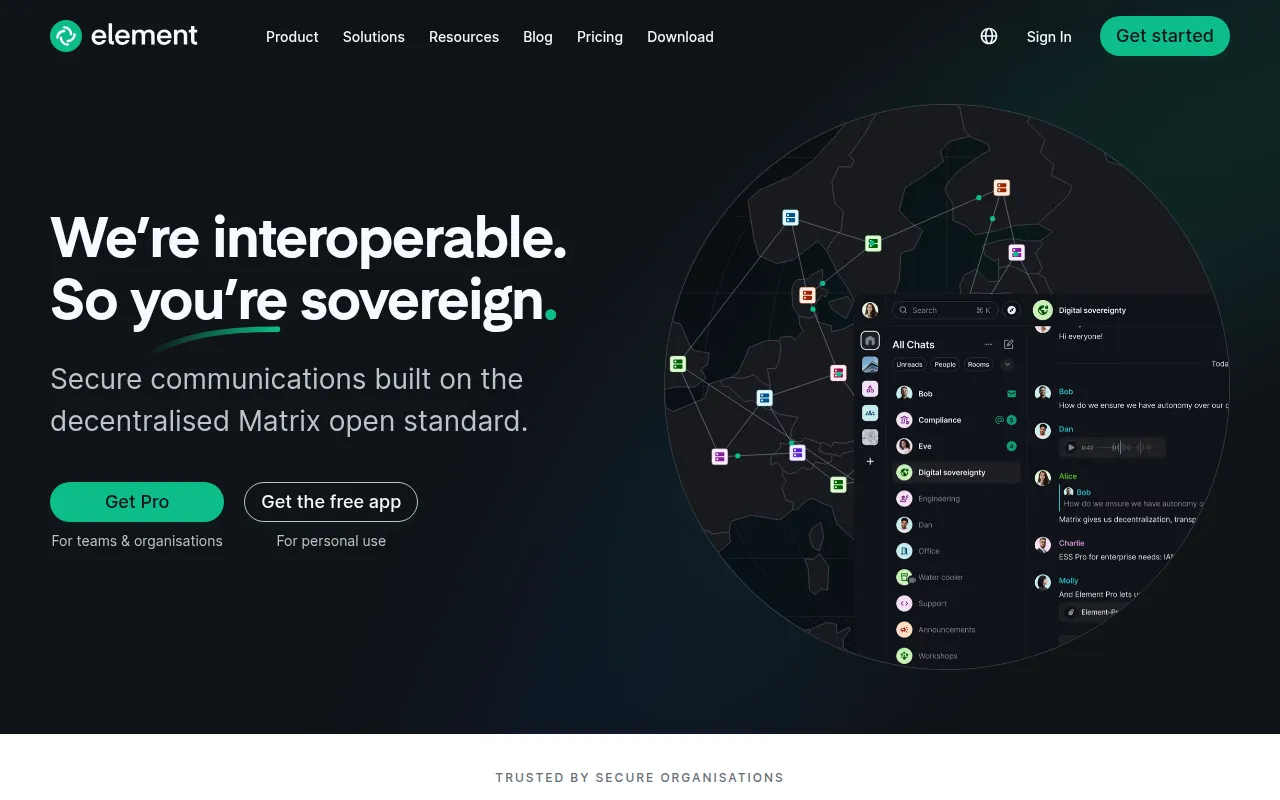
A Matrix web and desktop chat client built on the Matrix JS SDK, available hosted, self-hosted, or as an Electron desktop app.
Read moreSlack is a workplace messaging platform organized around channels, threads, and direct messages, with a large ecosystem of app integrations that connect it to other business tools. It became the default team chat app for many companies, particularly in tech, thanks to its search, notification handling, and third-party integrations.
Organizations look at open-source alternatives for cost and data control reasons that grow with company size. Slack pricing is per active user, and message history retention on lower tiers has historically been limited, pushing teams toward paid plans as chat becomes core to how they operate. Message and file data lives on Slack's servers, which raises questions for organizations with strict data residency requirements or a preference for keeping internal communication entirely in-house.
Rocket.Chat, Mattermost, and Element are the main self-hosted contenders. Rocket.Chat and Mattermost both closely follow Slack's channel-and-thread model and support similar integrations, bots, and search. Element, built on the Matrix protocol, works differently by federating across independently run servers, which matters if you want to communicate with other organizations without everyone joining the same instance.
Before switching, check integration support for the specific third-party tools your team relies on daily, since Slack's app directory is larger than any self-hosted alternative's plugin ecosystem. Test mobile app performance and notification reliability under real use, as these are common weak points for self-hosted chat. Consider whether you're prepared to run and secure the server infrastructure yourself, or whether a managed hosting plan from the same open-source vendor is worth paying for to skip that operational overhead while keeping data off Slack's platform specifically.


 Your brand here — Reach our audience of professional directory owners and boost your sales.