
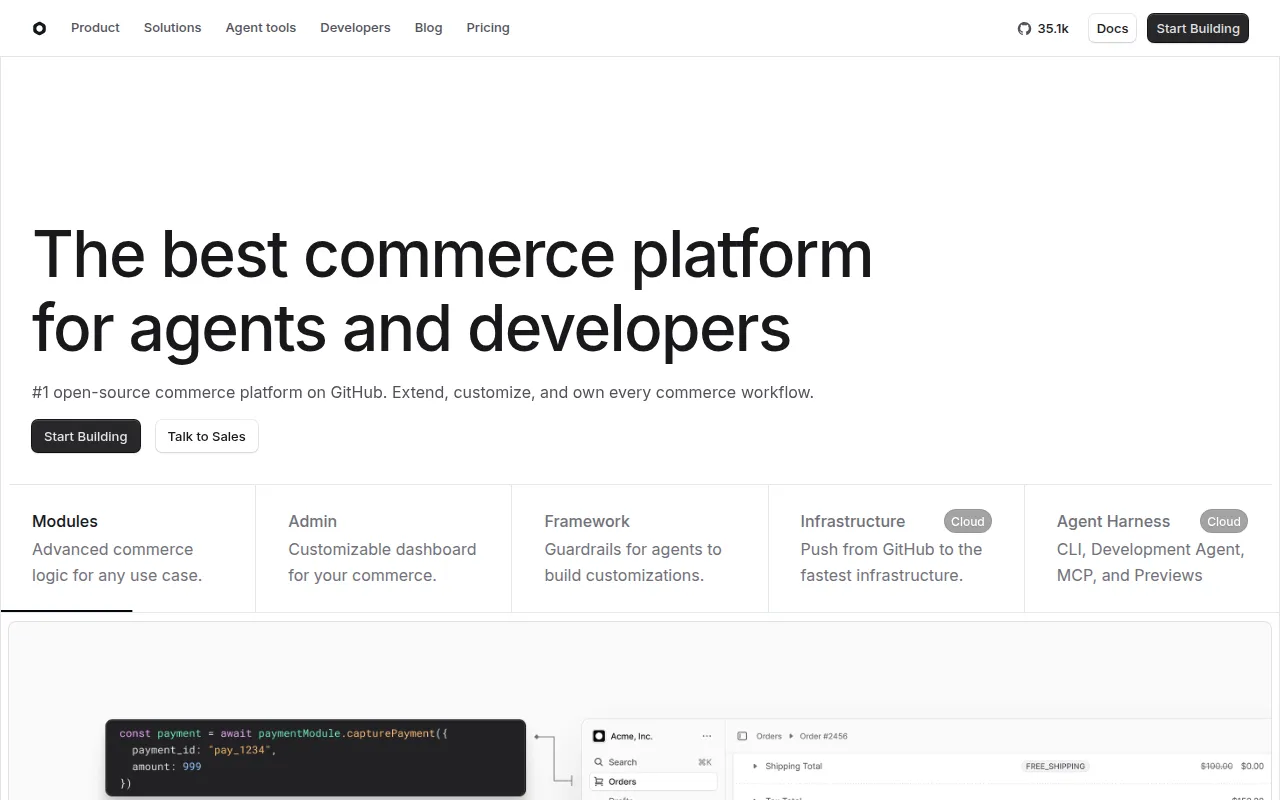
Medusa is an open source commerce platform with a customizable framework and modules for building online stores and marketplaces.
Read moreThe best open source alternative to Shopify is Medusa. If that doesn't suit you, we've compiled a ranked list of open source Shopify alternatives to help you find a replacement.

Medusa is an open source commerce platform with a customizable framework and modules for building online stores and marketplaces.
Read more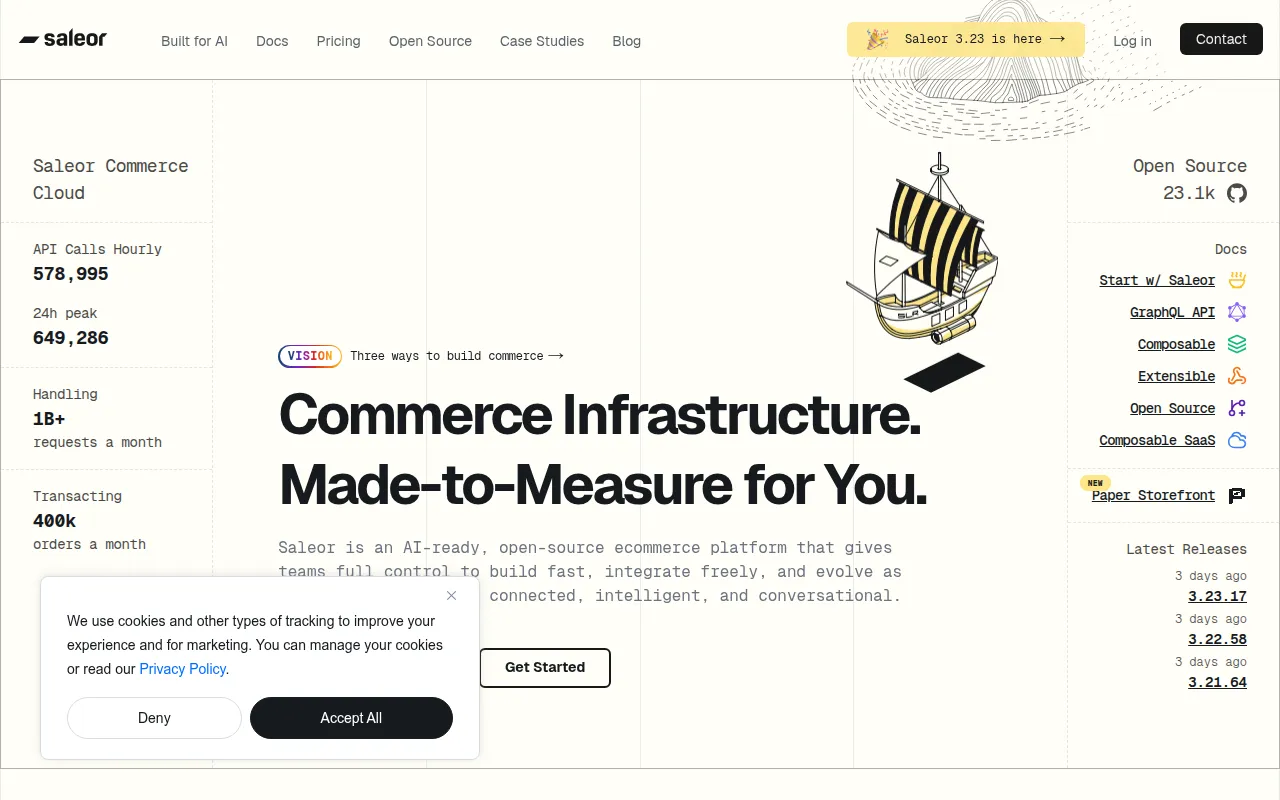
Saleor is an open source, GraphQL-native, API-only commerce platform for building composable storefronts and marketplaces.
Read more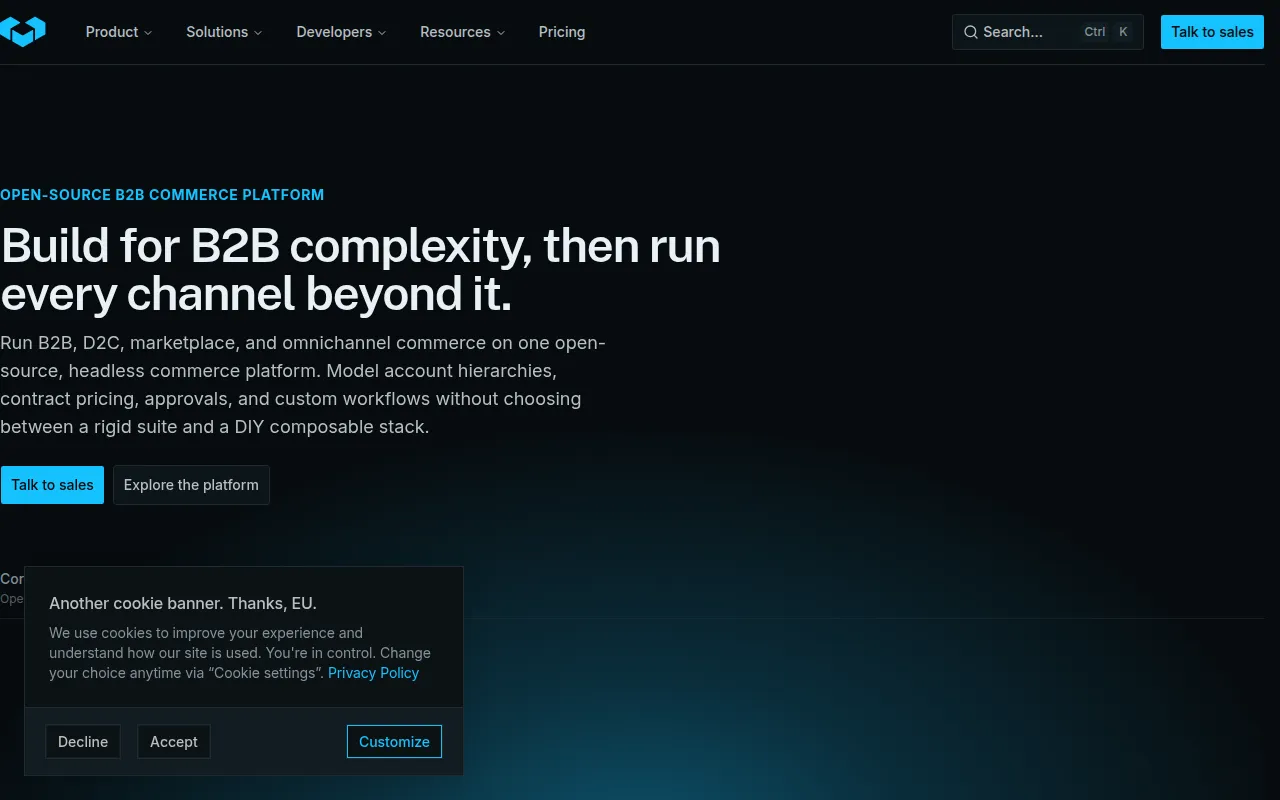
Vendure is an open source, headless commerce platform built on Node.js, NestJS, and GraphQL for D2C, B2B, and marketplace stores.
Read moreShopify combines a monthly platform fee with transaction fees on every order, and those fees run higher unless a merchant uses Shopify Payments exclusively. Running commerce on a self-hosted platform removes that per-order cut; the only ongoing cost is your own infrastructure.
Full backend access also matters once a store outgrows Shopify's app-store model. Custom checkout logic, non-standard pricing rules, or B2B quoting workflows are difficult to bolt onto a closed platform through apps alone, but are straightforward when you control the backend code directly.
Order, customer, and inventory data staying in your own database is useful for merchants who need direct data warehouse access or must keep commerce data in a specific region for compliance reasons. And because Shopify's theme language and app ecosystem are proprietary, a self-hosted stack built on standard APIs is considerably easier to migrate away from later if your needs change again.
Merchants running multiple storefronts under one catalog, or selling through several sales channels at once, also run into Shopify's per-store billing model. A self-hosted commerce backend can serve several storefronts from a single deployment without multiplying the monthly bill for each one.
Decide whether you need headless commerce, a backend exposed through an API with the storefront built separately, or a more integrated setup. Compare API design: GraphQL-only versus REST, and whether the platform is built to power custom storefronts rather than a bundled theme system. If you sell wholesale or B2B, check for tiered pricing, quoting, and company account support specifically, since not every open-source platform treats B2B as a first-class use case. Also check the extensibility model: plugin architecture versus direct code access, and confirm what infrastructure the platform expects, typically Node.js, Postgres, and Redis in some combination. Payment and shipping integrations are worth checking early too, since a commerce backend is only as useful as the carriers and processors it already connects to.
Medusa is TypeScript-based and headless-first, built to serve as a flexible commerce backend for custom storefronts, with a plugin architecture for extending checkout and payment logic.
Saleor exposes its entire storefront and admin surface exclusively through GraphQL, with no REST API layer, and is built for composable, high-performance commerce at scale.
Vendure is built with TypeScript, NestJS, React, and GraphQL, aimed at developers who want fine-grained control over both the commerce backend and its admin interface.


 Your brand here — Reach our audience of professional directory owners and boost your sales.