
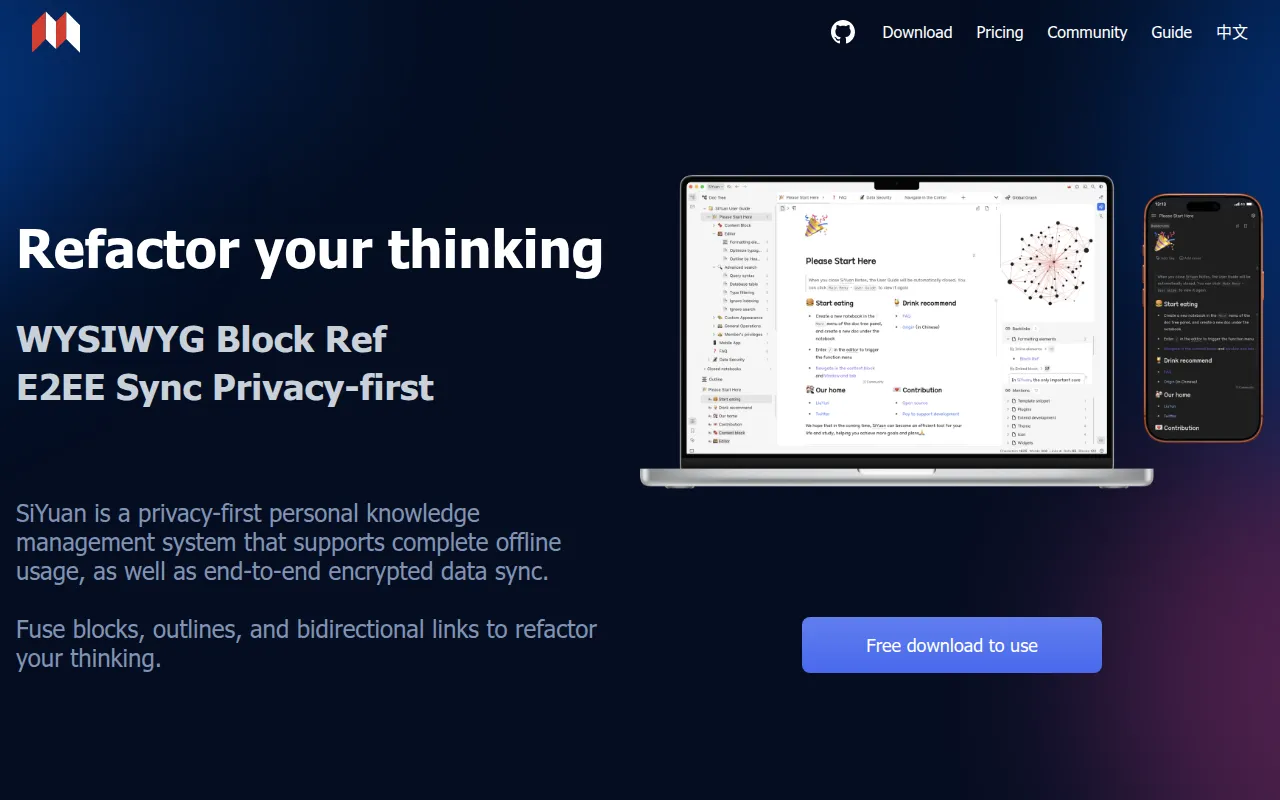
SiYuan is a self-hosted, block-based note-taking app with two-way references, a Markdown WYSIWYG editor, and flashcard review built in.
Read moreThe best open source alternative to Roam Research is SiYuan. If that doesn't suit you, we've compiled a ranked list of open source Roam Research alternatives to help you find a replacement.

SiYuan is a self-hosted, block-based note-taking app with two-way references, a Markdown WYSIWYG editor, and flashcard review built in.
Read more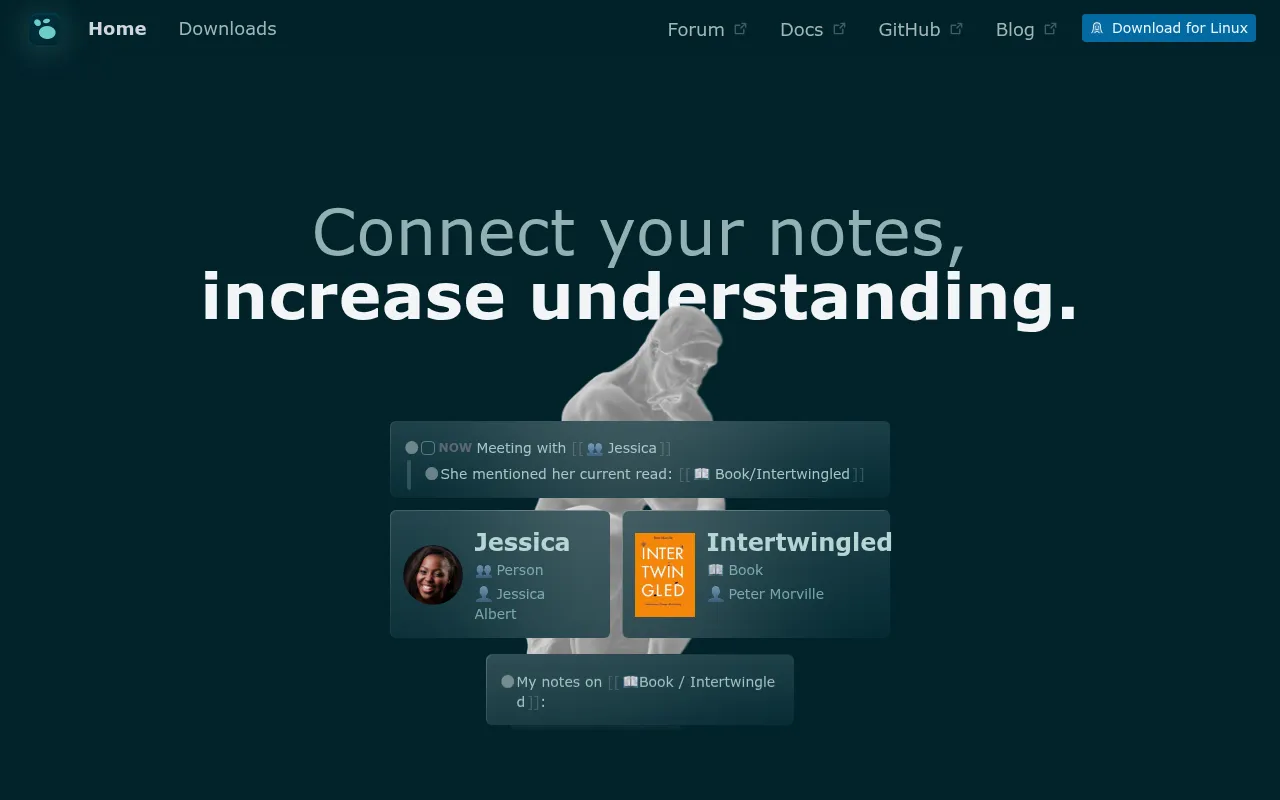
Logseq is an open-source outliner for notes and tasks, storing data as local Markdown or Org-mode files with backlinks and a plugin API.
Read moreRoam Research is a note-taking tool built around bidirectional links and daily notes, popularizing what's often called the networked note or "second brain" approach to personal knowledge management. Instead of organizing notes into folders, ideas are connected through links and backlinks, and a graph view shows how notes relate to each other.
People look for open-source alternatives largely over cost, data portability, and long-term access concerns. Roam charges a recurring subscription for what is, at its core, a text and link storage tool, and notes live on Roam's servers rather than as local files. For a tool meant to hold years of accumulated thinking, some users are uneasy about that much personal data depending on one company's continued operation and pricing decisions.
Logseq and Siyuan are the two most direct open-source alternatives. Both implement the same bidirectional linking and daily-notes model that made Roam popular. Logseq stores notes as local Markdown or Org files, so your notes remain plain text files you can read, back up, or process outside the app entirely. Siyuan offers a similar block-based, linked-note structure with additional support for rich content types like flashcards and PDF annotation, and can be self-hosted for sync across devices.
Before switching, check how each tool handles sync across multiple devices, since this is often the trickiest part of a local-first note app, and confirm the query and backlink features you actually rely on in Roam have equivalents. Also look at plugin ecosystems if you depend on Roam extensions, since community plugin support varies between these tools and doesn't map one to one with Roam's marketplace.


 Your brand here — Reach our audience of professional directory owners and boost your sales.