
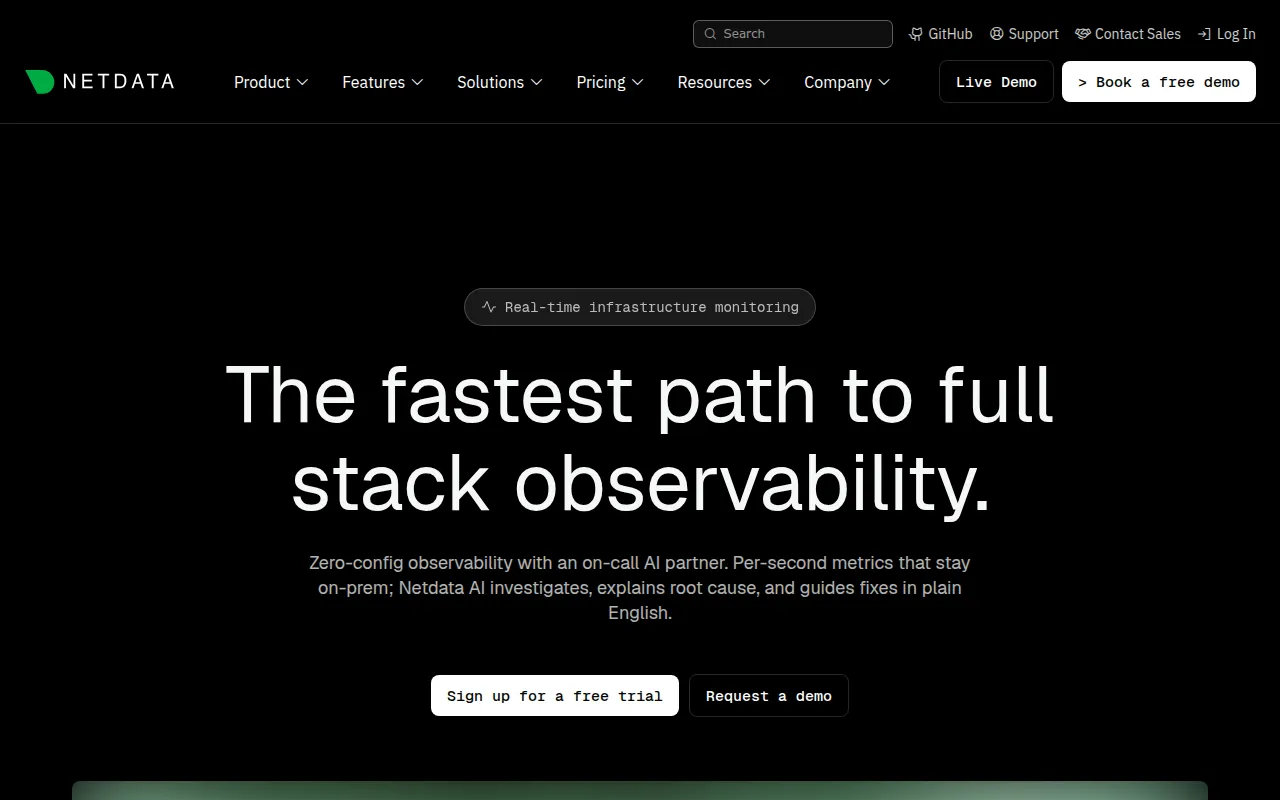
Netdata is a real-time infrastructure monitoring platform that collects per-second metrics with zero configuration and edge-based anomaly detection.
Read moreThe best open source alternative to New Relic is Netdata. If that doesn't suit you, we've compiled a ranked list of open source New Relic alternatives to help you find a replacement.

Netdata is a real-time infrastructure monitoring platform that collects per-second metrics with zero configuration and edge-based anomaly detection.
Read more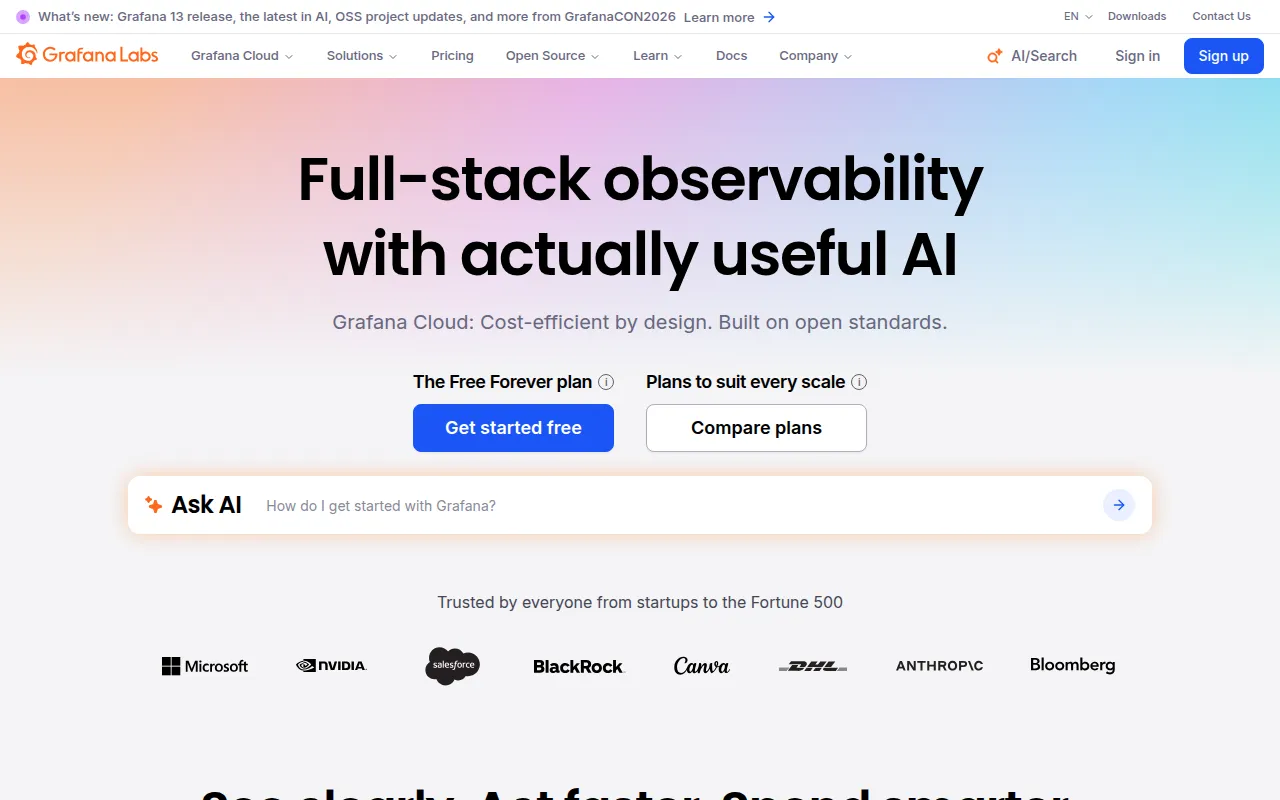
An open-source platform for building dashboards, exploring logs and metrics, and setting up alerts across mixed data sources.
Read more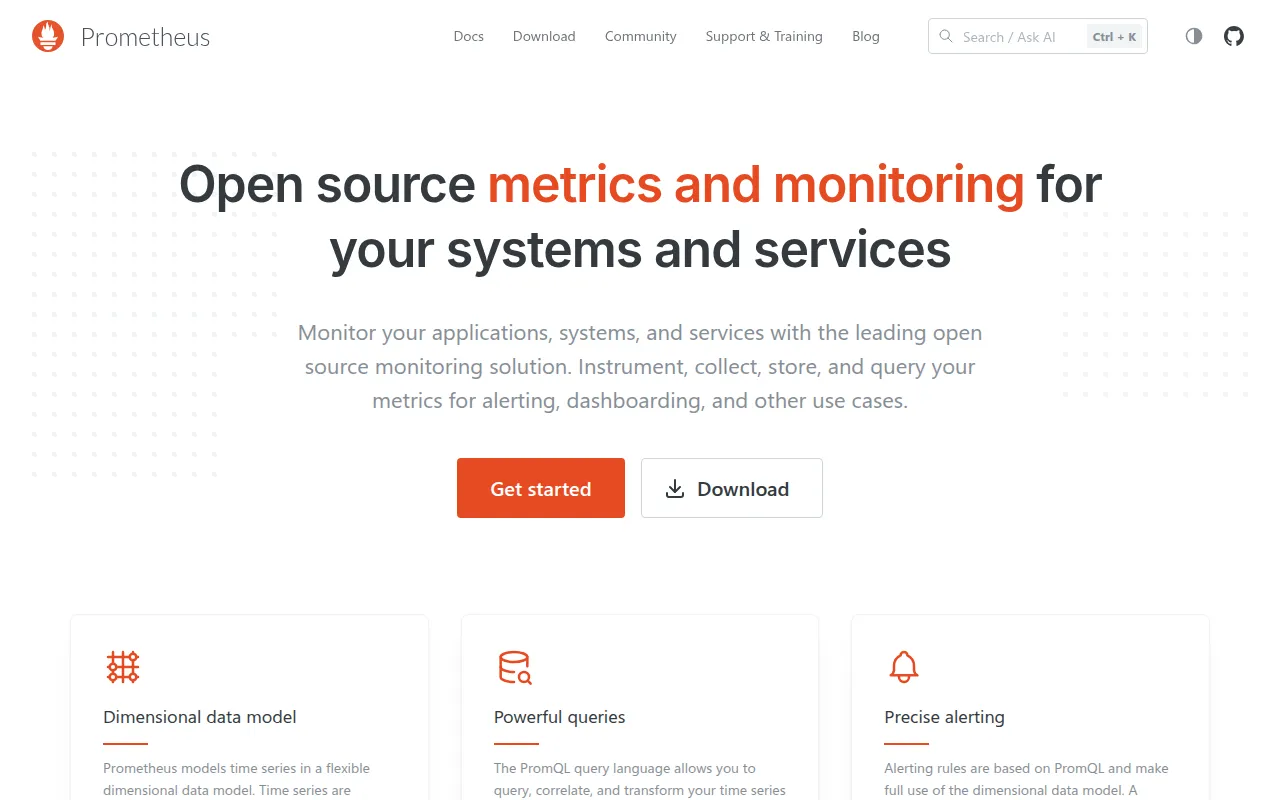
Prometheus collects time-series metrics from configured targets over HTTP, stores them, and lets you query and alert on them with PromQL.
Read more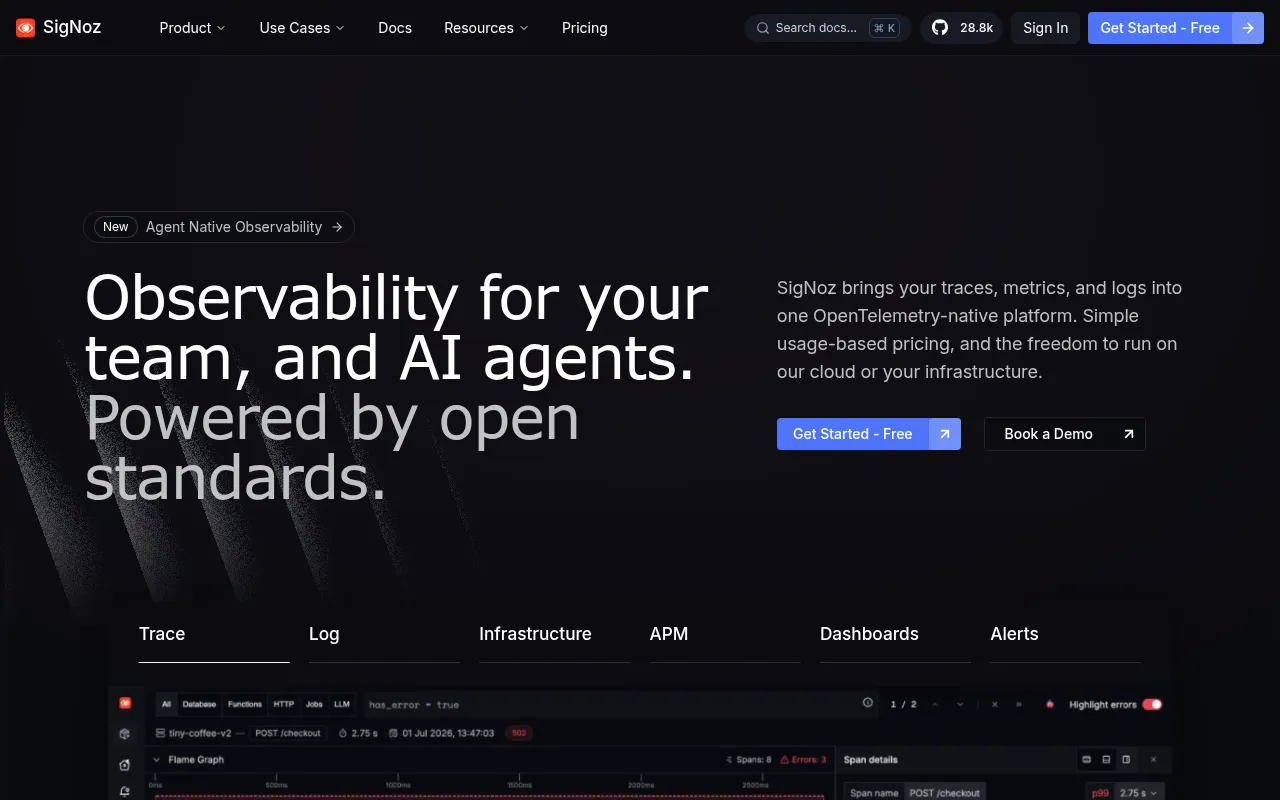
SigNoz is an open source, OpenTelemetry-native observability platform combining metrics, logs, traces, and alerts.
Read moreJaeger is a CNCF-graduated distributed tracing platform for monitoring and troubleshooting microservice-based systems.
Read moreNew Relic bills observability data by ingest volume, which climbs as your systems and telemetry grow, so adding more detailed logging or tracing to debug an issue can itself increase the monthly bill. Self-hosted alternatives put that pipeline on infrastructure you run:
Check OpenTelemetry compatibility for traces, metrics, and logs since that determines how portable your instrumentation is, whether the tool leans toward real-time or historical monitoring depending on your debugging style, the resource footprint of running the monitoring stack itself on your infrastructure, the depth of alerting and anomaly detection available, and how much application performance monitoring coverage is included versus infrastructure-only metrics.
Netdata is often run alongside another tool rather than in place of a full APM, since its focus stays on infrastructure rather than distributed request tracing. SigNoz covers more of what New Relic is typically used for, including tracing individual requests across services.


 Your brand here — Reach our audience of professional directory owners and boost your sales.