
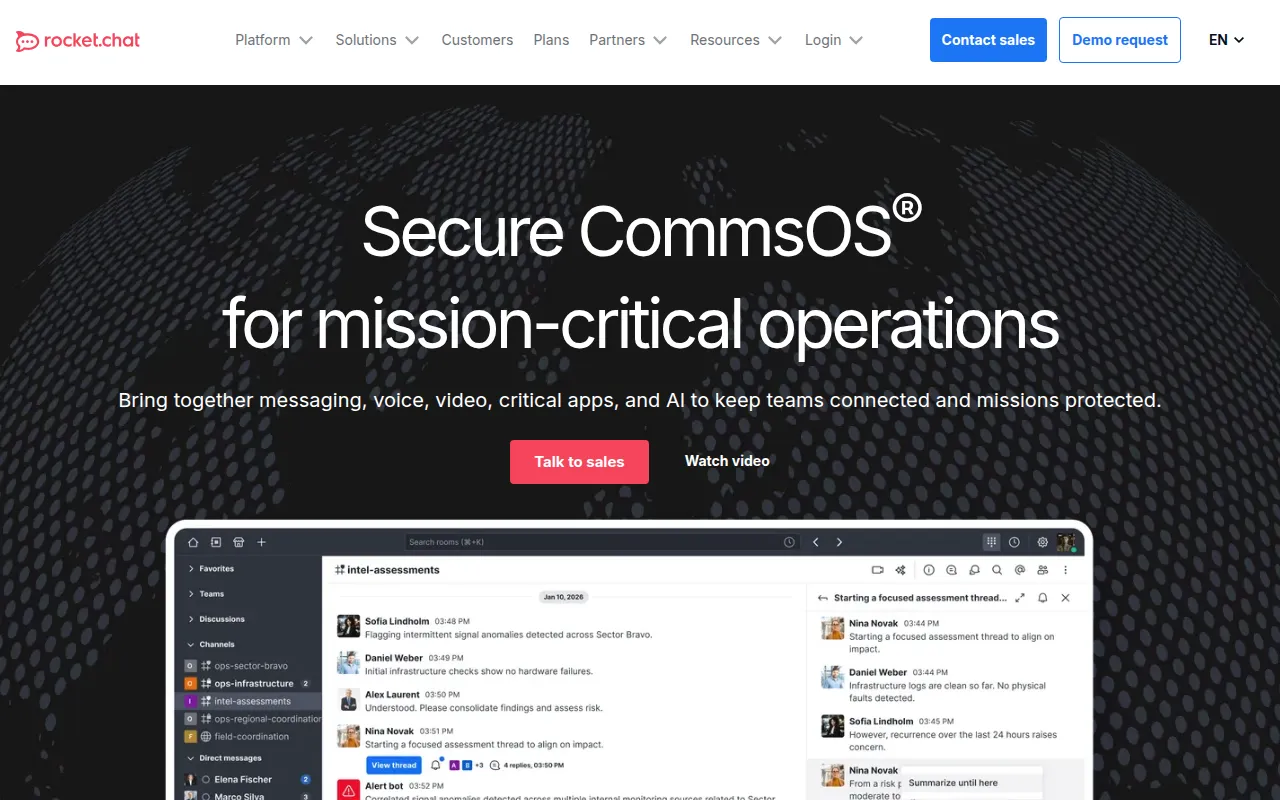
Self-hosted, open-source team chat platform in TypeScript with end-to-end encryption, voice calls, federation, and a custom app framework.
Read moreThe best open source alternative to Microsoft Teams is Rocket.Chat. If that doesn't suit you, we've compiled a ranked list of open source Microsoft Teams alternatives to help you find a replacement.

Self-hosted, open-source team chat platform in TypeScript with end-to-end encryption, voice calls, federation, and a custom app framework.
Read more
Open core, self-hosted collaboration platform offering chat, workflow automation, voice calling, screen sharing, and AI integration.
Read more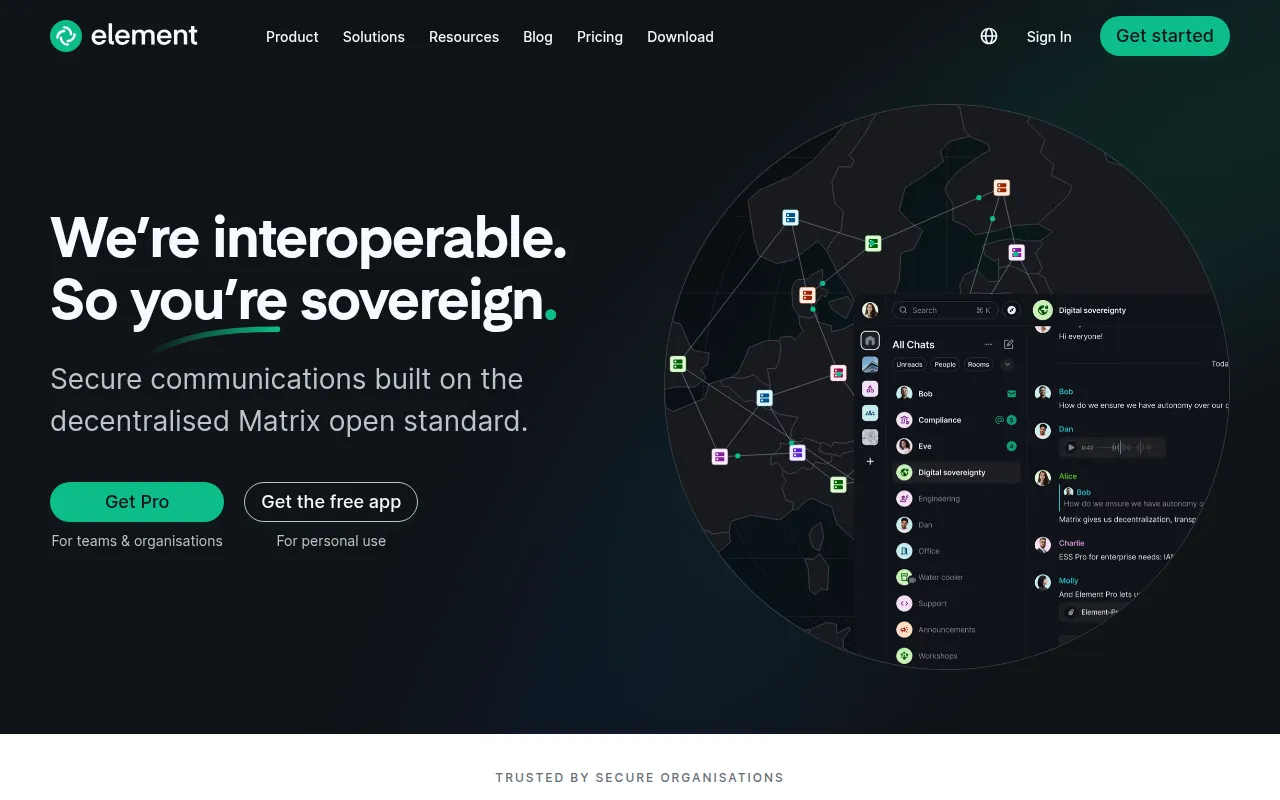
A Matrix web and desktop chat client built on the Matrix JS SDK, available hosted, self-hosted, or as an Electron desktop app.
Read moreTeams is Microsoft's chat and video conferencing platform, bundled into most Microsoft 365 plans. It combines persistent channel-based messaging, file sharing through SharePoint and OneDrive, and video meetings, and it's become the default communication tool in many organizations simply because it ships with the productivity suite they already pay for.
Organizations look at open-source alternatives for a few practical reasons. Message history and files are stored on Microsoft's servers, which raises data ownership questions for organizations in regulated sectors like healthcare, finance, or government. Licensing is tied to Microsoft 365 tiers, so smaller teams that don't need the rest of the suite still end up paying for it to get chat and video. There's also a customization ceiling: extending Teams beyond its built-in app integrations requires working within Microsoft's app framework and approval processes.
Rocket.Chat, Mattermost, and Element, built on the Matrix protocol, are the main self-hosted options. Rocket.Chat and Mattermost both replicate Teams' channel-and-thread messaging model closely, with self-hosted deployment and open APIs for building custom integrations. Element takes a different approach, using a federated protocol that lets separate organizations communicate across their own independently hosted servers rather than requiring everyone to join one company's instance.
When comparing tools, check video and voice call quality under real network conditions, since this varies more than text chat between platforms. Look at mobile app maturity, since self-hosted chat tools sometimes lag behind commercial products here. Consider how authentication integrates with your existing identity provider, and whether the tool supports end-to-end encryption if that's a requirement. Finally, weigh the operational cost of running your own chat server against a hosted plan from the same open-source vendor, since most of these projects also sell managed hosting.


 Your brand here — Reach our audience of professional directory owners and boost your sales.