
Vikunja
Vikunja is a self-hosted to-do and task management app with an AGPL-licensed API and web client for organizing personal and team work.
 Todoist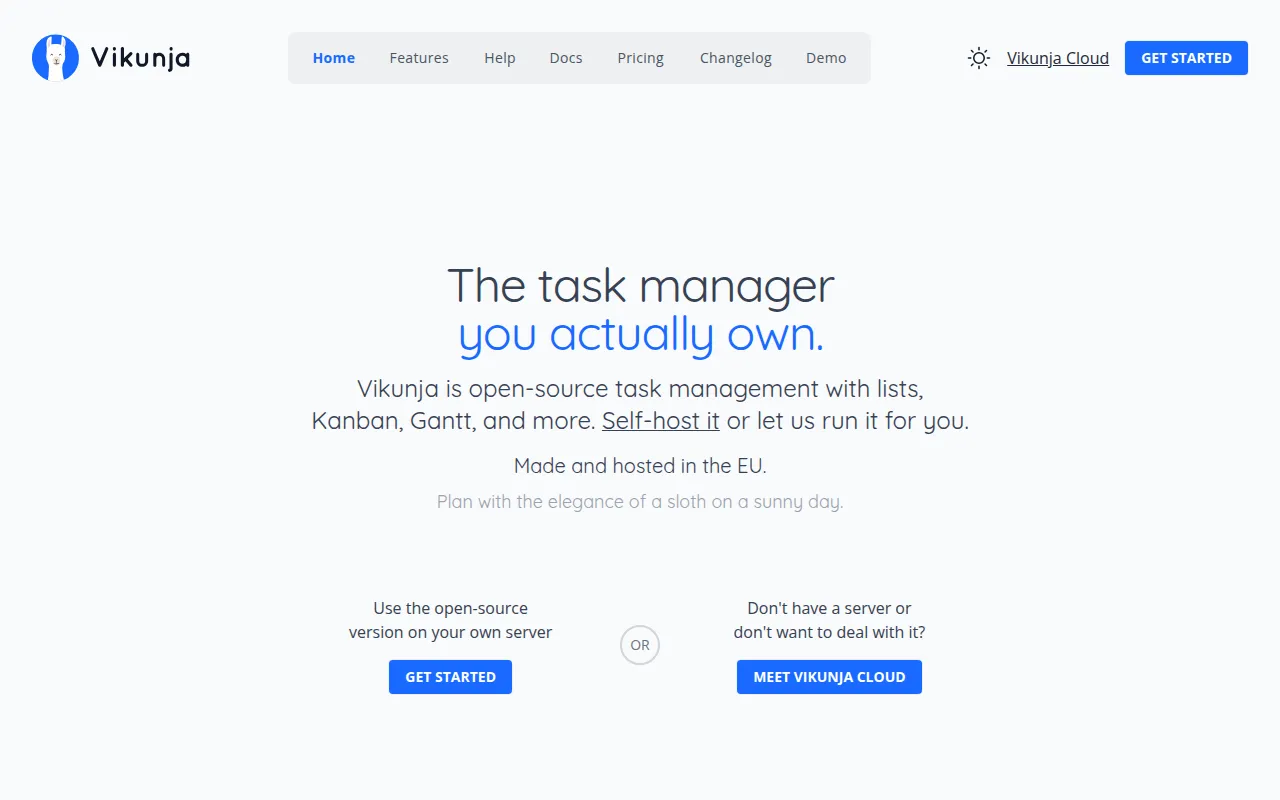
Vikunja is an open source to-do application, describing itself simply as "the Todo-app to organize your life," positioned as a self-hosted alternative to Todoist. Most of the project is licensed AGPL-3.0-or-later, with a separate GPL-3.0-or-later license covering the desktop client specifically. A hosted version, Vikunja Cloud, exists for people who want a managed deployment without running their own server, alongside a public demo instance for anyone who wants to try the software before installing it anywhere. The API is written in Go, and its source tree includes a Swagger-driven documentation setup that stays in sync with the actual endpoints.
Key features
- Task and list management: Vikunja organizes work as tasks within lists, forming the core to-do functionality documented on the project's features page.
- Open API with Swagger docs: The Go-based API is fully documented via Swagger, published live at try.vikunja.io/api/v1/docs, making it straightforward to build integrations or alternative clients against it.
- Docker Hub distribution: Official Docker images are published and actively pulled, tracked by a public Docker Hub pull counter badge directly in the repository.
- CI-verified builds: GitHub Actions runs the project's CI workflow on every change, with build status and a Go Report Card grade published directly in the README.
- Desktop client: A separate desktop client, licensed GPL-3.0-or-later, is maintained alongside the core AGPL-licensed API and web app.
- Community-funded development: The project accepts GitHub Sponsors contributions and sells sticker packs to fund ongoing work, and lists a dedicated security contact for responsibly disclosing vulnerabilities outside of public issue trackers.
Self-hosting and deployment
Vikunja can be installed following the project's installation docs, or built from source per the documented build guide, both linked from the main documentation hub. A magefile-based build system and dedicated testing documentation support contributors and self-hosters who want to build or modify Vikunja rather than run the prebuilt Docker image. For anyone who wants to try Vikunja before installing it, try.vikunja.io runs a live public instance of the app itself, and a documented roadmap, itself hosted in Vikunja, outlines what's planned next. Because the API and web frontend are separate components communicating over the documented Swagger-described interface, self-hosters can run the API alone and build a custom client against it if the default web app doesn't fit their workflow.
Getting started
The fastest way to evaluate Vikunja is try.vikunja.io, a hosted demo instance of the software running the same code as a self-hosted deployment. For a permanent deployment, the installation docs cover the supported setup paths, and the project also offers Vikunja Cloud as a paid hosted option for people who want Vikunja without maintaining a server themselves. Background images used on some screens are sourced from Unsplash under its standard license, requiring attribution to both the photographer and Unsplash.
Frequently asked questions






Similar to Vikunja


