
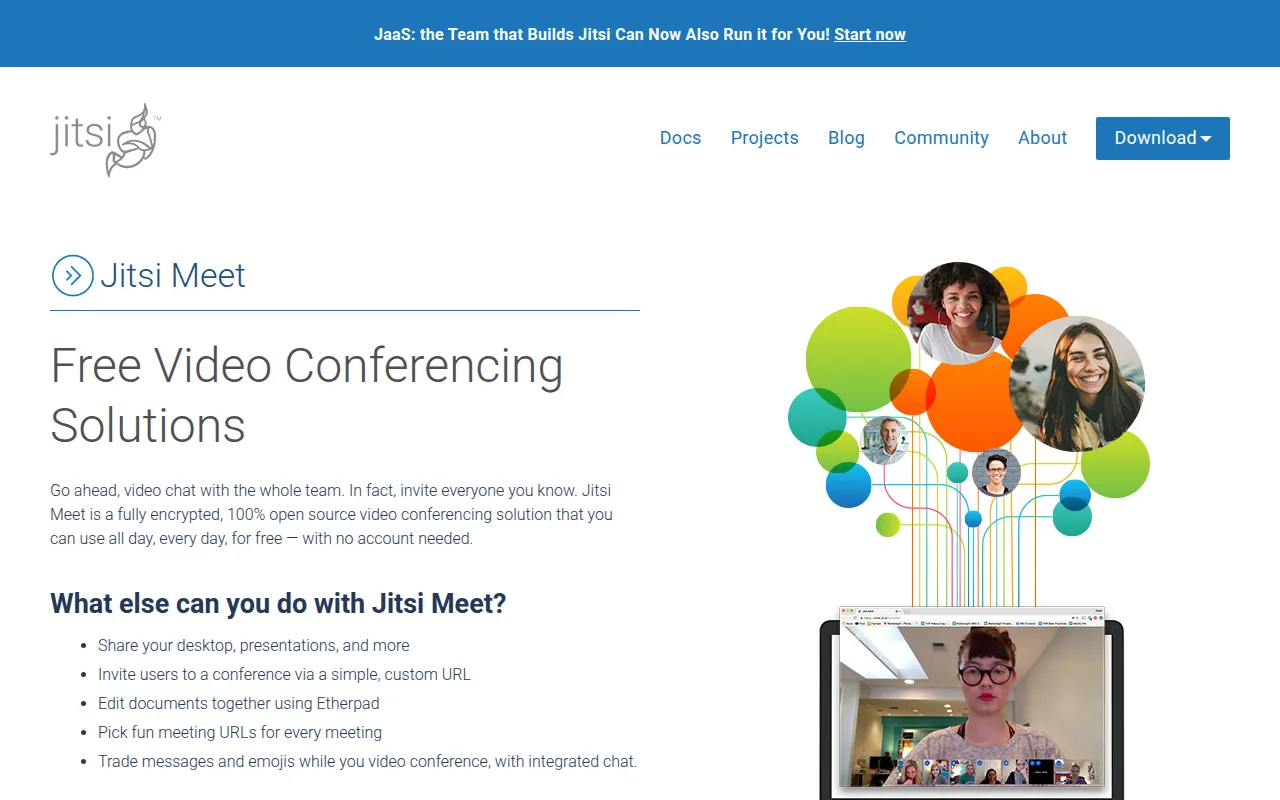
Jitsi Meet is an open source video conferencing platform with browser-based calls, mobile apps, and self-hosted deployment options.
Read moreThe best open source alternative to Zoom is Jitsi Meet. If that doesn't suit you, we've compiled a ranked list of open source Zoom alternatives to help you find a replacement.

Jitsi Meet is an open source video conferencing platform with browser-based calls, mobile apps, and self-hosted deployment options.
Read more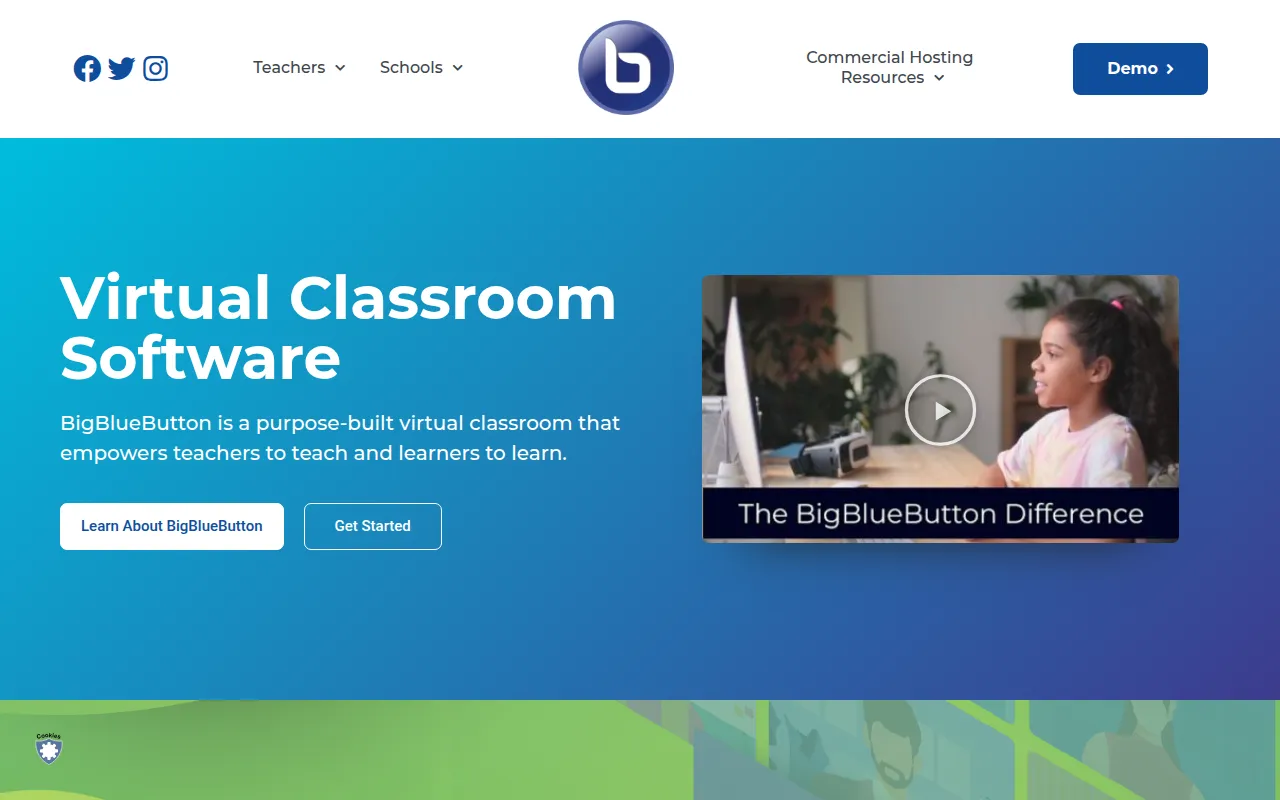
BigBlueButton is an open-source virtual classroom with video, whiteboards, polling, and breakout rooms for teaching.
Read moreZoom's free tier limits group call length, and higher participant counts or webinar-style features require paid tiers billed per host. Self-hosted video conferencing removes those caps entirely; limits become a matter of your own server capacity rather than a pricing tier.
Video and audio streams, along with meeting recordings, are sensitive by nature, so keeping that infrastructure on servers your organization controls rather than a third party's cloud matters for privacy and security. Educational institutions and enterprises with strict data residency requirements often need conferencing that never leaves their own network, which a self-hosted deployment provides directly.
There's also a durability argument: a self-hosted deployment is not subject to a vendor's pricing changes, feature removals, or acquisition down the line, since the software and its roadmap are yours to control.
Bandwidth and server costs still apply to a self-hosted video platform, so the tradeoff is not zero cost but a shift from a per-host subscription to infrastructure you size and manage yourself, which can be cheaper at scale for organizations already running their own servers.
Match the tool to your actual use case: general video calling versus classroom-specific features like breakout rooms, polls, and attendance tracking. Check whether the platform can be embedded directly into another web application if that matters for your product. Look at realistic scalability, how many simultaneous participants a single deployment can handle, since self-hosted video infrastructure has real limits. Confirm whether the tool is fully browser-based or requires a downloaded client, and check recording and screen-sharing support out of the box rather than assuming. Network requirements deserve attention too, since video conferencing infrastructure typically needs more bandwidth and more predictable server placement than a typical web app.
Jitsi Meet is browser-based video conferencing that can run standalone or be embedded directly into another web application, and does not require an account to join a call.
BigBlueButton is built specifically as a web conferencing system for virtual classrooms, with features like breakout rooms, polls, and shared notes aimed at teaching rather than general-purpose meetings.


 Your brand here — Reach our audience of professional directory owners and boost your sales.