
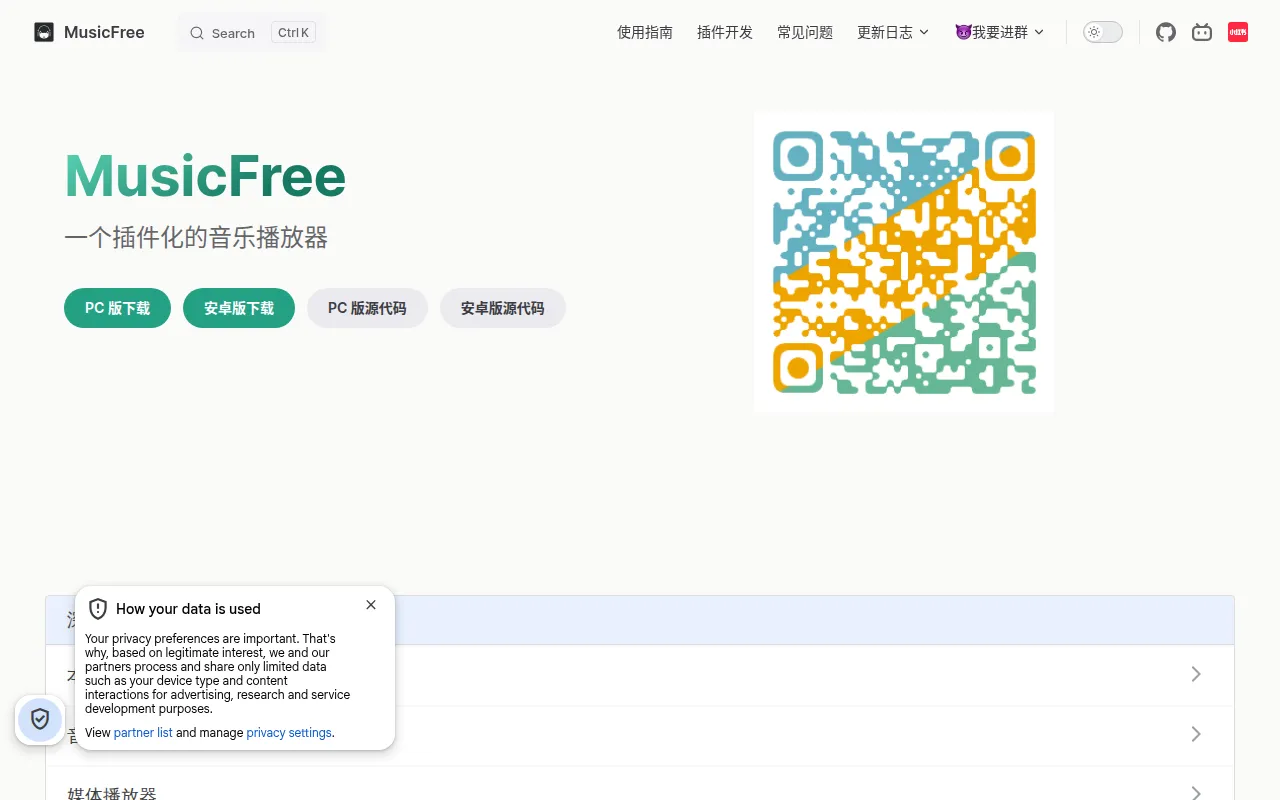
MusicFree is an open-source, plugin-driven music player for Android and HarmonyOS that adds no ads and stores all data locally.
Read moreThe best open source alternative to Spotify is MusicFree. If that doesn't suit you, we've compiled a ranked list of open source Spotify alternatives to help you find a replacement.

MusicFree is an open-source, plugin-driven music player for Android and HarmonyOS that adds no ads and stores all data locally.
Read more
Navidrome is an open source, self-hosted music server that streams your own library to any Subsonic-compatible client.
Read moreSpotify streams from a licensed catalog that can change or disappear as licensing deals shift, and a subscription is required to keep listening without ads or offline caps. Navidrome addresses a different problem: streaming music someone already owns, whether ripped CDs, purchased files, or a personal archive built up over years, from a server they control rather than relying on a third-party catalog and recurring subscription.
A self-hosted music streaming server needs broad format support across common file types like FLAC and MP3, fast library scanning that keeps up as files are added, transcoding for bandwidth-constrained mobile connections, and compatibility with existing mobile apps rather than requiring a purpose-built client. Multi-user support matters for households sharing one server, and playlist creation with play-count tracking makes the experience closer to a normal streaming app rather than a bare file browser.
Navidrome is a self-hosted music server that streams a personal library and speaks the Subsonic/Airsonic API, which means it works with a wide range of existing mobile and desktop clients built for that ecosystem rather than requiring its own app. It scans and indexes large libraries quickly, reading embedded metadata and cover art, transcodes on the fly for lower-bandwidth playback, and supports multiple user accounts with individual playlists and play history. Because it streams files the owner already has, there is no monthly subscription and no dependency on a licensed catalog; the tradeoff is that Navidrome only plays what has been added to its library, unlike Spotify's on-demand access to labels' catalogs. It also exposes a lightweight web player with a Last.fm-style interface for browsing artists, albums, and genres directly from a browser, and it can scrobble listening activity to Last.fm so play history carries over from a commercial streaming service.


 Your brand here — Reach our audience of professional directory owners and boost your sales.