
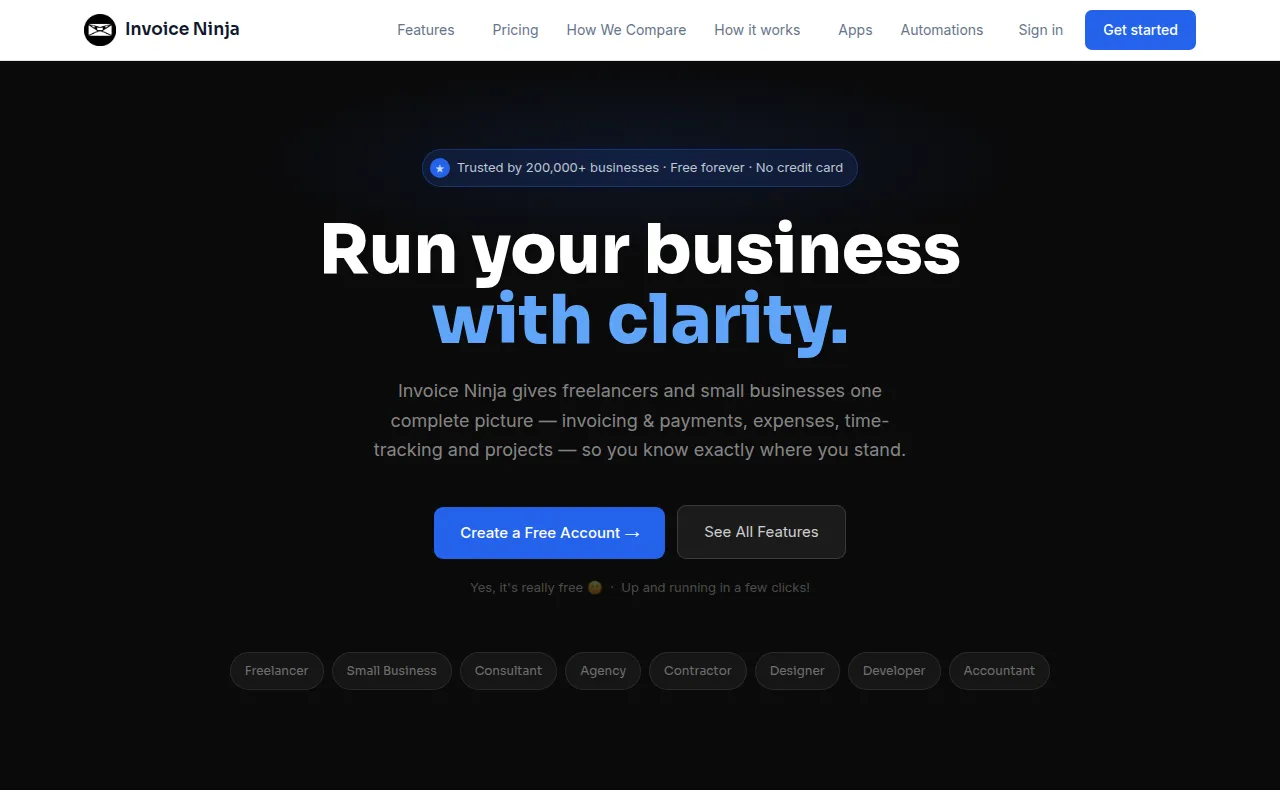
Invoice Ninja is a self-hostable invoicing, billing, and payments platform with client portals, recurring invoices, and Stripe support.
Read moreThe best open source alternative to QuickBooks is Invoice Ninja. If that doesn't suit you, we've compiled a ranked list of open source QuickBooks alternatives to help you find a replacement.

Invoice Ninja is a self-hostable invoicing, billing, and payments platform with client portals, recurring invoices, and Stripe support.
Read more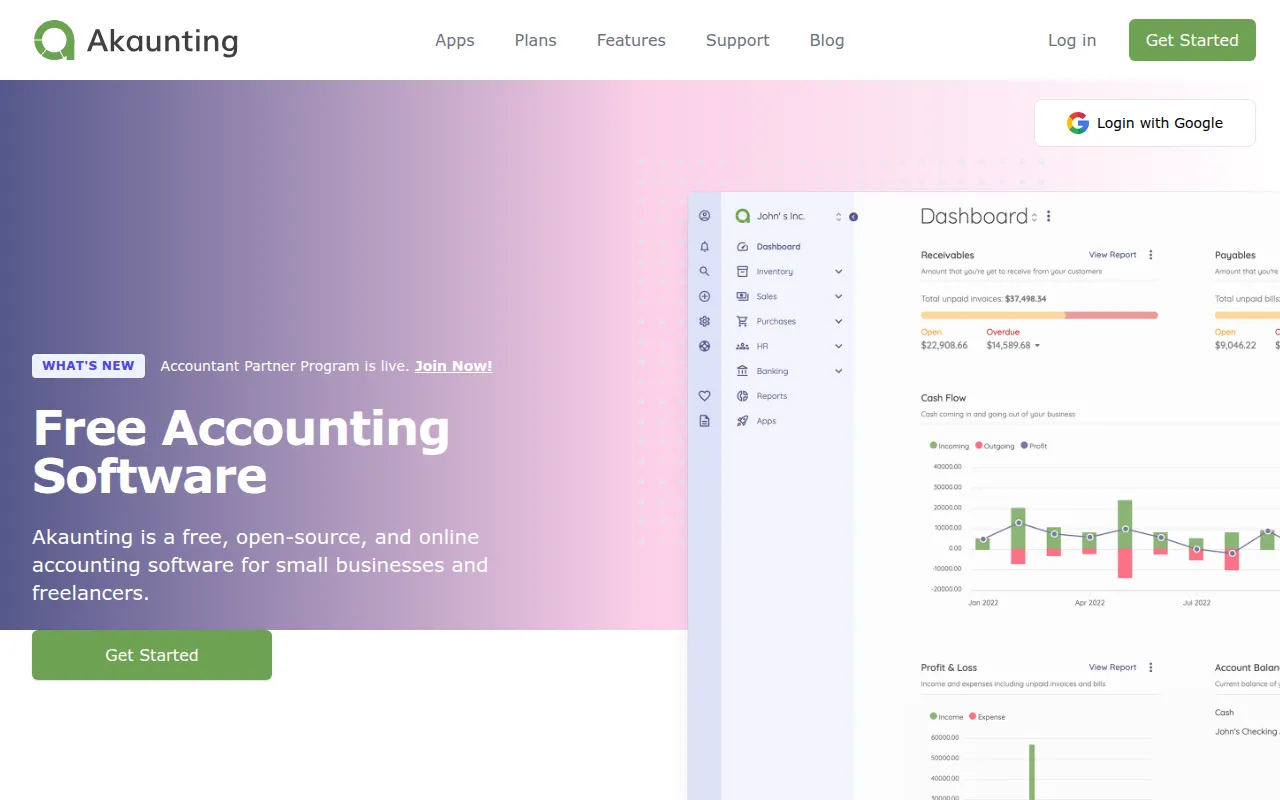
Akaunting is open source, self-hosted accounting software for small businesses, built on Laravel and Vue.
Read moreQuickBooks subscriptions are priced per company file and climb further with each added user or advanced feature like inventory tracking. Self-hosting accounting software keeps financial records, the most sensitive data most small businesses hold, on a server your own team controls rather than in a vendor's cloud. It also avoids QuickBooks' export friction: books built in an open, documented database schema can be queried or migrated directly instead of relying on a vendor-controlled export format.
For freelancers and small agencies specifically, the appeal is often simpler: an open-source invoicing tool can be run for the cost of a small server instead of a recurring per-user accounting subscription.
Check the license carefully, "source-available" and "open source" are not the same thing, and some accounting tools restrict commercial self-hosted use or gate features behind a paid license even though the code is visible. Confirm double-entry bookkeeping support if you need real accounting rather than simple invoice tracking. Look at multi-company and multi-currency support if you run more than one legal entity. Check whether project and time tracking are built in if you bill clients by the hour rather than by fixed invoice.
Akaunting is a Laravel and Vue-based online accounting platform with double-entry bookkeeping, invoicing, and multi-company support, plus an app marketplace for extending it, closest in shape to QuickBooks' own core accounting features. Invoice Ninja focuses more narrowly on invoicing, quotes, projects, and time tracking, and is source-available rather than fully open source under a permissive license, a distinction worth checking before deploying it commercially at scale.
Neither tool matches QuickBooks feature for feature on payroll or tax filing, both are strongest at the invoicing and bookkeeping layer, so a business with heavy payroll needs should check that specific module before assuming full parity. Both run comfortably on a small VPS, which keeps the hosting cost well under what a QuickBooks subscription charges per month once more than one user needs access to the books.


 Your brand here — Reach our audience of professional directory owners and boost your sales.