
Akaunting
Akaunting is open source, self-hosted accounting software for small businesses, built on Laravel and Vue.
 QuickBooks
 Xero
Xero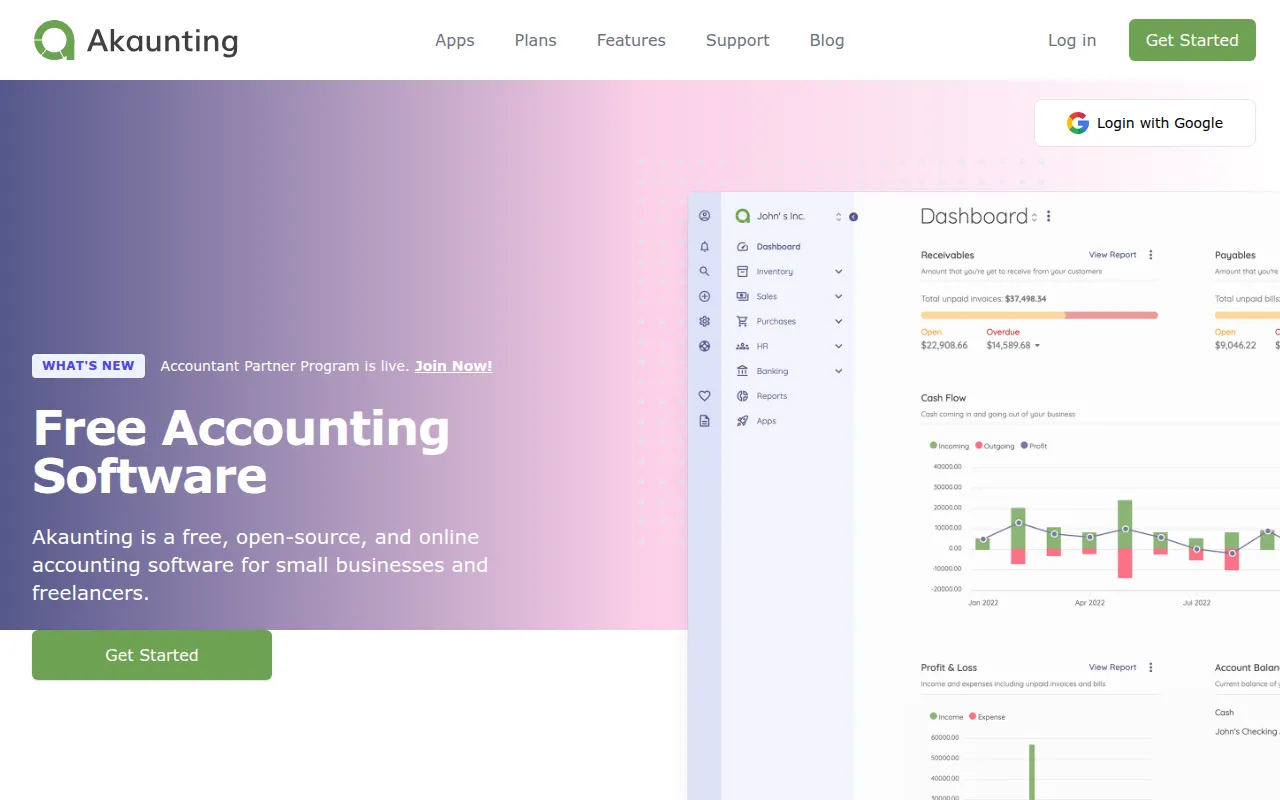
Akaunting is open source online accounting software for small businesses and freelancers, built as an alternative to QuickBooks and Xero for teams that want to self-host their financial data. It's built on Laravel and Vue with a modular architecture, and a developer portal lets third parties build and sell their own apps in Akaunting's App Store, extending the core accounting functionality without forking the codebase. The portal specifically frames building Akaunting apps as a way for developers to generate ongoing revenue from the marketplace, similar to a plugin store model.
Key features
- Double-entry accounting: track income, expenses, and balances with standard accounting workflows.
- Invoicing and billing: create invoices and bills, and track payments against them.
- Modular App Store: install additional apps to extend core accounting functionality, with a developer portal for building and selling your own.
- Multi-currency and multi-company support: manage finances across different currencies and multiple companies from one install.
- RESTful API: integrate Akaunting's accounting data with other tools programmatically.
- Translations: the interface is community-translated into many languages via Crowdin.
- Sample data seeding: optional sample data can be seeded with
php artisan sample-data:seedfor testing or demos before entering real financial data.
Tech stack
Akaunting is built on the Laravel PHP framework with a VueJS frontend and Tailwind CSS for styling. Its modular structure comes from the community-maintained Module package, which lets both core functionality and third-party apps plug into the same Laravel application without forking the core codebase.
Getting started
Before installing, the environment needs PHP 8.1+ with the required extensions, Composer, Node.js and npm, Git, a supported database such as MariaDB, MySQL, PostgreSQL, or SQLite, a web server like Apache, Nginx, or IIS, and build tools such as build-essential on Debian/Ubuntu systems. After cloning the repository, composer install, npm install, and npm run dev install dependencies, and a single php artisan install command with database and admin flags completes the setup.
Ideal use cases
Akaunting fits freelancers and small businesses that want double-entry accounting and invoicing without a recurring QuickBooks or Xero subscription, particularly teams already comfortable self-hosting PHP applications. Its modular App Store also suits agencies that want to package accounting alongside point-of-sale, CRM, or industry-specific modules for clients from a single deployment. Security vulnerabilities are handled through a documented responsible disclosure policy rather than public GitHub issues, and translation contributions go through Crowdin, where the interface has been localized into a large number of languages by community translators. Contributors are expected to imitate the existing Akaunting code style and follow PSR coding standards, and empty pull requests without a clear description may be rejected outright. Full server and PHP extension requirements are documented separately on the on-premise requirements page, since they vary by which App Store modules a given install uses.
Tags:
Frequently asked questions



Similar to Akaunting


