
A self-hosted photo and video management platform with mobile backup, facial recognition, and metadata search, licensed under AGPLv3.
Read moreThe best open source alternative to Google Photos is Immich. If that doesn't suit you, we've compiled a ranked list of open source Google Photos alternatives to help you find a replacement.

A self-hosted photo and video management platform with mobile backup, facial recognition, and metadata search, licensed under AGPLv3.
Read more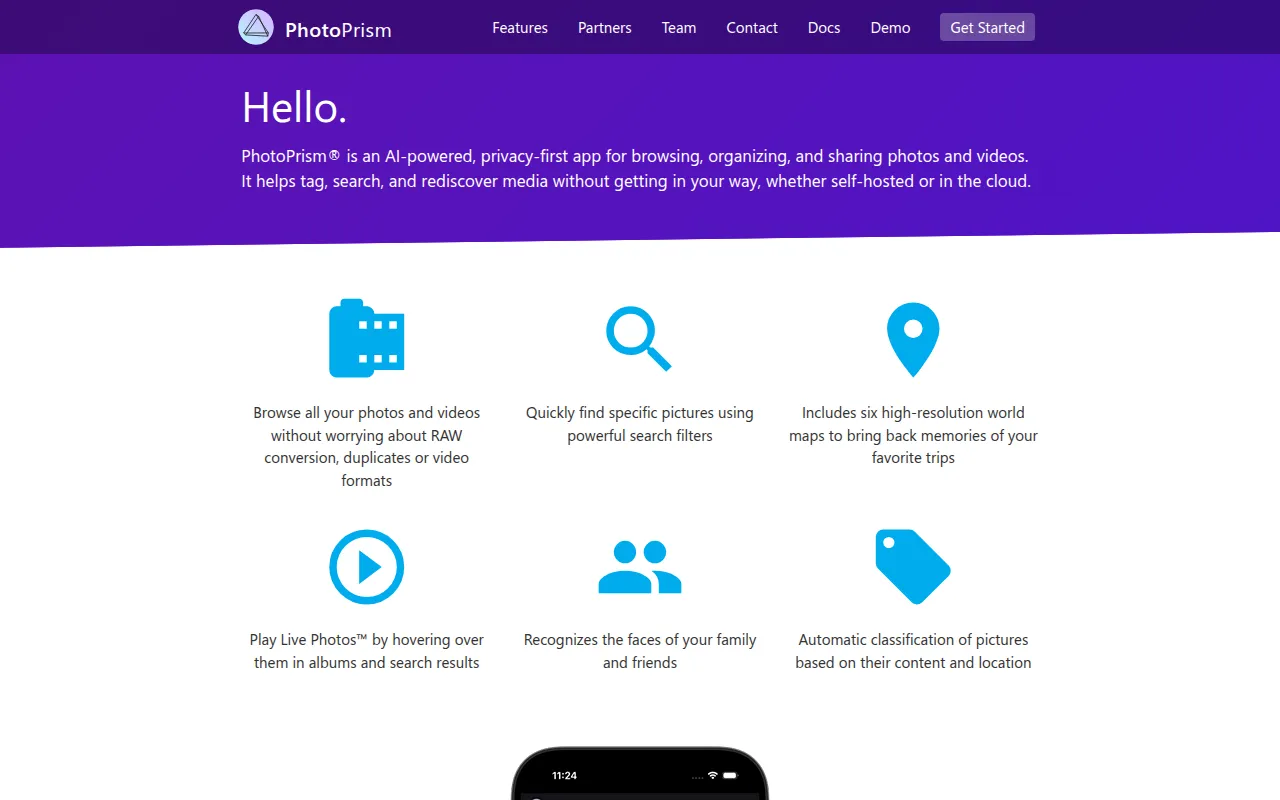
PhotoPrism is a self-hosted, AI-powered app for browsing, organizing, and sharing photos and videos with automatic tagging.
Read more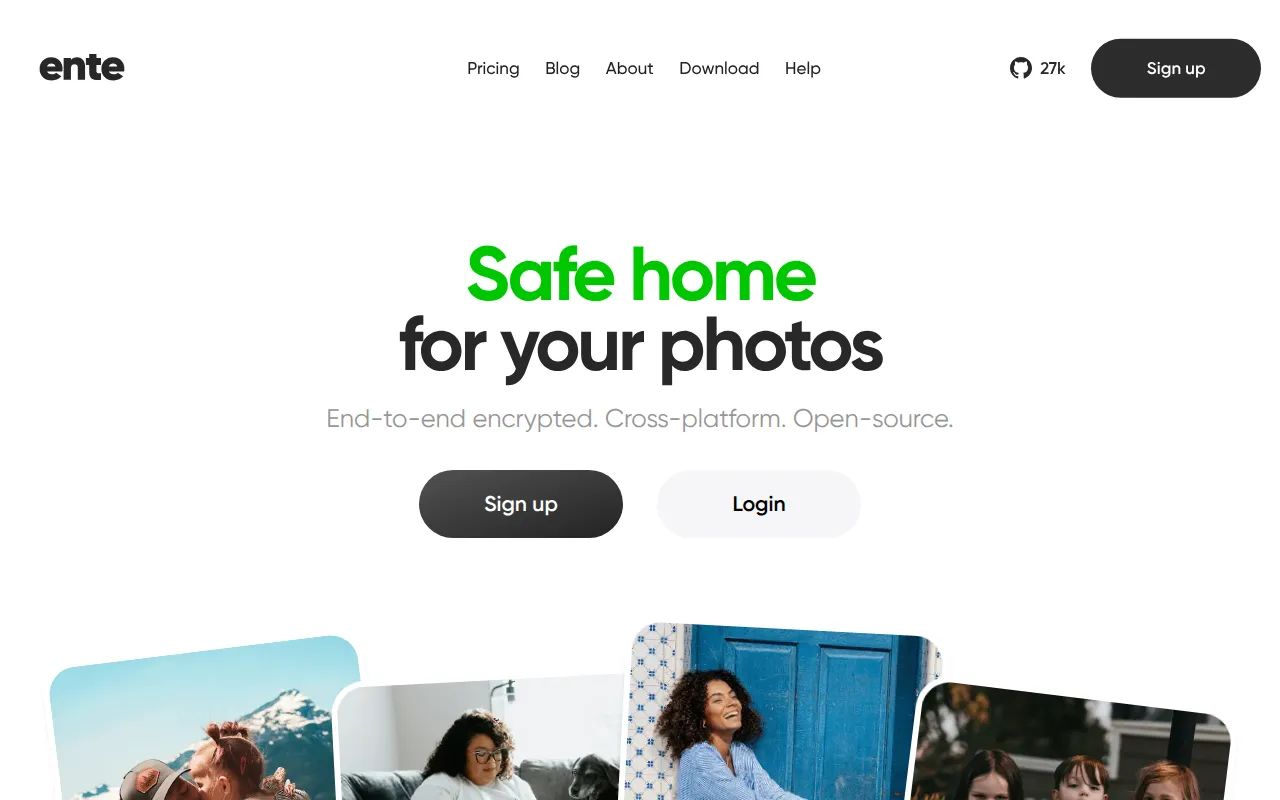
An end-to-end encrypted platform with apps for encrypted photo backup, two-factor codes, and document storage, self-hostable from this monorepo.
Read moreGoogle Photos is a cloud photo and video backup service that automatically organizes media by date, location, and detected faces or objects, and syncs across devices. It offers free storage up to a limit shared with a Google account's other services, with paid storage tiers beyond that through Google One.
People look for open-source alternatives to Google Photos for privacy reasons, since photo libraries often contain sensitive personal content that many prefer not to have processed and stored on a third party's servers. Storage cost is another factor for people with large photo and video libraries, and some simply want full control and ownership of their media without depending on a single company's account and policies.
Immich and Ente are both common self-hosted options here, with different tradeoffs. Immich focuses on replicating Google Photos' feature set closely, including automatic backup from mobile apps, face recognition, and a similar browsing experience, run on a server you control. Ente takes an end-to-end encrypted approach, meaning even the server operator cannot see your photos, which suits users prioritizing privacy above feature parity, and it also offers a hosted option if you don't want to self-host.
Before switching, check mobile app reliability for automatic backup, since this is where photo tools tend to differ most in day-to-day use. Confirm your server has enough storage for your existing library plus future growth, since photo and video libraries grow quickly. Also test face recognition and search accuracy on your own photos before fully committing, since machine learning quality varies between these tools and Google's implementation.


 Your brand here — Reach our audience of professional directory owners and boost your sales.