
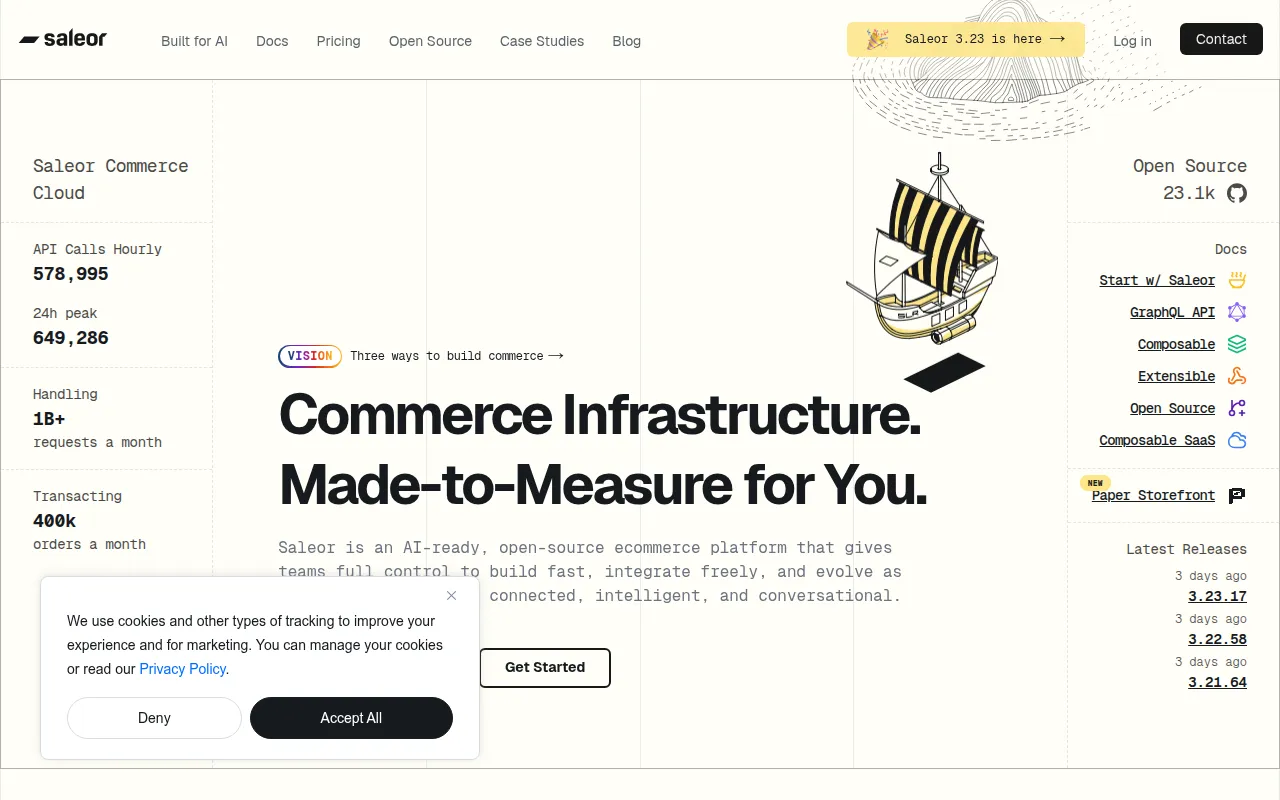
Saleor is an open source, GraphQL-native, API-only commerce platform for building composable storefronts and marketplaces.
Read moreThe best open source alternative to BigCommerce is Saleor. If that doesn't suit you, we've compiled a ranked list of open source BigCommerce alternatives to help you find a replacement.

Saleor is an open source, GraphQL-native, API-only commerce platform for building composable storefronts and marketplaces.
Read moreBigCommerce hosts the storefront, checkout, and admin panel as one package, with pricing tiers based on annual online sales revenue. That model works for merchants who want a turnkey store, but it caps how deeply you can customize checkout flows, data models, or the storefront's rendering layer. High-growth stores can also hit revenue-based plan thresholds that force an upgrade regardless of infrastructure needs.
An open-source, headless commerce platform separates the storefront from the commerce logic. The catalog, cart, checkout, and order data sit behind an API, and any frontend, whether Next.js, Remix, or a mobile app, can consume it. That split matters most for merchants who need a custom buying experience, multiple storefronts sharing one product catalog, or data residency outside a vendor's hosted infrastructure.
A commerce platform needs to handle multi-channel sales, tax calculation, inventory across warehouses, and payment gateway integrations without requiring custom code for each. Since headless platforms hand rendering to you, check the quality of the API and how well-documented the schema is, and whether a reference storefront exists to start from instead of building an entire frontend from scratch.
Saleor is a headless commerce platform with a GraphQL API at its core, built on Python and Django on the backend with a React-based dashboard for merchandising and order management. It supports multi-channel and multi-currency selling, product variants, discounts, and a checkout API that frontend teams can build against directly rather than working around a hosted checkout page. Saleor ships a Next.js storefront template as a starting point, and its plugin and webhook system lets you hook into order and payment events for custom logic. The core platform is open source, so self-hosting avoids revenue-based pricing tiers entirely; Saleor Cloud exists as a paid managed option for teams that don't want to run their own infrastructure.

 Your brand here — Reach our audience of professional directory owners and boost your sales.