

Meilisearch is a Rust-based, open source search engine with typo-tolerant full-text and hybrid search returning results under 50ms.
Read moreThe best open source alternative to Algolia is Meilisearch. If that doesn't suit you, we've compiled a ranked list of open source Algolia alternatives to help you find a replacement.

Meilisearch is a Rust-based, open source search engine with typo-tolerant full-text and hybrid search returning results under 50ms.
Read more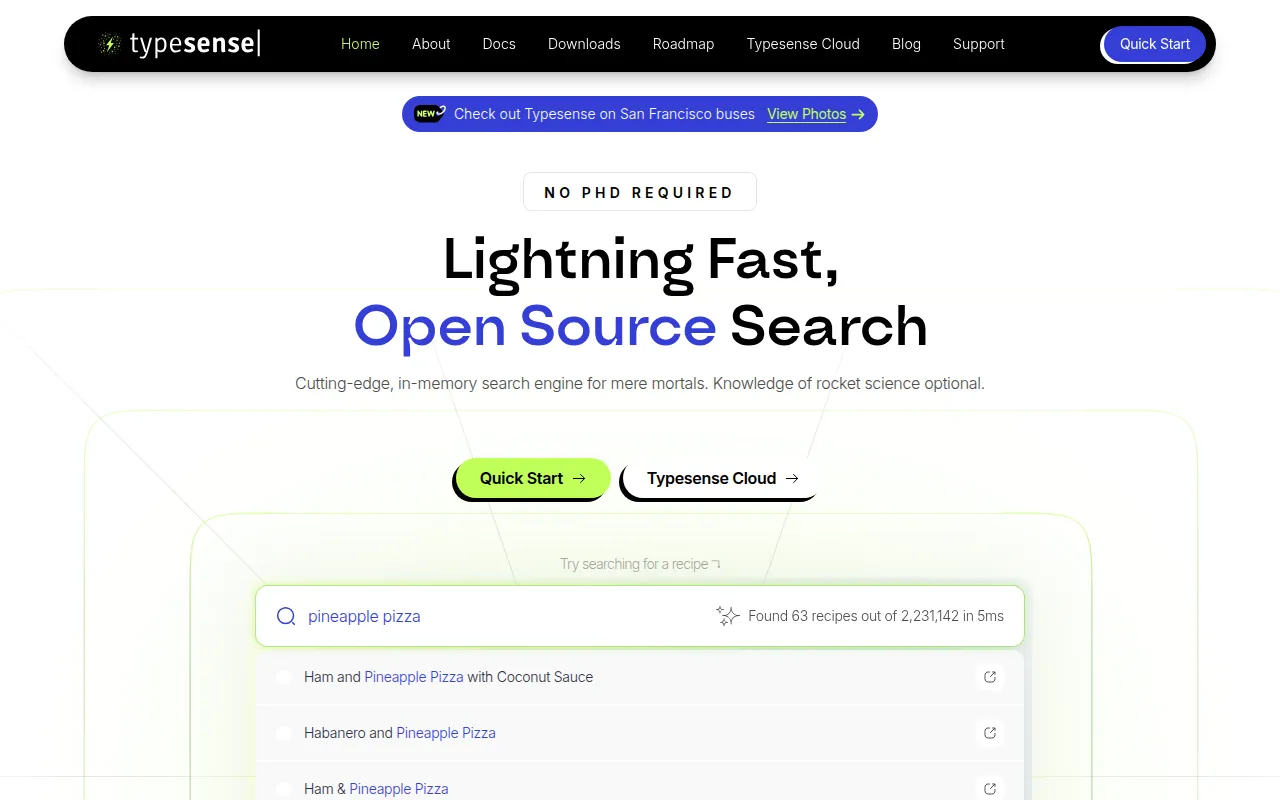
Typesense is an open source, typo-tolerant search engine built in C++ for fast, sub-50ms full-text, vector, and hybrid search.
Read moreAlgolia charges per search operation and per record indexed, so search volume that grows with your product's traffic translates directly into a growing bill, independent of any new feature you've added. Self-hosting a search engine caps that cost at your own server spend instead of a per-query meter. It also keeps the indexed data, which is often a full copy of your product catalog, documents, or user-generated content, inside infrastructure you control rather than mirrored into a third-party index.
Open-source search engines have also closed much of the gap that used to justify Algolia's price: typo tolerance, fast response times, and now hybrid semantic and keyword search are available in self-hosted engines without a hosted-only premium.
Check whether typo tolerance and relevance tuning work out of the box or need manual configuration, this was historically Algolia's main advantage. Look for hybrid search support (combining vector/semantic search with traditional keyword search) if your use case includes natural-language queries rather than just short keyword search. Confirm the resource footprint, an in-memory search engine can be fast but memory-hungry at scale, so check RAM requirements against your index size. Check whether the alternative also covers vector-database use cases if you're evaluating it for AI retrieval, not just product search.
Meilisearch is a Rust-based search engine built for speed, with typo tolerance and AI-powered hybrid search (combining keyword and vector search) available directly through its REST API, and it ships with sensible relevance defaults so most integrations skip the manual ranking tuning Elasticsearch usually requires. Typesense positions itself even more broadly, as an alternative to both Algolia and Pinecone for vector search, and as an easier-to-operate alternative to Elasticsearch, running as a fast, typo-tolerant, in-memory C++ search engine with sub-50-millisecond query times on typical datasets.
Both engines expose a single binary or Docker image rather than a cluster of services, which is a meaningful operational difference from Elasticsearch deployments that usually need dedicated ops attention. For a small product catalog or documentation site, either can run comfortably on a single small server; large catalogs with millions of records need enough RAM to hold the in-memory index, so check sizing against your record count and average document size before committing to a self-hosted deployment.


 Your brand here — Reach our audience of professional directory owners and boost your sales.