
Zammad
Web-based, open-source helpdesk platform unifying email, chat, phone, and social support in one place.
 Freshdesk
 Zendesk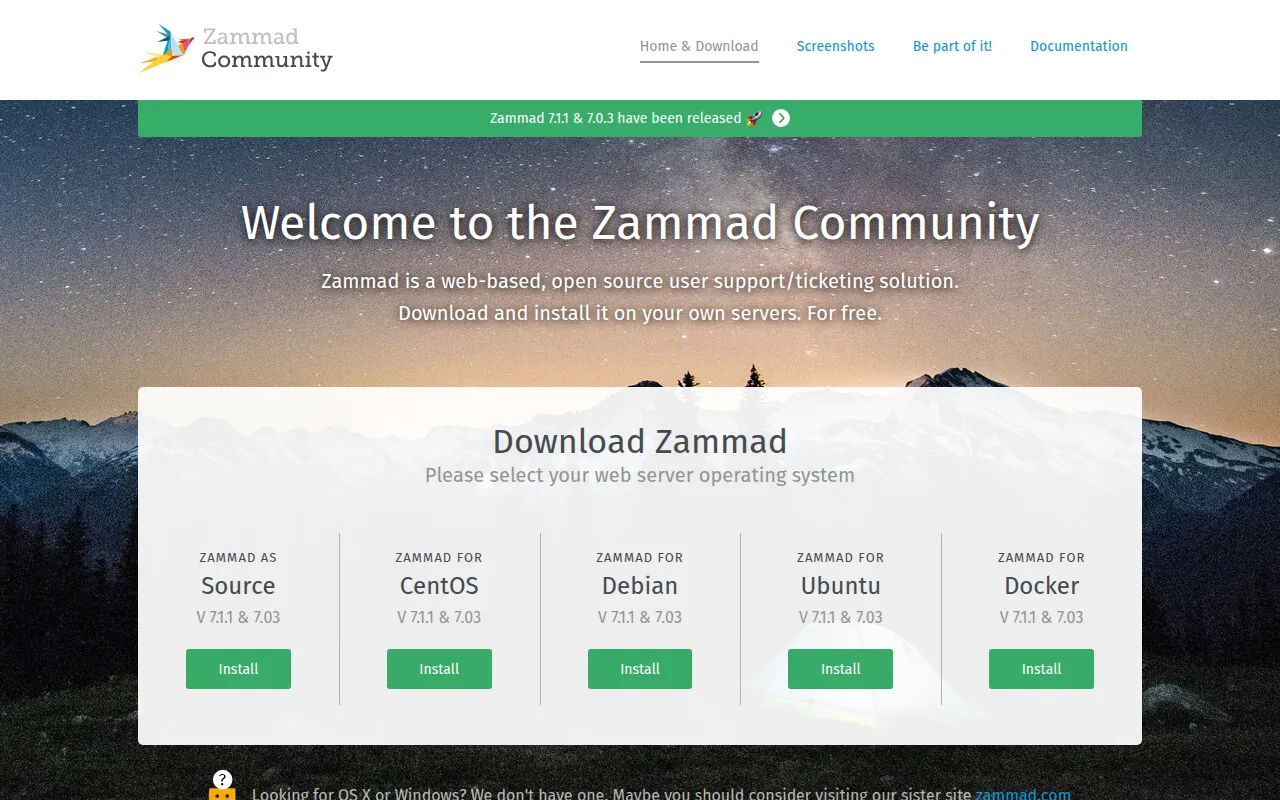
Zammad is an open-source, web-based helpdesk and customer support platform for unifying inquiries from email, chat, telephone, and social media in one place. It's maintained by the independent Zammad Foundation and developed by Zammad GmbH in collaboration with the community. Zammad can be self-hosted through Docker, Kubernetes via an official Helm chart, or DEB/RPM packages, or run on Zammad GmbH's cloud service.
Key features
- Multi-channel ticketing: consolidate email, chat, telephone, and social media inquiries into a single ticket queue.
- REST API: automate ticket creation, updates, and reporting through a documented HTTP API.
- Kubernetes and Docker deployment: run Zammad through an official Helm chart or the community Docker Compose setup.
- DEB/RPM packages: install on Debian, Ubuntu, RHEL, or similar distributions from prebuilt packages for stable and develop branches.
- AGPLv3 licensing: the full source is open under the GNU AGPLv3 and owned by the independent Zammad Foundation.
- Developer documentation: a dedicated developer manual documents how to extend and integrate with Zammad.
Ideal use cases
Zammad fits support teams that currently juggle a shared inbox, a separate chat tool, and a spreadsheet for tracking tickets, and want those channels consolidated into one queue with assignment and reporting. Because it's self-hostable under an AGPLv3 license with no separate enterprise edition gating core functionality, it suits organizations that want full helpdesk functionality without per-agent SaaS pricing, as long as they're willing to run and maintain the Docker, Kubernetes, or package-based deployment themselves. The REST API and developer manual make it a reasonable fit for teams that want to automate ticket creation from internal tools, sync customer data from a CRM, or build custom reporting rather than relying solely on the built-in UI. Teams that want the functionality without operating infrastructure can use Zammad GmbH's cloud service and its free trial instance to evaluate the product before deciding whether to self-host. Because development is led by a company but owned by an independent foundation, organizations concerned about vendor lock-in have a documented governance structure to point to. Helm chart availability makes it a natural fit for teams that already run their infrastructure on Kubernetes, alongside the DEB/RPM packages for teams standardized on traditional Linux server management.
Self-hosting and deployment
Zammad self-hosts through several official paths: Docker container images published for the zammad-docker-compose project, a Helm chart for Kubernetes listed on Artifact Hub, and DEB/RPM packages for stable and develop branches through packager.io. Because the software and its Foundation are structured independently of the commercial entity, self-hosting carries no feature gating beyond what the open-source AGPLv3 license already covers. Teams that would rather avoid managing setup, backups, and updates can move to Zammad GmbH's cloud service instead, including a free trial instance.
Tags:
Frequently asked questions





Similar to Zammad


