
Jenkins
Jenkins is a self-hosted automation server with 2,000+ plugins for CI/CD pipelines, builds, testing, and deployment.
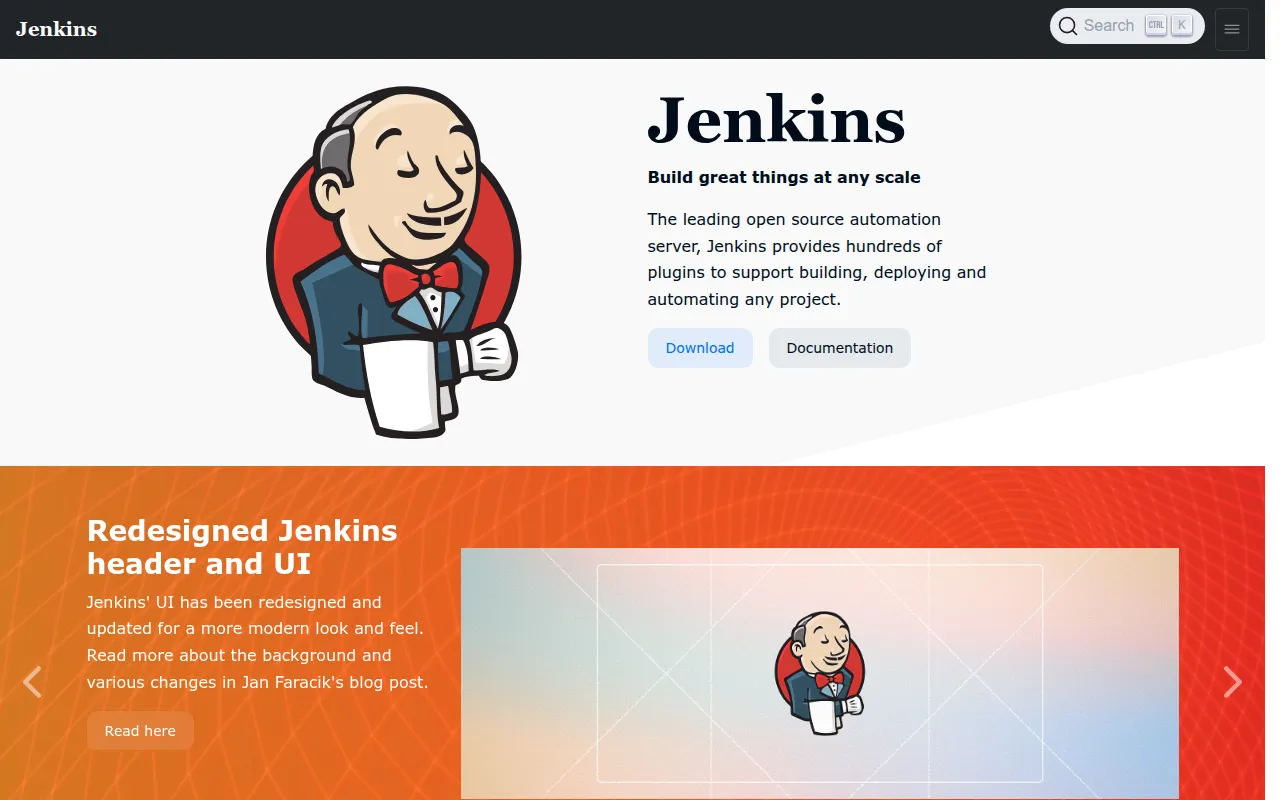
Jenkins is a self-hosted automation server written in Java. It's built for developers and operations teams who need to automate builds, tests, static analysis, and deployments as part of a software delivery pipeline. Rather than a hosted SaaS product, Jenkins runs on your own infrastructure (or a container), and you extend it through a plugin ecosystem with over 2,000 available plugins.
The project has been around for years and forms the backbone of many organizations' CI/CD setups, from small teams to large enterprises. It's not tied to a single cloud provider or workflow, which is both its strength and the reason it takes more setup work than a managed CI service.
Key features
- Plugin ecosystem: over 2,000 plugins cover source control integrations, build tools, test frameworks, notifications, and deployment targets.
- Pipelines as code: define build, test, and deploy stages in a Jenkinsfile checked into your repo, using Groovy-based pipeline syntax.
- Two release lines: a Weekly line with the latest features and fixes, and a Long-Term Support (LTS) line that gets periodic bug-fix backports for stability.
- Multiple distribution formats: available as a WAR file, Docker image, or native packages/installers for Linux distributions and Windows.
- Self-hosted control: runs on your own servers or containers, so you control the environment, agents, and network access.
- Open governance: the project is community-governed under an open source model, with public decision-making and contribution paths.
Ideal use cases
Jenkins fits teams that need a customizable, self-hosted CI/CD server and are willing to manage the infrastructure themselves. It works well for organizations with varied build environments (multiple languages, custom agents, on-prem systems) where a generic hosted CI product doesn't cover every integration out of the box.
It's a good fit for automating repetitive workflows: compiling code, running test suites, running static analysis, and pushing builds to staging or production. Teams that already use Groovy-based pipeline scripts or want fine-grained control over build agents will find Jenkins's plugin model useful.
Jenkins is not the best fit if you want a zero-maintenance, fully managed CI service. Running Jenkins means you're responsible for patching, plugin compatibility, scaling agents, and securing the server. If your pipelines are simple and your team doesn't want to operate infrastructure, a hosted CI/CD product with less configuration overhead is likely a better match.
Installation
Jenkins ships as official distributions in several formats. Pick the one that matches your environment:
- WAR file: run directly with a Java runtime.
java -jar jenkins.war
- Docker image: pull and run the official image.
docker pull jenkins/jenkins
docker run -p 8080:8080 -p 50000:50000 jenkins/jenkins
- Native packages/installers: available for various Linux distributions and Windows. Check the Downloads page for platform-specific instructions.
After installation, choose a release line:
- Weekly: frequent releases with the newest features, improvements, and bug fixes.
- LTS: a more stable line updated periodically via backported fixes, recommended for production environments that prioritize stability over the newest features.
For development setup, contributing to Jenkins core, or working with Jenkins internals, follow the contributing guide and the Developer Documentation on the Jenkins website. New contributors can look through issues tagged 'good first issue' in the GitHub repo and join the project's Gitter chat for help getting oriented.
Frequently asked questions




Similar to Jenkins


