
Flagsmith
Flagsmith is an open source feature flag, remote config, and A/B testing platform with on-premise hosting options.
 LaunchDarkly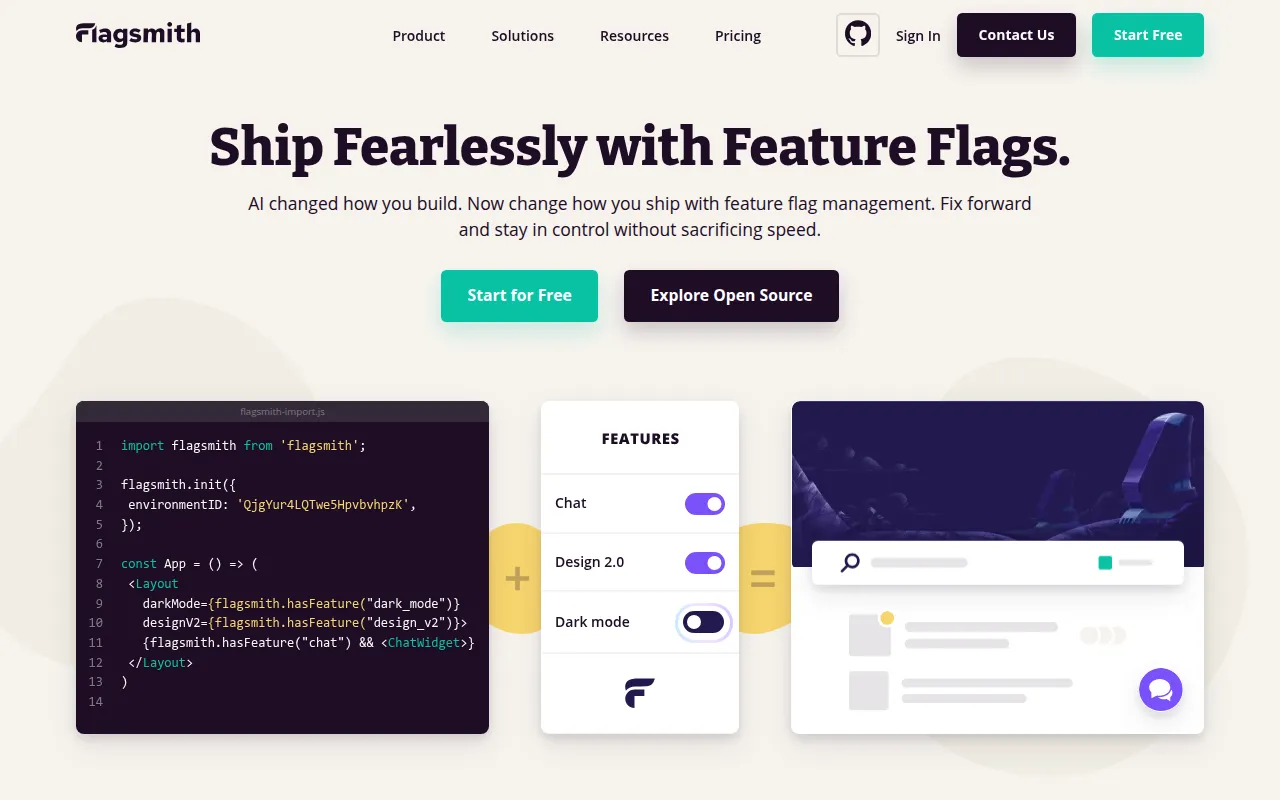
Flagsmith is an open source feature flag, remote config, and A/B testing platform for controlling software releases without redeploying code. It's built as an alternative to LaunchDarkly for teams that want on-premise or private cloud hosting alongside the ability to toggle features, run experiments, and target releases to specific user segments. Flagsmith ships SDKs for 15+ languages and frameworks, and the project describes its goal as changing how a team releases software by making rollout and rollback a configuration change instead of a deployment.
Key features
- Feature flags: wrap any section of code with a flag and toggle it per environment without a new deployment.
- Remote config: change configuration values remotely instead of hardcoding them per environment or rebuilding to change them.
- A/B and multivariate testing: use segments to run experiments on new features and measure the results directly within the platform.
- User segments: release features to specific groups, such as beta testers, before a full rollout to every user.
- Organization management: structure work across organizations, projects, and roles for team members, keeping access scoped appropriately.
- Broad SDK coverage: SDKs cover TypeScript, .NET, Java, and more, with integrations for React, Next.js, and other frameworks documented directly.
- Integrations: connect Flagsmith to other tools already in a team's development workflow rather than treating it as an isolated system.
- Change management: audit logs and permissioned roles keep track of who changed which flag, which matters once more than one team touches the same flags.
Ideal use cases
Engineering teams practicing trunk-based development use Flagsmith to ship code behind a flag and control the rollout separately from the deploy, reducing the blast radius of a bad release. Regulated industries that need feature flag data to stay on-premise, rather than routed through a third-party SaaS, use the self-hosted Docker deployment instead of a cloud-only competitor like LaunchDarkly.
Self-hosting and deployment
Flagsmith can be self-hosted with a single Docker Compose command, docker-compose -f docker-compose.yml up, which bootstraps an admin user, organization, and project automatically and prints a password-reset link in the compose logs. A hosted SaaS version is also available at flagsmith.com for teams that don't want to manage the infrastructure themselves, along with an interactive demo for evaluating the product before installing anything.
Open source vs paid
The majority of Flagsmith's platform is open source under the BSD-3-Clause license, with a small number of repositories under MIT, and the project states that its core functionality stays open regardless of commercial plans. Enterprise-level governance and management features require a valid Flagsmith Enterprise license on top of the open source core.
Tech stack
Flagsmith's core platform is licensed under BSD-3-Clause, with some repositories under MIT, and Docker image size and pull counts for the official images are tracked publicly on Docker Hub.
Frequently asked questions





Similar to Flagsmith


