
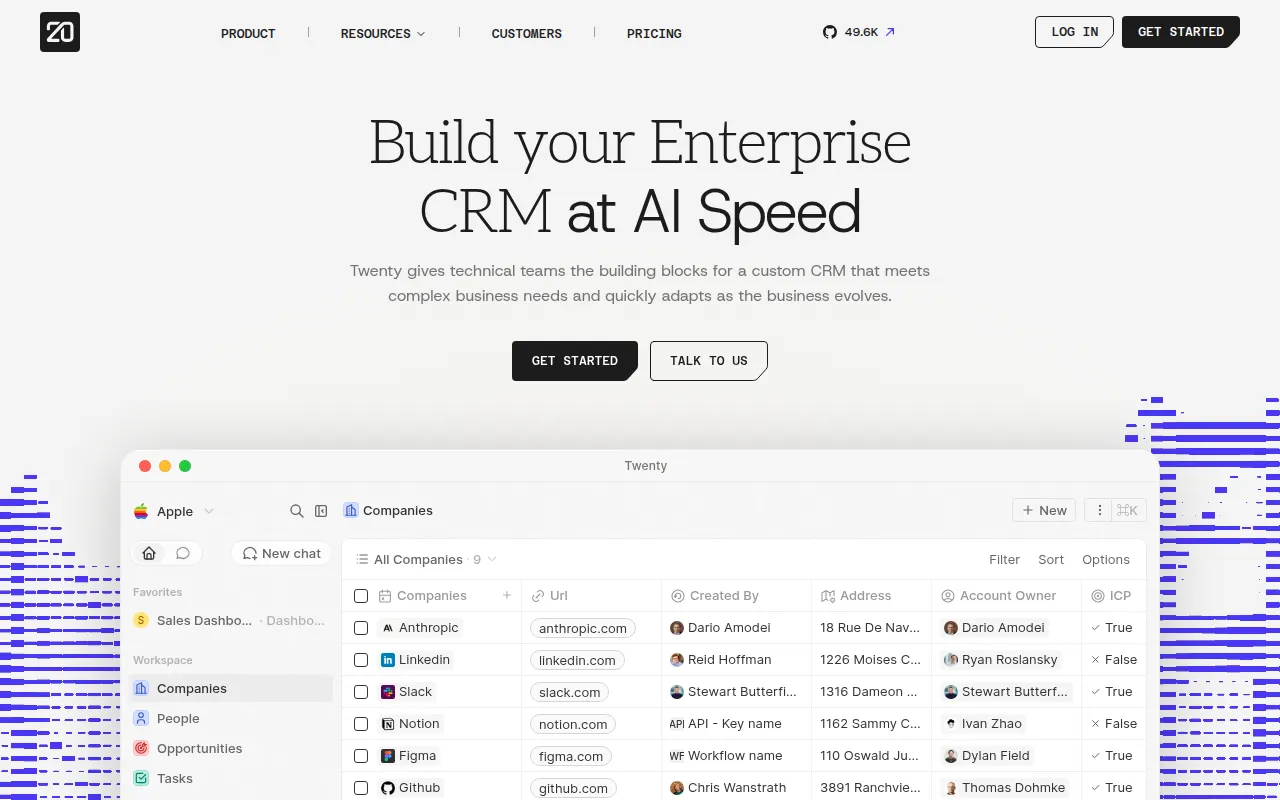
Open-source CRM built on TypeScript, NestJS, and PostgreSQL, with a GraphQL API and workflow automation.
Read moreThe best open source alternative to Salesforce is Twenty. If that doesn't suit you, we've compiled a ranked list of open source Salesforce alternatives to help you find a replacement.

Open-source CRM built on TypeScript, NestJS, and PostgreSQL, with a GraphQL API and workflow automation.
Read more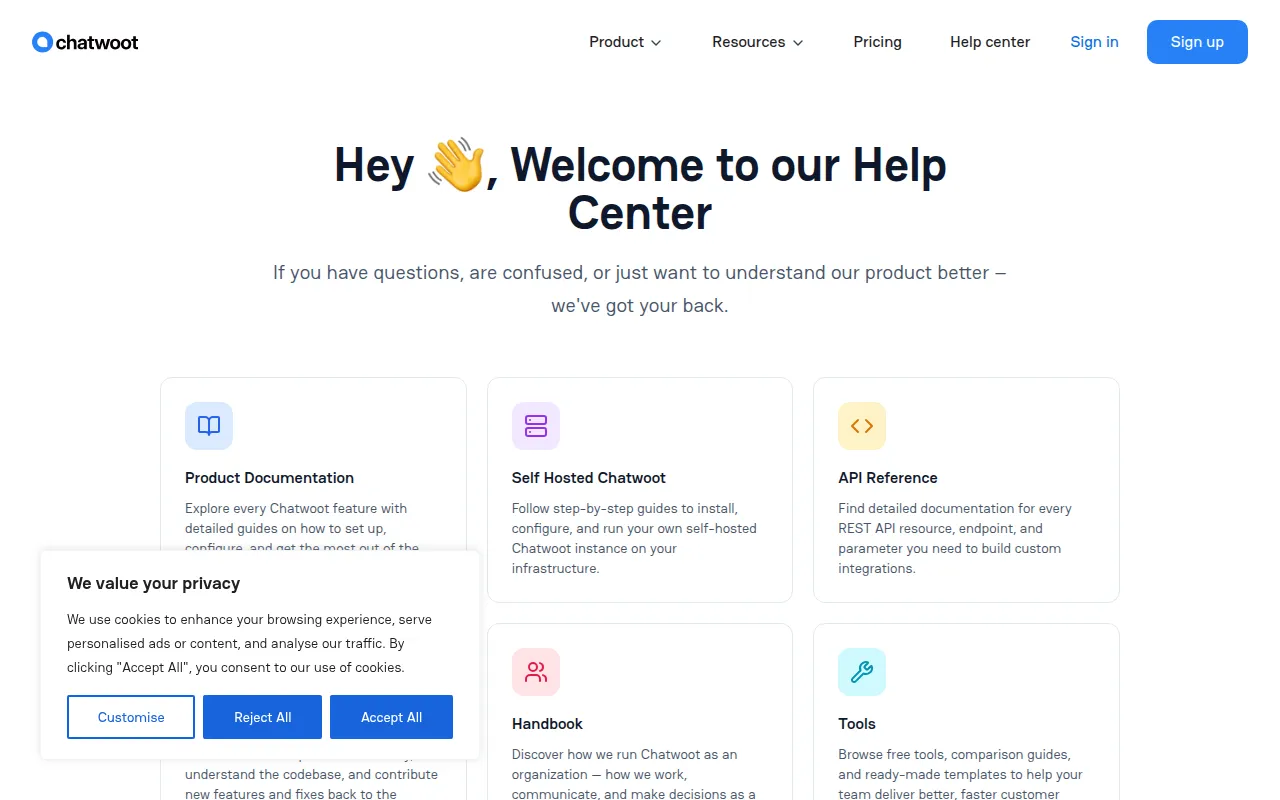
Chatwoot is a self-hosted customer support platform with an omnichannel inbox, help center, and AI agent, built as an alternative to Intercom and Zendesk.
Read moreSalesforce pricing scales per user across separate clouds (Sales, Service, Marketing), so a team that needs both a CRM and a support desk ends up paying for two products with two license types. Self-hosting a CRM or support tool keeps customer records, deal data, and support conversations inside infrastructure your team controls, rather than distributed across a vendor's clouds with per-object API limits. It also avoids Salesforce's steep customization cost: changes that require an Apex developer or a paid consultant in Salesforce can often be made directly in an open-source tool's codebase.
Smaller and mid-size teams in particular often don't need Salesforce's full breadth, a modern open-source CRM covers pipeline and deal tracking without the enterprise configuration overhead that Salesforce assumes.
Be clear about which part of Salesforce you're replacing: core CRM (contacts, deals, pipeline) and Service Cloud (support tickets, cases) are different products with different open-source equivalents. Check the tech stack and self-hosting requirements, since some open-source CRMs need several services (database, search index, background workers) running together. Look at how mature the object model and reporting are compared to Salesforce, since newer open-source CRMs may not yet cover every custom-field and automation case Salesforce supports.
Twenty is a modern, open-source CRM built with React, TypeScript, NestJS, and GraphQL, focused on pipeline and deal management with a clean, fast interface, it replaces Salesforce's core Sales Cloud rather than the entire product suite. Chatwoot addresses a different slice of Salesforce: it's built as an alternative specifically to Salesforce Service Cloud, along with Zendesk and Intercom, covering omnichannel support conversations rather than sales pipeline. Teams replacing all of Salesforce typically need both: Twenty for the CRM side and Chatwoot for the support side.


 Your brand here — Reach our audience of professional directory owners and boost your sales.