
A node-based interface for running Stable Diffusion and other generative AI models to create images, video, 3D, and audio locally or via API.
Read moreThe best open source alternative to Midjourney is ComfyUI. If that doesn't suit you, we've compiled a ranked list of open source Midjourney alternatives to help you find a replacement.

A node-based interface for running Stable Diffusion and other generative AI models to create images, video, 3D, and audio locally or via API.
Read more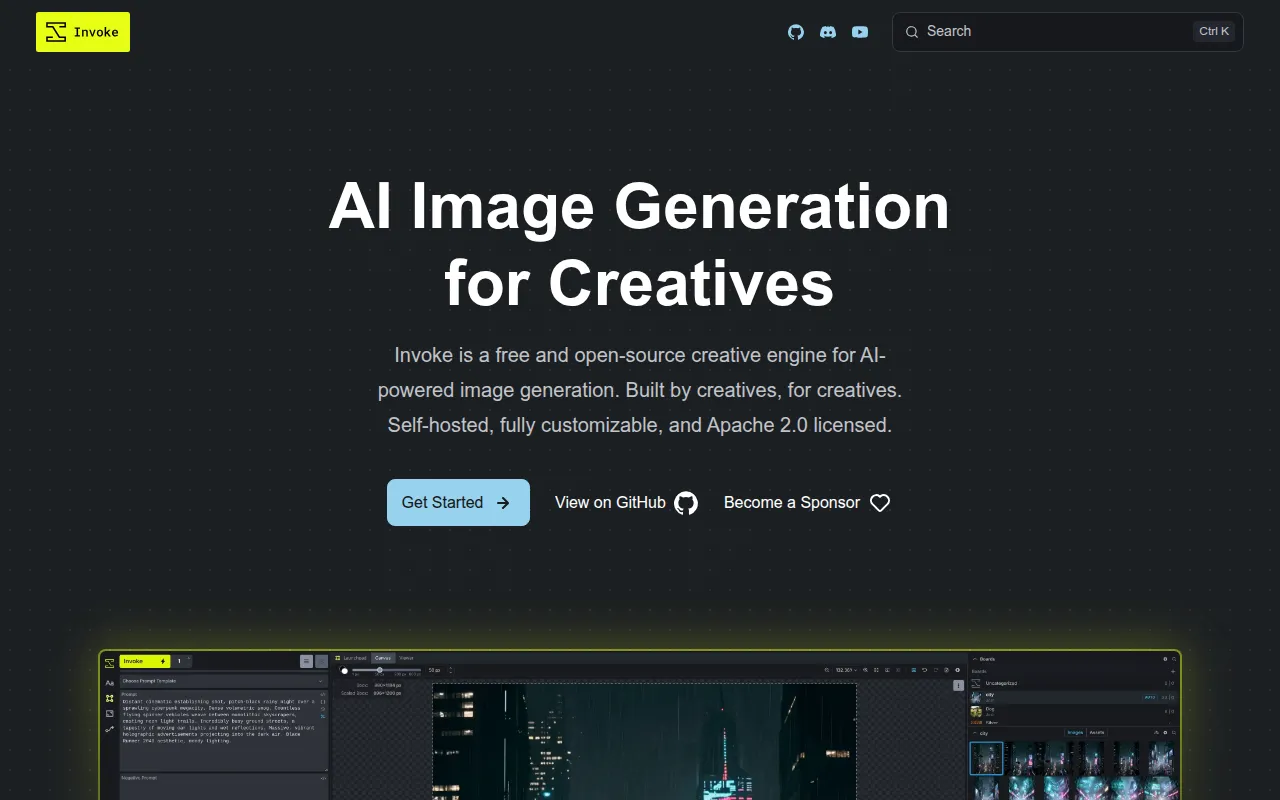
InvokeAI is a self-hosted web UI for Stable Diffusion and other image models with a unified canvas, node workflows, and model management.
Read moreMidjourney is a text-to-image generation service that produces images from written prompts. It runs as a hosted product, historically accessed through a Discord bot and now also through a web interface, and it's known for a distinctive, painterly default aesthetic that made it popular with artists and designers experimenting with AI-generated visuals.
People look for open-source alternatives for reasons that go beyond cost. Midjourney requires a subscription and runs entirely on its own servers, so every prompt and generated image passes through a third party, which is a concern for anyone working with confidential concepts or client work under NDA. There's no way to change the underlying model, fine-tune it on a specific style, or run generation offline. Output ownership and usage rights are also governed by Midjourney's terms rather than something you control directly.
ComfyUI is the most flexible open-source route, providing a node-based interface for running image generation models like Stable Diffusion and Flux locally or on your own cloud GPU. Because you control the model weights, you can fine-tune or use custom checkpoints, chain multiple models together, and automate generation pipelines without per-image billing beyond your own compute costs.
The main tradeoff is that self-hosted generation requires a capable GPU and more setup effort than typing a prompt into Discord. Before switching, check whether the models available for local use match the visual style you need, since Midjourney's look comes from specific proprietary training rather than a setting you can replicate exactly. Also consider generation speed on your hardware versus a cloud GPU rental, and whether a node-based workflow tool like ComfyUI fits your comfort level compared to a simpler prompt box.

 Your brand here — Reach our audience of professional directory owners and boost your sales.