
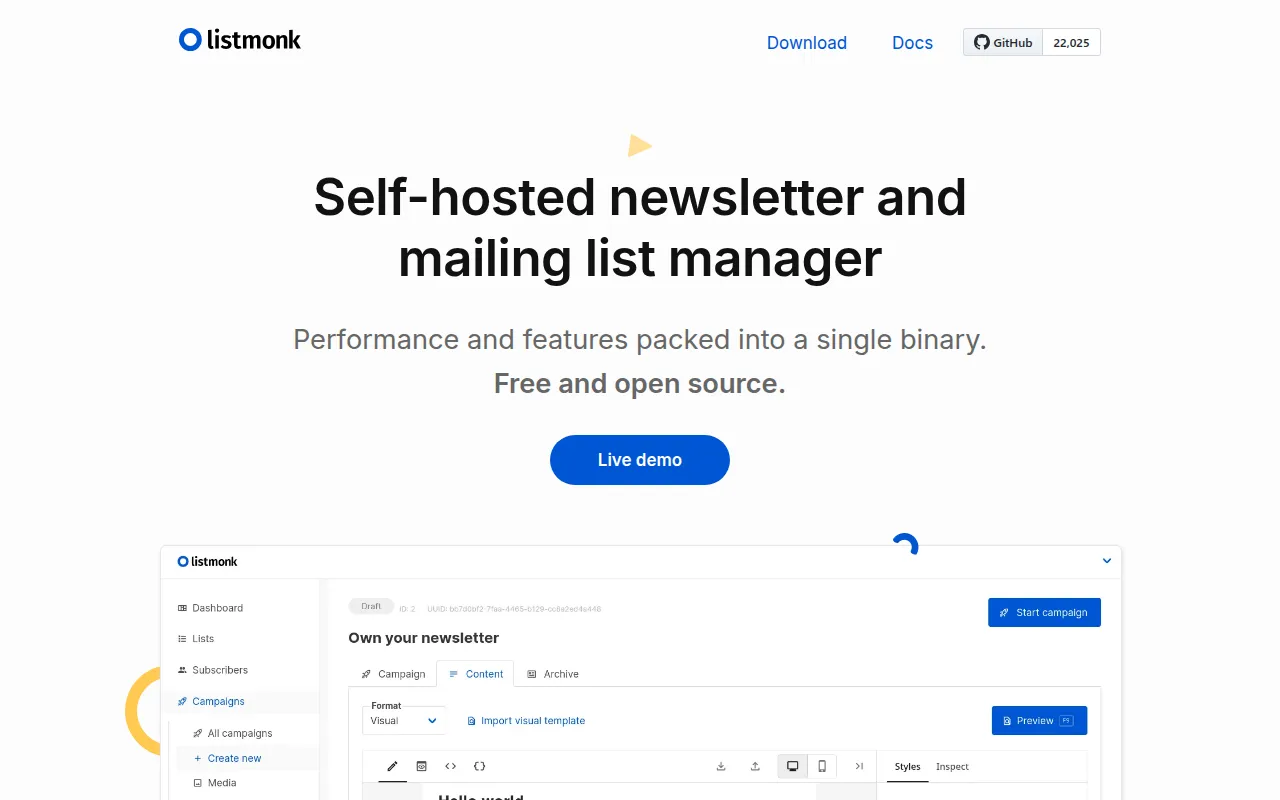
listmonk is a self-hosted, single-binary newsletter and mailing list manager backed by PostgreSQL.
Read moreThe best open source alternative to Brevo is listmonk. If that doesn't suit you, we've compiled a ranked list of open source Brevo alternatives to help you find a replacement.

listmonk is a self-hosted, single-binary newsletter and mailing list manager backed by PostgreSQL.
Read moreBrevo prices its email plans around how many emails you send per month, and subscriber lists live inside Brevo's platform. That's fine for teams that want a hosted dashboard, but it means every list, every open rate, and every unsubscribe event belongs to a third party. Growing past a plan's sending limit triggers a price jump regardless of whether you use any of Brevo's CRM or chat add-ons.
Self-hosting a mailing list manager removes the per-email pricing model entirely. Once the software runs on your own server, sending volume is bound only by your SMTP provider or relay, and subscriber data stays in a database you control, which matters for GDPR compliance when EU subscriber data can't leave infrastructure you manage.
Look for support for list segmentation beyond basic tags, a way to query subscribers with something more expressive than dropdown filters, and campaign analytics such as opens, clicks, and bounces that don't require a paid tier. Delivery matters as much as the sending tool: check that the platform integrates cleanly with SMTP relays like Amazon SES, Postmark, or Mailgun, since deliverability infrastructure is a separate problem from list management.
listmonk is a single Go binary backed by PostgreSQL, built by the team at Zerodha, one of India's largest stockbrokers, to run their own newsletter of several million subscribers. Segmentation uses raw SQL queries against the subscriber table, which is more powerful than tag-based filtering once lists grow complex. Campaigns support A/B subject line testing, scheduled sending, and a public subscription page with double opt-in. Because it's a static binary with one Postgres dependency, deployment is a single Docker container or systemd service, and there's no per-subscriber or per-email fee built into the software itself, only whatever your SMTP relay charges for sending.
 Your brand here — Reach our audience of professional directory owners and boost your sales.